

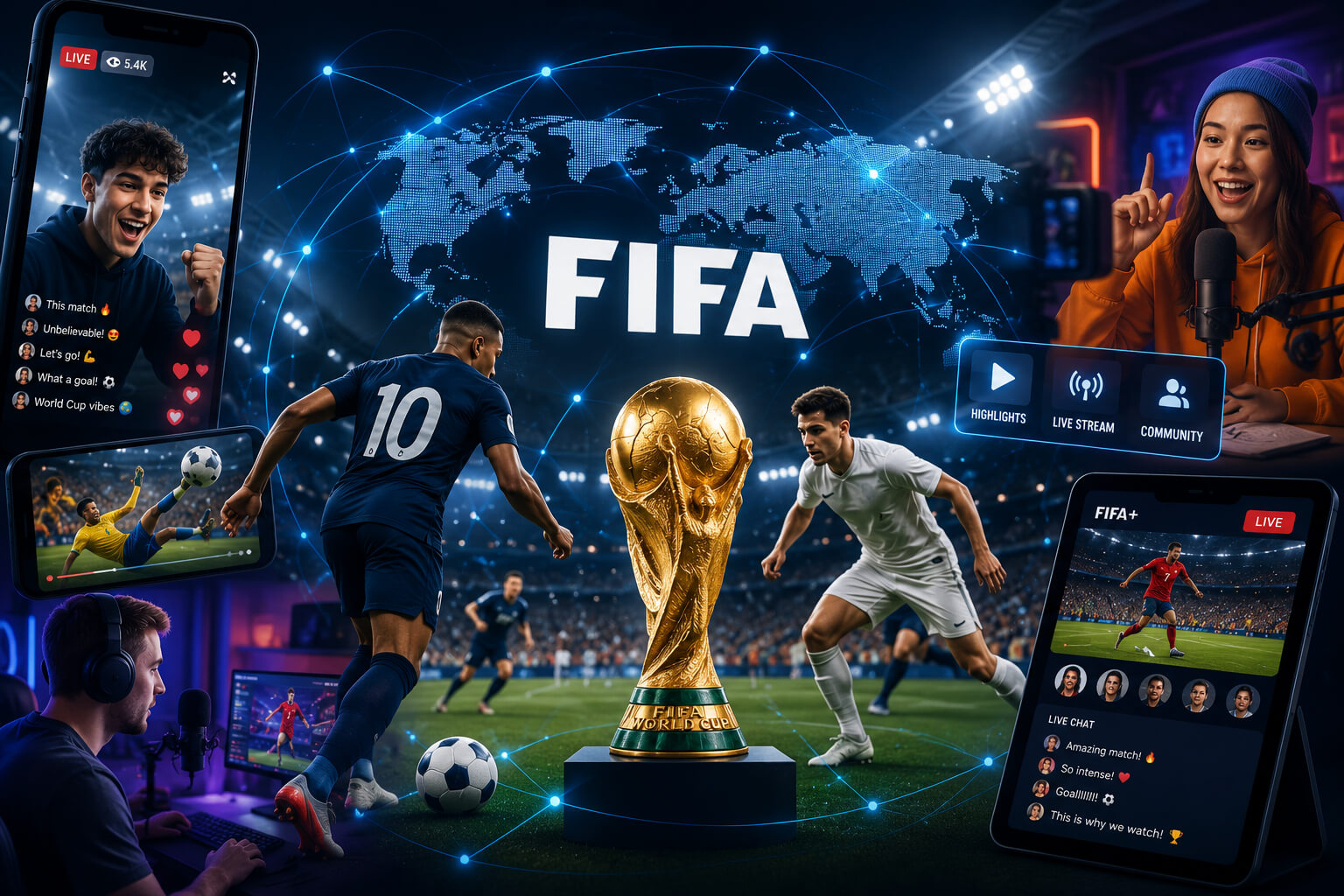
FIFA is changing the way fans experience the World Cup, and creators are now becoming a major part of the strategy. In recent years, FIFA influencers and streaming have played a huge role in bringing the tournament to a wider audience. Notably, FIFA influencers and streaming help bridge the gap between traditional coverage and interactive online experiences.
As the 2026 FIFA World Cup kicks off across the United States, Mexico, and Canada, the tournament is no longer relying only on traditional TV broadcasts. Instead, FIFA is expanding its reach through digital platforms, creator-led coverage, social media partnerships, and streaming-first experiences designed to connect with younger fans.
The shift marks a major moment for the creator economy. Influencers, streamers, and digital broadcasters are becoming part of how global sports organizations reach audiences who spend more time on YouTube, TikTok, Twitch-style platforms, and mobile apps than on traditional television. For instance, the rise of FIFA influencers and streaming is changing the landscape of sports broadcasting around the world.
FIFA’s Creator Strategy Targets Younger Audiences
FIFA’s move into influencer-led broadcasting reflects a broader change in sports media. Younger viewers are not just looking for a standard match broadcast. They want commentary, interaction, behind-the-scenes content, creator reactions, and community-driven viewing experiences.
That is where creators come in.
Instead of treating influencers as an afterthought, FIFA is giving digital creators a larger role in how World Cup content is distributed and discussed online. The goal is to make the tournament feel more social, interactive, and accessible to fans who follow sports through short-form videos, livestreams, and creator communities.
Brazil’s CazéTV Will Stream All 104 World Cup Matches
One of the biggest examples of this strategy is in Brazil, where CazéTV will stream all 104 matches of the 2026 World Cup.
CazéTV is connected to Brazilian streamer and influencer Casimiro Miguel, who has built a strong following through informal, personality-driven sports coverage. His platform previously worked with FIFA during the 2022 World Cup, streaming a selection of matches on YouTube. Clearly, CazéTV demonstrates the potential for FIFA influencers and streaming to create more accessible content for fans.
That earlier experiment helped prove that creator-led sports broadcasts could attract large digital audiences. Now, CazéTV has expanded its role significantly, becoming the only channel in Brazil with rights to every match of the tournament.
For creators and media companies, this shows how influencer-backed platforms are becoming serious competitors in live sports broadcasting.
YouTube and TikTok Enter the World Cup Viewing Experience
FIFA is also working with YouTube and TikTok to bring World Cup content to audiences in new ways.
TikTok has been selected as a preferred social video platform for the tournament, giving creators and rights holders more opportunities to share World Cup-related content. Rights-holding broadcasters will also be able to livestream parts of matches through a dedicated TikTok hub.
YouTube has also joined FIFA’s digital strategy. Under FIFA’s partnership with the platform, rights-holding broadcasters can stream limited live match action, including the opening minutes of games.
This is important because YouTube and TikTok are where many younger fans already discover sports highlights, creator reactions, player stories, and viral moments. By meeting audiences on these platforms, FIFA is making the World Cup more visible outside traditional broadcast channels.
What This Means for Influencers and Creators
The 2026 World Cup could become one of the biggest creator-driven sports events ever. Consequently, FIFA influencers and streaming are shaping new fan interactions and media models.
For influencers, the opportunity goes beyond simple match reactions. Creators can build content around live commentary, fan culture, predictions, memes, player storylines, travel content, behind-the-scenes coverage, and short-form highlights.
For brands, this creates new ways to connect with sports fans through creator partnerships. Instead of only buying traditional ad placements, brands can work with influencers who already have trusted relationships with niche communities.
This is especially valuable for reaching Gen Z and younger millennial audiences who are more likely to follow individual creators than traditional sports networks.
Sports Media Is Becoming More Social
FIFA’s digital push shows that major sports events are becoming more than broadcasts. They are becoming multi-platform entertainment ecosystems.
Fans now expect to watch, comment, share, remix, and participate in real time. A World Cup match is not just a 90-minute event anymore. It becomes a stream, a TikTok clip, a YouTube discussion, a meme, a creator reaction, and a global social media conversation.
This is why influencer-led sports coverage is growing. Creators can turn major events into community experiences, making fans feel more involved and connected.
The Future of World Cup Coverage
The 2026 World Cup may set a new standard for how global sports organizations use digital creators and streaming platforms.
Traditional TV still plays a major role, especially for full-match broadcasts. But FIFA’s growing partnerships with creator-led platforms, YouTube, TikTok, and streaming services show where the future is heading.
For the creator economy, the message is clear: influencers are no longer just promoting sports events. They are becoming part of the broadcast experience itself.
As FIFA looks to reach the next generation of fans, creators and streaming platforms are moving closer to the center of the world’s biggest sporting stage. In summary, FIFA influencers and streaming are at the heart of this evolving digital transformation.
