

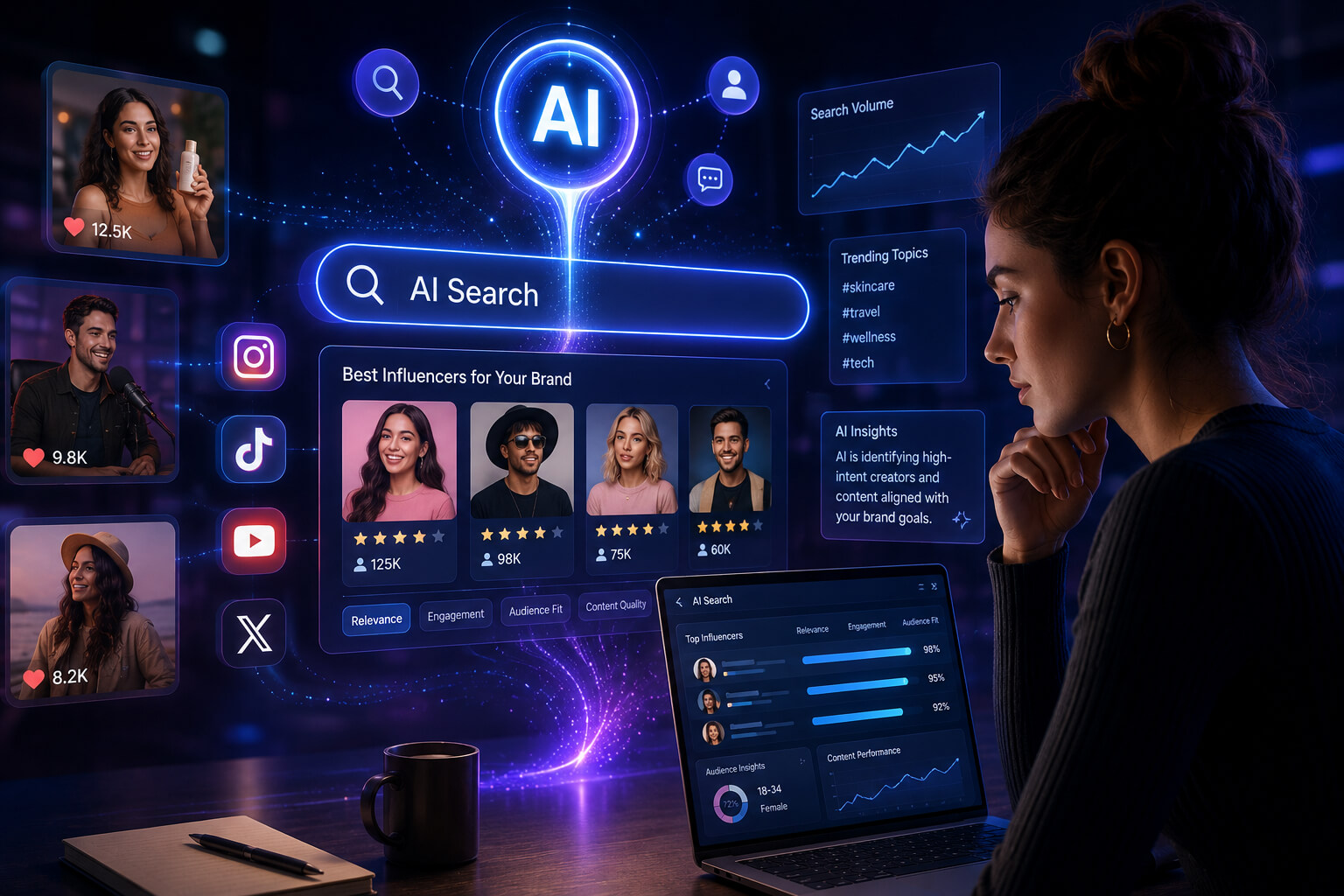
Influencer marketing is entering a new phase in 2026 as artificial intelligence changes how people discover brands, products, and trusted voices online. Instead of relying only on short-term sponsored posts, companies are moving toward deeper creator relationships that can influence both human audiences and AI-powered search systems.
The shift comes as AI search becomes a larger part of everyday online behavior. More consumers are using AI tools to ask questions, compare products, and make buying decisions. This is forcing brands to think differently about visibility. In the past, search strategy often focused on keywords, backlinks, and paid ads. Now, brands also need credible third-party voices that AI systems may recognize, summarize, and surface in responses.
AI Search Makes Influencers More Important
AI search is changing the role of influencers from content promoters into trust signals. When creators talk about a brand consistently, their content can shape how audiences understand that brand. It may also influence how AI-powered discovery platforms interpret reputation, relevance, and authority.
This gives creators a more strategic role in marketing. A single sponsored post may generate temporary attention, but long-term creator partnerships can build stronger brand recall over time. For AI-driven discovery, repeated and credible mentions from trusted voices may become more valuable than isolated campaigns.
As AI search tools continue to grow, brands are likely to prioritize influencers who can demonstrate real audience trust, not just large follower counts.
Brands Are Moving Away From One-Off Creator Deals
In 2026, more marketers are expected to focus on long-term influencer partnerships rather than scattered one-time promotions. This approach allows brands and creators to build more authentic messaging, stronger audience relationships, and more consistent content.
Long-term partnerships also give creators time to understand a brand’s products, values, and target audience. That makes the content feel less transactional and more natural. For consumers, repeated exposure to a creator’s genuine experience with a product can feel more trustworthy than a single paid mention.
This is especially important as audiences become more selective. Many users can quickly identify forced sponsorships or generic influencer ads. Brands that want to stand out will need creator partnerships that feel credible, useful, and aligned with the creator’s usual content.
Performance Is Becoming the New Priority
The influencer marketing industry is also becoming more performance-driven. Brands are no longer measuring success only through likes, impressions, or follower counts. They want proof that creators can influence real customers and produce measurable business results.
This means marketers may focus more on metrics such as conversions, website traffic, lead quality, search visibility, audience engagement, and long-term brand lift. Creators who can show that their content drives meaningful action will likely become more valuable to brands.
At the same time, creators who rely only on audience size may face more pressure. As AI tools make creator discovery easier, brands can find niche influencers with highly relevant audiences. This could benefit smaller creators who have strong trust and expertise in a specific field.
AI Tools Are Changing Influencer Discovery
AI is not only changing how consumers search. It is also changing how brands find creators.
AI-powered influencer search tools can help marketers identify creators based on content style, audience relevance, visual similarity, niche expertise, and brand alignment. This makes influencer discovery more precise than traditional searches based only on follower count or category.
For example, a brand looking for creators in sustainable fashion, AI productivity tools, fintech education, or health technology can use AI-powered search to find influencers who already produce relevant content. This reduces the time needed to identify potential partners and helps brands avoid mismatched collaborations.
As creator markets become more crowded, better discovery tools may become essential for finding high-quality influencers before competitors do.
Creator Partnerships Are Becoming More Like Media Partnerships
Another major trend is that creators are beginning to operate more like independent media companies. Many influencers are expanding beyond social feeds into newsletters, podcasts, communities, events, courses, and long-form video.
This makes creator partnerships more valuable because brands can reach audiences across multiple formats. Instead of buying one Instagram post or TikTok video, a company may partner with a creator across a full campaign that includes educational content, product demos, live discussions, and ongoing audience engagement.
In B2B marketing, this trend is especially important. Professionals often trust individual experts more than corporate brand accounts. A respected creator in AI, cybersecurity, finance, SaaS, or marketing can influence buying decisions by explaining complex products in a clear and relatable way.
What This Means for Brands in 2026
For brands, the rise of AI search influencer marketing means creator strategy needs to become more intentional. Companies should focus on fewer but stronger partnerships with creators who have credibility, audience trust, and subject-matter relevance.
Successful brands will likely invest more time in creator vetting, relationship building, campaign planning, and performance tracking. They will also need clearer agreements that define expectations, content rights, disclosure rules, messaging guidelines, and long-term goals.
The biggest opportunity is trust. As AI search changes how people discover information, brands that are talked about consistently by credible creators may have an advantage. Influencer marketing is no longer just about social media visibility. It is becoming part of search, reputation, and digital authority.
The Future of Influencer Marketing Is AI-Driven
Influencer marketing in 2026 is becoming more strategic, more measurable, and more connected to AI-powered discovery. Brands are shifting away from short-term sponsored posts and moving toward long-term partnerships that can build trust across both human audiences and AI search systems.
Creators who can prove real influence will become more valuable. Brands that build authentic relationships with the right creators will be better positioned for the future of search and digital marketing.
As AI continues to reshape online discovery, influencer marketing may become one of the most important ways brands earn visibility, credibility, and consumer trust.
