

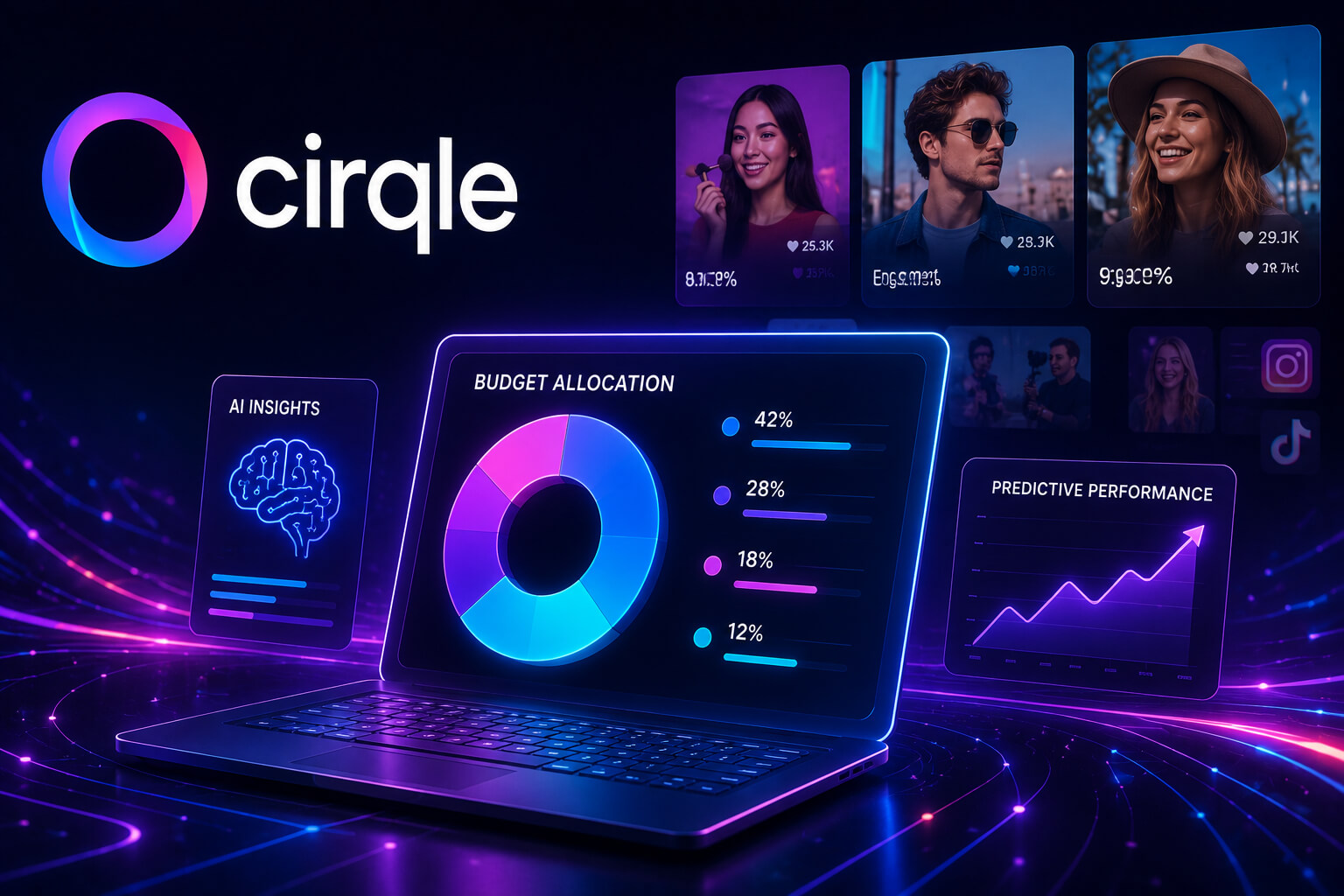
Creator marketing automation is changing the way brands approach visible metrics. Creator marketing has always had a strange obsession with the visible stuff. Follower counts. Big names. Long creator lists. Dashboards full of numbers that look useful until someone asks the awkward question: did this actually convert?
The Cirqle is now pushing a different idea. The company is betting that the real future of creator marketing automation is not just removing busywork. It is helping brands decide where the next dollar of creator budget should go.
The company opened a private beta this spring for an agentic platform designed to run influencer campaigns end to end, including creator sourcing, brief writing, rate negotiation, campaign planning, performance forecasting, and budget reallocation. In late May, The Cirqle also launched The Cirqle MCP, which lets brands use agents through natural language prompts inside tools such as Claude, ChatGPT, Gemini, and Copilot.
Creator Marketing Automation Moves Beyond Admin Work
For years, automation in influencer marketing mostly meant making annoying tasks a little faster. Find creators. Build lists. Send messages. Compare rates. Export another spreadsheet. Repeat until everyone is tired.
The Cirqle is arguing that this is not the real prize.
According to Chief Strategy Officer Ernst Rustenhoven, the bigger opportunity is automating the decision layer: which creator deserves budget, which content should get paid amplification, and which campaign move is likely to produce the strongest return. That is a much more serious shift than simply making influencer marketers faster at admin work.
It also changes what brands should expect from creator marketing software. A platform is no longer just a place to store creator profiles and campaign notes. It starts acting more like a planning engine, one that can read campaign context, compare historical performance, and suggest what to do next.
Follower Count Is Losing Its Grip
The Cirqle’s argument lands hardest on one of the oldest habits in influencer marketing: using follower count as a shortcut for value.
Across 350,000 creators and posts in its network, The Cirqle says the relationship between follower count and return is close to zero. The company also points to published client results, including Secret Sales reaching 16.8x return on ad spend, Lookfantastic reaching 11x, and About You cutting cost per acquisition by 49%.
That does not mean reach is useless. It means reach alone is lazy math.
A creator with a massive audience can still miss the product completely. A smaller creator can quietly move more buyers because the audience actually fits. This is where creator marketing has been heading for a while, but the industry still keeps sliding back to the easiest number on the screen.
Follower count is visible. It is quick to explain. It makes a campaign deck look clean.
Conversion is messier. But it is the number brands eventually care about.
Fit Is Becoming the Real Performance Signal
The Cirqle’s model puts more weight on “fit.” That means the creator matches the brand, the creator’s audience matches the product, and the content actually lands with that audience.
Rustenhoven points to two early signals before a campaign starts: a reach rate above 20% and an engagement rate above 3%. If both are present, he argues, the creator is usually more likely to convert, regardless of follower count. The company also says leading brands acquire customers at around 27% of their average order value, while weaker performers pay far more for the same outcome.
This is the part brands may not love hearing. Some influencer campaigns do not fail because the creator was bad. They fail because the selection logic was bad.
The wrong audience. A creative format that does not fit. Pricing that misses the mark. A weak signal used as proof.
Automation can help, but only if it is trained around performance instead of vanity metrics.
Brands Can Now Query Campaign Data Like a Conversation
The Cirqle MCP is built around Model Context Protocol, an open standard that allows brands to connect campaign data to AI clients they already use. After authentication through an existing Cirqle login, teams can ask questions and trigger workflows through natural language prompts.
A marketer could ask for creator recommendations based on a specific budget and return target. The system can then cross-reference creator profiles, campaign briefs, historical performance, and rate history to return recommendations quickly. The platform also connects with data sources such as Meta and TikTok ads managers, Shopify, Northbeam, and Impact.com, according to The Cirqle.
That matters because influencer marketing has often lived across too many disconnected tools.
One platform handles discovery. Another manages contracts. A separate tool runs ads. Attribution lives somewhere else. Meanwhile, a spreadsheet holds the whole thing together with panic and color-coded tabs.
If agentic tools can pull those layers into one working system, creator marketing becomes less about chasing updates and more about making better calls.
Human Approval Still Matters
The Cirqle is not presenting this as a fully hands-off machine. That part is important.
According to the company, three decisions still require human approval: spending above a set threshold, final creator selection on major commitments, and content approval. Human-in-the-loop review also matters heavily for regulated categories such as healthcare, where compliance cannot be treated casually.
That is probably the right limit.
Letting an agent shortlist creators is one thing. Letting it spend heavily, approve brand-facing content, or finalize contracts without review is something else entirely. Creator marketing still depends on taste, risk judgment, brand safety, and cultural timing. Those are not always clean data problems.
The smarter version of automation is not “let the AI do everything.”
It is: let the system handle the repetitive work, expose better options, and force humans to spend their time on the decisions that actually matter.
Bad Attribution Can Make Automation Dangerous
There is also a warning inside The Cirqle’s pitch. If the data is wrong, automation does not magically fix it. It can make the mistake faster.
Rustenhoven argues that brands need to fix attribution before handing too much control to agents. If a system is told to optimize around flawed performance data, it will push money toward whatever the bad data calls a winner. That is not efficiency. That is expensive confusion at machine speed.
This may be the least glamorous part of the story, but maybe the most useful one.
Before brands chase agentic creator marketing, they need to know whether their measurement stack is clean enough to support it. Otherwise, automation just becomes a more confident way to waste budget.
The Influencer Marketing Job Is Changing
The shift does not necessarily remove the marketer. It changes the job.
Instead of manually building every shortlist, writing every brief from scratch, and digging through old campaign results, marketers become the people designing the system. They set limits. Success must be clearly defined. Leaders decide what the agent can and cannot do. Human approval still matters in moments that require judgment.
Mat Jenkins, The Cirqle’s Director of Frontend Engineering, describes the shift as moving from doing the work to designing the thing that does the work and signing off on it.
That is a different skill set. Less spreadsheet endurance. More strategic control.
And for creators, this could also change who gets paid. If brands move away from follower count and toward conversion-based performance, smaller creators with highly aligned audiences may gain more leverage. Not because they look bigger, but because they work better.
Creator Marketing Is Getting More Performance-Driven
The bigger story here is not just The Cirqle launching another AI tool. The bigger story is that creator marketing is becoming more performance-driven, more automated, and less forgiving of vague campaign logic.
Brands that still treat influencer campaigns as a manual process built around follower count may start falling behind brands that can test, learn, reallocate, and optimize faster. The gap may not show up in one campaign. It shows up after ten.
The Cirqle is betting that the future belongs to platforms that own useful creator data, connect it to performance signals, and let marketers ask better questions without digging through five different systems.
That sounds less glamorous than “AI replaces influencer marketing.”
But it is probably closer to what is actually happening.
