
Brands spend plenty of time finding creators. They negotiate deals, shape the campaign, approve videos and make sure everything fits the brief. Then the content goes live and something strange happens: much of the distribution gets handed back to the platform algorithm.
Precisify thinks that part of creator marketing needs more attention.
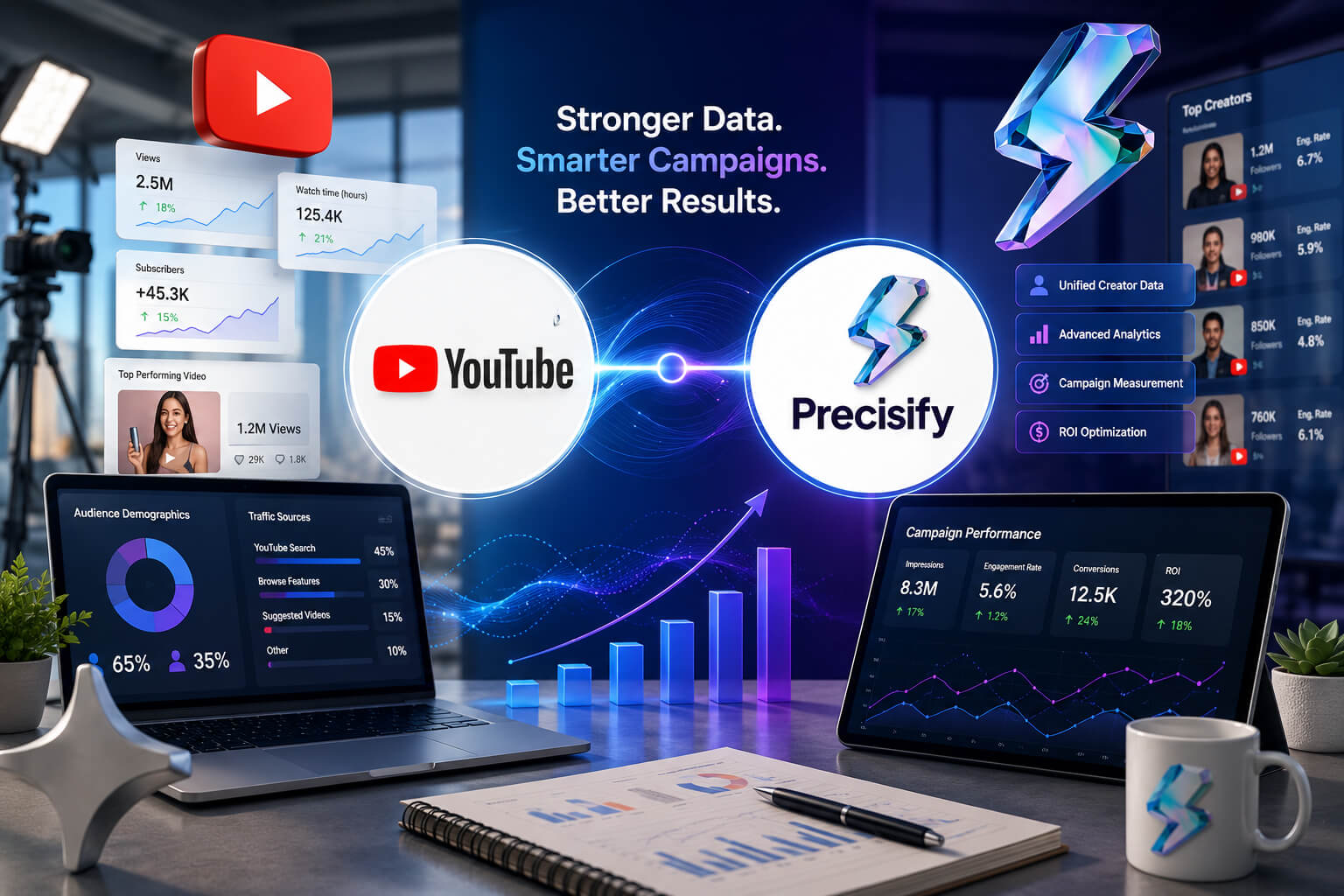
The London-based media intelligence company has joined the YouTube Creator Partnerships API, giving it access to verified first-party audience information from creators who opt into data sharing. Precisify plans to combine that information with its existing media intelligence, targeting and measurement technology.
The idea is straightforward. Creator marketing shouldn’t just be about finding someone with the right audience on paper. Brands should also understand who actually watches the content, deliberately extend its reach and measure whether those viewers eventually take action.
YouTube Algorithms Are Changing Who Sees Creator Content
Follower counts don’t tell the whole story anymore. Recommendation algorithms increasingly push videos beyond a creator’s existing community, which can be great for discovery but makes campaign reach harder for advertisers to predict.
Precisify co-founder and co-CEO Christian Dankl told Net Influencer that non-follower audiences account for approximately 80% of total reach on YouTube and around 90% on TikTok. His point is that a brand can carefully select a creator based on audience fit, only for the platform’s recommendation system to determine much of the actual audience once the content goes live.
Traditional media buying works differently. Advertisers can define an audience, estimate reach and control how they distribute their budget. Organic creator campaigns offer much less certainty. Precisify sees paid amplification as a way to bring some of that control back into creator marketing.
YouTube Gives Precisify Access to First-Party Creator Data
Joining the Creator Partnerships API gives Precisify access to information that isn’t available through YouTube’s standard public API. That includes verified first-party audience signals from creators participating in the program.
This matters because creator campaigns often depend on estimated demographics, public channel information or information supplied by creators themselves. The Creator Partnerships API can provide signals based on actual Google user behavior, including audience interests and affinities.
For brands, that creates another way to check whether a creator actually reaches the people they want. A channel might look perfect because of its subject matter, subscriber count or public profile, while the underlying audience data could paint a different picture.
Better audience information makes creator selection less dependent on assumptions. It also brings influencer campaigns closer to the way advertisers already plan other digital media investments.
Precisify Can Search Creator Videos for Brand Mentions
Audience information isn’t the only interesting part of the integration. Precisify also gains access to audio transcripts from the video libraries of participating creators.
That gives brands another route into creator discovery. Instead of simply searching broad categories such as beauty, gaming, fitness or technology, marketers can look for creators who have previously mentioned their company, competitors or relevant products.
That history can reveal connections that follower counts won’t show. A creator may already discuss a particular product category regularly without having an obvious profile that would place them on a traditional influencer shortlist.
It could also help brands find creators with a more natural connection to a campaign. Someone who has independently discussed a product category several times may make more sense than a creator selected purely because their demographic profile looks right.
Clickable YouTube Shorts Could Push Creator Campaigns Toward Sales
Precisify is also highlighting a commerce-focused capability involving YouTube Shorts. According to Dankl, the API integration allows the company to make Shorts created through brand collaborations clickable, with links associated with the video and its description.
That might sound like a small technical change, but it addresses a familiar creator marketing problem. Short-form video can generate enormous reach while leaving brands with a less obvious path between someone watching the content and actually buying something.
Clickable creator content shortens that journey. A viewer can encounter a recommendation and move toward the advertiser’s destination without having to search separately for the product or brand.
For performance marketers, this makes creator-led Shorts easier to treat as more than an awareness format. The content can sit closer to consideration and conversion, particularly when brands combine it with deliberate paid distribution.
Precisify Wants Brands to Move Beyond Organic-Only Creator Campaigns
Precisify’s argument goes against one of the creator industry’s more established habits. Brands often put enormous effort into creator selection and content production but rely heavily on organic distribution after publication.
Dankl argues that advertisers leave potential returns behind when they do this. If an advertiser already paid for the partnership and created a strong piece of content, there is little reason to leave its entire audience distribution to an algorithm.
Precisify wants brands to treat successful creator content more like a conventional media asset. Paid amplification can extend that content toward carefully selected audiences rather than simply waiting to see where YouTube recommends it.
The company is pushing what it describes as a full-funnel approach, bringing creator selection, content, distribution and measurement closer together. That could become increasingly important as influencer marketing budgets get large enough to face the same scrutiny as other advertising channels.
Creator Marketing Measurement Is Moving Past Likes and Views
Creator marketing has never suffered from a shortage of metrics. Views, likes, comments, engagement rates, clicks and follower growth are easy enough to collect. Connecting those numbers directly to sales remains considerably harder.
Precisify says its technology can measure creator campaigns against offline retail performance. Its approach uses historical sales information and geographic testing to estimate how much additional sales activity a campaign generates.
The company typically works with historical sales information at SKU and ZIP-code level, according to Net Influencer. It then models expected sales, runs advertising in selected markets and compares those results against similar markets where the campaign wasn’t activated. The difference helps estimate the sales lift attributable to the advertising.
That moves the conversation away from whether people watched a sponsored video and toward whether the campaign changed buying behavior. For brands selling through major retailers, that distinction can matter far more than another engagement-rate report.
Earlier Precisify Campaigns Show the Measurement Approach
Precisify points to earlier campaigns conducted before its Creator Partnerships API integration as examples of what its measurement technology can track.
One campaign involving All Star Innovations and creator group Dude Perfect used $125,000 in advertising spend. According to figures supplied by Precisify and reported by Net Influencer, the campaign delivered an 11.4x return on ad spend and a 24.2% retail sales lift across Walmart, Target and Amazon.
Precisify also reported results from an ASICS campaign using its contextual targeting technology. The campaign recorded a 52.28% video view rate, generated 78,202 hours of total watch time and produced a 17.66% relative lift in brand awareness.
Those are company-reported results rather than universal benchmarks for creator campaigns. Still, they show the type of evidence Precisify wants advertisers to consider when deciding whether influencer marketing deserves a larger piece of their media budget.
Creator Marketing Is Becoming a Bigger Advertising Business
The push for stronger measurement arrives as more advertising money enters the creator economy. Net Influencer reports that U.S. creator marketing and influencer sponsorship spending reached around $10 billion annually in 2025, citing eMarketer data. The overall U.S. advertising market, by comparison, stood at close to $300 billion.
Dankl argues that creator marketing is growing around five times faster than the wider U.S. media industry. If that growth continues, influencer campaigns will increasingly have to compete for budgets alongside established digital advertising channels.
That changes expectations. Smaller experimental creator campaigns can sometimes justify themselves through reach, engagement and cultural relevance. Larger recurring investments usually face tougher questions from marketing teams and finance departments.
Brands want to know who saw the advertising, whether those people matched the intended audience and what happened afterward. First-party creator data combined with paid-media measurement gives platforms such as Precisify a chance to answer those questions more convincingly.
Influencer Marketing Is Starting to Behave More Like Media Buying
Precisify’s YouTube partnership points to a broader change happening across the creator economy. Influencer marketing is gradually picking up tools and practices that advertisers already expect from established media channels.
Creator choice still matters. So does personality, authenticity and the creative relationship between a brand and an influencer. None of that disappears because more data enters the process.
What changes is everything surrounding the content.
Brands can examine first-party audience signals before committing more money. They can identify creators who already discuss relevant products. They can amplify successful videos toward defined audiences. They can also look beyond social engagement and investigate whether a campaign generated measurable commercial results.
That makes creator marketing easier to repeat. Instead of treating every partnership as a standalone experiment, advertisers can begin building a system around what worked and why.
Precisify Pushes for More Accountable Influencer Marketing
Precisify plans to bring this argument to the IAB Creator Fronts in New York on September 15, 2026. Dankl is expected to discuss what the company describes as a new era of accountable influencer marketing. Net Influencer also reports that a launch event connected with the API announcement is planned at a Google office later in September.
The creator industry doesn’t need much more evidence that people watch influencers. The harder challenge now is proving what that attention does for advertisers.
Precisify’s integration with the YouTube Creator Partnerships API puts first-party audience intelligence, creator discovery, paid amplification and sales measurement closer together. If brands start demanding that level of accountability more widely, the impact could stretch well beyond one platform or one technology company.
Creator marketing is still built around people and content. But behind the scenes, it is starting to look a lot more like serious media buying.
Sources
Net Influencer — Precisify Joins YouTube’s Creator Partnerships API to Bring Media-Buy Discipline to Influencer Marketing
https://www.netinfluencer.com/precisify-joins-youtube-creator-partnerships-api-to-bring-media-buy-discipline-to-influencer-marketing/
Precisify — Official Website
https://www.precisify.com/
YouTube — Creator Partnerships
https://support.google.com/youtube/
