

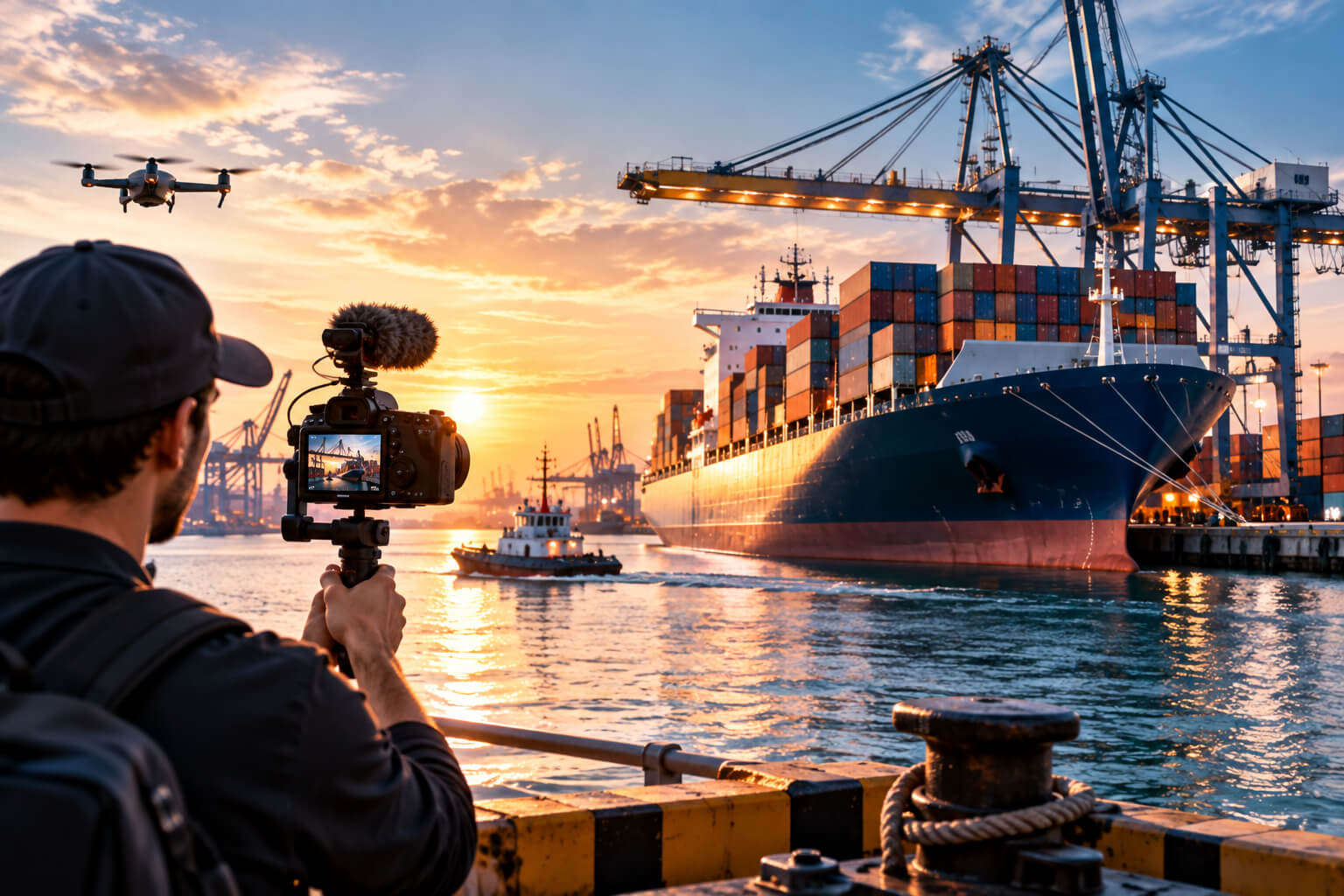
The maritime industry has plenty of stories. One way to help these stories reach a wider audience is through maritime influencer marketing. The problem is that most of them rarely reach people outside the industry.
That is starting to change as creator marketing moves into specialised sectors. Shipping companies, maritime technology firms, cruise operators and other businesses connected to the ocean have an opportunity to work with creators who can show audiences what life at sea, on the bridge or inside an engine room actually looks like.
For an industry that has traditionally relied on corporate announcements, trade publications and industry events, creator partnerships offer a different way to tell those stories.
Maritime Influencer Marketing Opens a New Door for the Industry
Influencer marketing is no longer confined to fashion, beauty and lifestyle brands. Creator partnerships are increasingly being used by specialist and B2B businesses that want to reach tightly defined communities.
The opportunity for maritime companies is particularly interesting because the sector already has something that many brands struggle to create: access. Ships, ports, engine rooms, navigation systems, offshore operations and life at sea are naturally visual subjects. A creator who can take an audience into those environments can make maritime subjects understandable without turning every piece of content into a corporate presentation.
The original IndexBox analysis highlights this gap between the maritime sector and the wider creator economy, arguing that shipping and marine businesses have significant room to use influencer partnerships to improve visibility and engagement.
Maritime Creators Do Not Need Millions of Followers
Follower numbers can look impressive on a marketing report, but they do not automatically translate into useful audiences.
For maritime businesses, a creator with a smaller audience made up of seafarers, shipping enthusiasts, engineers, students or marine professionals may offer much greater relevance than a general lifestyle influencer with hundreds of thousands of followers.
That makes micro-creators particularly interesting. Their audiences are often built around a specific subject rather than broad entertainment. Someone producing regular content about ships, maritime careers or marine engineering may already have the exact people a shipping company wants to reach.
The relationship between creator and audience can also feel more personal. That matters when the campaign involves technical subjects or career decisions rather than an impulse purchase.
Captains and Crew Members Could Become the Industry’s Strongest Creators
Maritime companies do not necessarily have to look outside their own organisations to find people who can create compelling content.
Captains, engineers, cadets, surveyors and other maritime professionals already have experiences that most audiences will never see firsthand. Their daily routines, challenges and observations can provide a natural source of content.
Captain Kate McCue is one of the clearest examples of how a maritime professional can build a large online following by sharing life at sea. Her social content gives viewers access to the working environment of a cruise ship while putting a recognisable personality at the centre of the story.
For maritime employers, that model could also have recruitment value. Younger audiences considering careers at sea may respond differently to an employee explaining the profession than they would to a conventional recruitment advertisement.
Real Access Makes Maritime Creator Content More Interesting
The strongest creator campaigns are unlikely to come from simply asking someone to hold a product and read a script.
Maritime businesses have an advantage here because their operating environments can become part of the content itself.
A creator could tour a vessel with its crew, document a port operation, explain how navigation technology works or follow an engineer during a maintenance process. A maritime technology company could demonstrate its system under real operating conditions rather than relying on a studio presentation.
That kind of access gives the audience a reason to watch.
It also gives creators material they can interpret in their own style, which is one of the reasons creator content often feels different from traditional advertising.
YouTube, TikTok and Instagram Give Maritime Stories More Reach
Maritime companies have traditionally concentrated much of their digital communication around corporate websites, LinkedIn, trade media and industry events. Those channels remain important, particularly for B2B audiences, but they are not the only places where maritime stories can find an audience.
YouTube can support longer vessel tours, interviews and technical explainers. TikTok can turn a short moment from life at sea into a highly shareable piece of content. Instagram can combine short-form video with photography and visual storytelling.
The point is not to put every maritime campaign on every platform. The better approach is to match the creator and format with the audience the company wants to reach.
Creator Partnerships Can Support Maritime Recruitment
The maritime sector faces a communication challenge when it comes to attracting the next generation of workers. Many people outside the industry have little understanding of what modern maritime careers actually involve.
Creator content can make those careers more visible.
A cadet documenting their training journey could provide a realistic picture of entering the profession. An engineer could explain what happens during a typical working day. A captain could discuss the responsibilities involved in operating a large vessel.
That content does not need to feel like recruitment advertising. In fact, it may work better when it does not. Showing the reality of the job can give prospective workers a clearer idea of what they are considering.
The Campaign Should Start With the Objective
Finding an influencer and then trying to build a campaign around that person can create unnecessary problems.
Maritime businesses should first decide what they want the partnership to achieve. Recruitment, brand awareness, product education, event promotion and customer acquisition require different approaches.
A marine equipment manufacturer launching a new technology might need a technically knowledgeable creator who can demonstrate the product. A shipping company looking to attract cadets may benefit from someone closer to the age and interests of its target recruits.
The creator should fit the objective, not the other way around.
Authenticity Matters More When the Subject Is Technical
Maritime content can become overly polished very quickly.
Companies understandably need rules around safety, confidentiality, vessel security, customer information and operational procedures. Those restrictions are necessary. But controlling every word can remove the personality that makes creator content work.
The IndexBox article cites Chloe Buchanan of The MTM Agency, who argues that excessive scripting can undermine the authenticity brands are trying to achieve through influencer partnerships.
That is especially relevant in maritime marketing. Audiences can tell when someone is speaking naturally about something they know compared with someone simply repeating corporate messaging.
Give creators clear boundaries. Then give them enough freedom to sound like themselves.
Specialist Maritime Creator Networks Are Emerging
The idea of maritime creator marketing is already moving beyond theory. Specialist companies are beginning to connect maritime businesses with creators and established industry audiences.
TideBridge Media, for example, promotes creator and media services aimed specifically at the maritime sector. The company says its media properties reach a community of more than 500,000 maritime professionals.
Marine businesses are also developing direct relationships with creators. SeaAir, for instance, promotes partnerships with YouTube creators, boating channels and marine influencers to demonstrate products in real-world settings.
Those developments point to a wider change in how specialist industries approach digital marketing. Instead of relying exclusively on large media outlets, companies can increasingly build relationships with smaller communities that already care about their subject.
Maritime Companies Have More Stories Than They Think
A container ship crossing an ocean might not sound like obvious social media material.
Show the bridge, however, and the story changes.
Show how the crew manages a voyage. Explain what happens inside the engine room. Follow a cadet through training. Demonstrate the technology keeping a vessel operating. Suddenly, an industry that can appear distant becomes much easier to understand.
That is the real opportunity behind maritime influencer marketing.
The sector does not need to become another lifestyle category. It simply needs to recognise that some of its most interesting storytellers may already be working on ships, in ports, in engineering teams and across the wider maritime ecosystem.
Creator partnerships can give those people a much larger audience.
Sources
- IndexBox — Maritime Influencer Marketing: Why the Industry Should Embrace Creator Partnerships
https://www.indexbox.io/blog/maritime-influencer-marketing-why-the-industry-should-embrace-creator-partnerships/ - The Drum — The UK’s Influencer Surge: Bigger Budgets, Smarter Strategies, Stronger Creator Ecosystems
https://www.thedrum.com/industry-insight/the-uk-s-influencer-surge-bigger-budgets-smarter-strategies-stronger-creator-ecosystems - TideBridge Media — Maritime Creator and Media Services
https://tidebridgemedia.com/services - SeaAir — Marine Creator Partnerships
https://seaair.com/pages/influencers
