

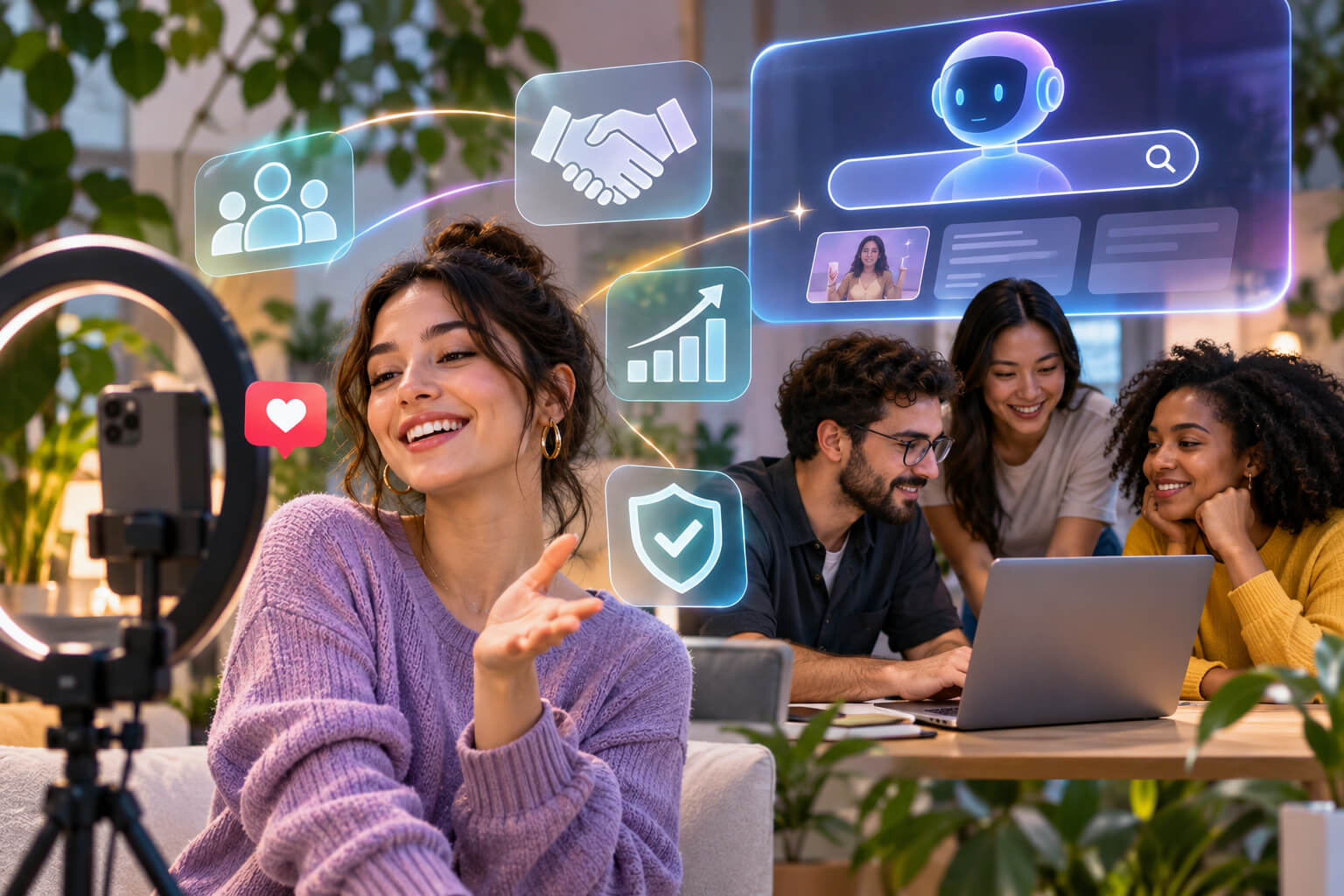
Influencer marketing is entering a period where having millions of followers may no longer be enough to attract brands. Companies are becoming more selective about the creators they work with, while audiences are paying closer attention to whether online recommendations feel genuine.
A new Influencer Marketing Trend Report 2027 from German influencer marketing agency Reachbird, a subsidiary of adesso SE, highlights how trust, long-term creator relationships and artificial intelligence are changing the industry.
Published on November 10, 2026, the ninth edition of the report brings together insights from 17 industry experts under the theme Gallery of Influence. It identifies five major trends expected to shape influencer marketing strategies in 2027.
The findings suggest that brands are moving beyond traditional metrics such as follower counts and impressions. Instead, they are placing greater value on creators who understand their communities, produce meaningful content and maintain credibility.
Artificial intelligence is also changing how brands approach visibility. As AI-powered search tools become more common, creator content could play a larger role in how businesses appear in digital recommendations.
Trust and Authenticity Become the Foundation of Influencer Marketing in 2027
Trust is becoming one of the most valuable assets in influencer marketing, particularly as AI-generated content continues to spread across social media platforms. Reachbird’s report suggests that audiences are increasingly drawn to creators who communicate genuine opinions, demonstrate expertise and maintain transparent relationships with their followers.
The growing volume of automated content has made authenticity harder to establish. Consumers encounter polished promotional videos, synthetic personalities and AI-generated recommendations every day, making it more difficult to distinguish personal experiences from commercial messaging. For brands, this creates a challenge that cannot be solved simply by increasing content production.
Research from Gartner supports this shift. A September 2026 survey found that 35% of US consumers relied less on influencers for shopping information because of concerns surrounding AI-generated content. Meanwhile, 43% said they were increasingly turning to real people for recommendations.
These findings suggest that creators who build credibility through consistent communication and honest product experiences may become more attractive to brands. Audiences are not necessarily rejecting influencer marketing, but they appear to be placing greater importance on whether the person making a recommendation deserves their confidence.
Brands Prioritize Long-Term Creator Partnerships Over One-Off Campaigns
The traditional approach of hiring influencers for individual sponsored posts is gradually giving way to more structured relationships. Reachbird expects brands to invest more heavily in long-term creator partnerships in 2027, focusing on shared objectives, audience relevance and consistent collaboration rather than short promotional campaigns.
Long-term partnerships allow creators to develop a deeper understanding of the products and businesses they represent. Instead of receiving a campaign brief and publishing a single advertisement, creators can participate in developing content strategies, shaping brand messages and building recurring relationships with audiences.
This approach can also make promotional content feel more natural. When followers repeatedly see a creator using or discussing a product over time, the partnership may appear more credible than an isolated sponsored recommendation. However, transparency remains essential, particularly when creators receive compensation or other benefits from brands.
Research from Boston Consulting Group has similarly highlighted the importance of sustained creator relationships. Its 2026 findings suggest that leading creator marketing programs increasingly treat creators as strategic partners rather than temporary advertising channels.
For businesses, the shift requires more careful creator selection. A smaller number of relevant partnerships may deliver stronger results than working with numerous influencers who have limited connections to the brand’s target audience.
Niche Influencers Gain Importance as Brands Focus on Relevant Communities
Reachbird’s report identifies niche communities as another major influencer marketing trend for 2027. Brands are recognizing that audience size alone does not determine whether a creator can influence purchasing decisions or generate meaningful engagement.
Creators who focus on specific interests often develop stronger relationships with their followers because their content addresses clearly defined needs. Technology reviewers, fitness educators, financial commentators and sustainability-focused creators can attract audiences who actively seek information within those subjects.
For businesses, these communities offer opportunities to reach consumers with a genuine interest in particular products or services. A specialized creator with a modest following may be more relevant to a brand than a general entertainment personality whose audience spans unrelated interests.
The growing influence of niche creators also reflects changes in social media discovery. Recommendation algorithms increasingly distribute content according to user interests and engagement patterns, allowing specialized accounts to reach people beyond their existing follower base.
Sprout Social’s 2026 influencer marketing research found that only 17% of surveyed consumers checked a creator’s follower count before deciding whether to engage. The finding reinforces the idea that credibility, content quality and relevance can matter more than audience size.
For brands planning campaigns in 2027, identifying the right community may become more important than securing the largest possible reach.
Long-Form Content and Educational Storytelling Attract Greater Attention
Short-form video continues to dominate social media, but Reachbird expects more brands and creators to recognize the value of longer, more informative content. The report highlights educational entertainment, meaningful storytelling and shareable content as formats likely to gain importance in 2027.
Audiences are exposed to an enormous volume of short videos every day, many of which disappear from attention almost immediately. While these clips can generate views, they do not always provide enough information to build lasting interest in a product, service or creator.
Longer content offers opportunities to explain complex subjects, demonstrate products and develop stories that audiences can follow over time. Tutorials, detailed reviews, interviews and educational videos can provide practical value beyond the initial viewing experience.
For creators, this creates room to establish expertise rather than depending entirely on viral trends. A technology creator who explains how a product works, for example, may build greater credibility than someone who simply promotes its features in a brief sponsored clip.
Brands can also benefit from content that remains useful after a campaign ends. Educational material may continue attracting viewers through search engines, social media recommendations and repeated sharing.
The challenge is keeping audiences interested. Longer videos are not automatically more effective, and creators still need to deliver information in engaging ways.
AI-Powered Search Changes How Brands and Creators Build Visibility
Artificial intelligence is creating new challenges for brand discovery as consumers increasingly use conversational search tools to find information, compare products and explore recommendations. Reachbird’s report suggests that AI-driven visibility could become an important consideration for influencer marketing strategies in 2027.
Traditional search optimization has largely focused on helping websites appear in search engine results. AI-powered search experiences introduce another layer by generating answers from information gathered across multiple sources.
This development could increase the value of credible creator content, expert commentary and detailed product information. Brands may need to consider how their products and expertise are represented across the wider digital environment, not just on their websites or social media profiles.
A creator who consistently publishes accurate tutorials, thoughtful reviews or specialized industry commentary may contribute to a brand’s online authority. Such content could also provide useful information for systems that retrieve and summarize material from the web.
However, visibility within AI-generated answers is not guaranteed. Different AI search systems use their own methods to select and present information, and brands cannot assume that influencer partnerships will automatically improve their appearance in those responses.
The broader implication is that creator marketing, search optimization and digital public relations may become more closely connected as businesses adapt to changing discovery habits.
AI Agents Transform Influencer Marketing Campaign Management
Artificial intelligence is also changing the operational side of influencer marketing. Reachbird identifies AI agents and automated workflows as emerging tools that could help businesses manage creator discovery, campaign planning, content production and performance analysis.
Influencer marketing often involves substantial administrative work, particularly when brands collaborate with multiple creators across different platforms. Marketing teams must evaluate potential partners, negotiate agreements, coordinate content schedules and monitor campaign results.
AI-powered tools can assist with several of these processes by analyzing audience information, identifying relevant creators and organizing campaign data. More advanced systems may eventually handle connected tasks with less manual intervention.
For agencies and brands, this could reduce time spent on repetitive work and allow teams to focus more attention on strategy and creative development.
Still, automation does not eliminate the need for human judgment. An AI system may identify creators whose audiences match a brand’s target market, but that does not necessarily mean those creators are suitable partners.
Credibility, communication style and audience relationships remain difficult to evaluate through numerical data alone. The most effective use of AI may involve supporting human decision-making rather than attempting to replace it entirely.
Influencer Marketing Performance Moves Beyond Followers and Engagement
As influencer marketing budgets increase, brands are placing greater pressure on campaigns to demonstrate measurable business value. Reachbird’s findings suggest that traditional performance indicators such as follower counts, impressions and likes are becoming less useful when evaluated without additional context.
A campaign that generates millions of views may appear successful, but those numbers reveal little about whether viewers developed stronger interest in the brand or made purchasing decisions. Smaller campaigns targeting highly relevant audiences can sometimes produce more meaningful results.
This is encouraging businesses to examine a broader range of outcomes, including customer engagement, qualified leads, conversions and long-term brand recognition.
Boston Consulting Group’s 2026 research estimated that creator marketing had become a global industry worth more than $30 billion. Despite that growth, the firm found that only 15% of surveyed marketers qualified as high performers in creator marketing.
The gap suggests that many businesses are still developing effective ways to connect creator activity with commercial performance.
For marketers preparing their 2027 strategies, success may increasingly depend on establishing clear campaign objectives before selecting creators or deciding which platforms to use.
What Influencer Marketing Trends 2027 Mean for Brands and Content Creators
The developments highlighted by Reachbird suggest that influencer marketing is becoming more sophisticated, but also more demanding. Brands are expected to make better decisions about who represents them, how campaigns are developed and what results those partnerships should deliver.
For creators, the shift creates opportunities to build careers around expertise, audience relationships and original content. Those who establish recognizable identities and maintain consistent communication may become valuable partners even without enormous follower counts.
Businesses may also need to rethink how they allocate influencer marketing budgets. Investing in a smaller group of credible creators, developing educational content and maintaining long-term collaborations could provide stronger foundations than relying on frequent one-off promotions.
Artificial intelligence will remain part of that process. Automated tools can help identify opportunities and improve campaign efficiency, while AI-powered search may create additional channels for content discovery.
Yet the report’s central message is that technology alone cannot establish trust. Brands still need people who can communicate authentically and connect with audiences in ways that automated marketing struggles to reproduce.
The Future of Influencer Marketing in 2027 Will Depend on Credibility
Reachbird’s Influencer Marketing Trend Report 2027 points toward an industry where influence is measured less by visibility alone and more by the quality of relationships between creators, brands and audiences.
Trust, specialized communities, long-term partnerships and meaningful storytelling are becoming important as consumers navigate increasingly crowded digital platforms.
AI will continue reshaping how content is produced, distributed and discovered. It may also make campaign management more efficient and introduce new opportunities for brands seeking visibility through conversational search.
But the growing presence of automated content could make human credibility even more valuable.
For creators, building an audience will remain important. Keeping that audience’s trust may become the bigger challenge.
And for brands, the strongest influencer marketing strategies in 2027 may not involve reaching the most people. They may involve finding the right voices, developing genuine relationships and creating content that audiences have a reason to believe.
Sources
- MarketScreener / Reachbird – Influencer Marketing Trends 2027: Trust, Strategic Partnerships and AI-Driven Visibility Are Transforming the Industry
- Boston Consulting Group – The Power of Authenticity: How Leading Brands Are Pulling Ahead in Creator Marketing
- Gartner – 35% of Consumers Rely on Influencers Less Due to AI
- Sprout Social – The 2026 Influencer Marketing Report
