

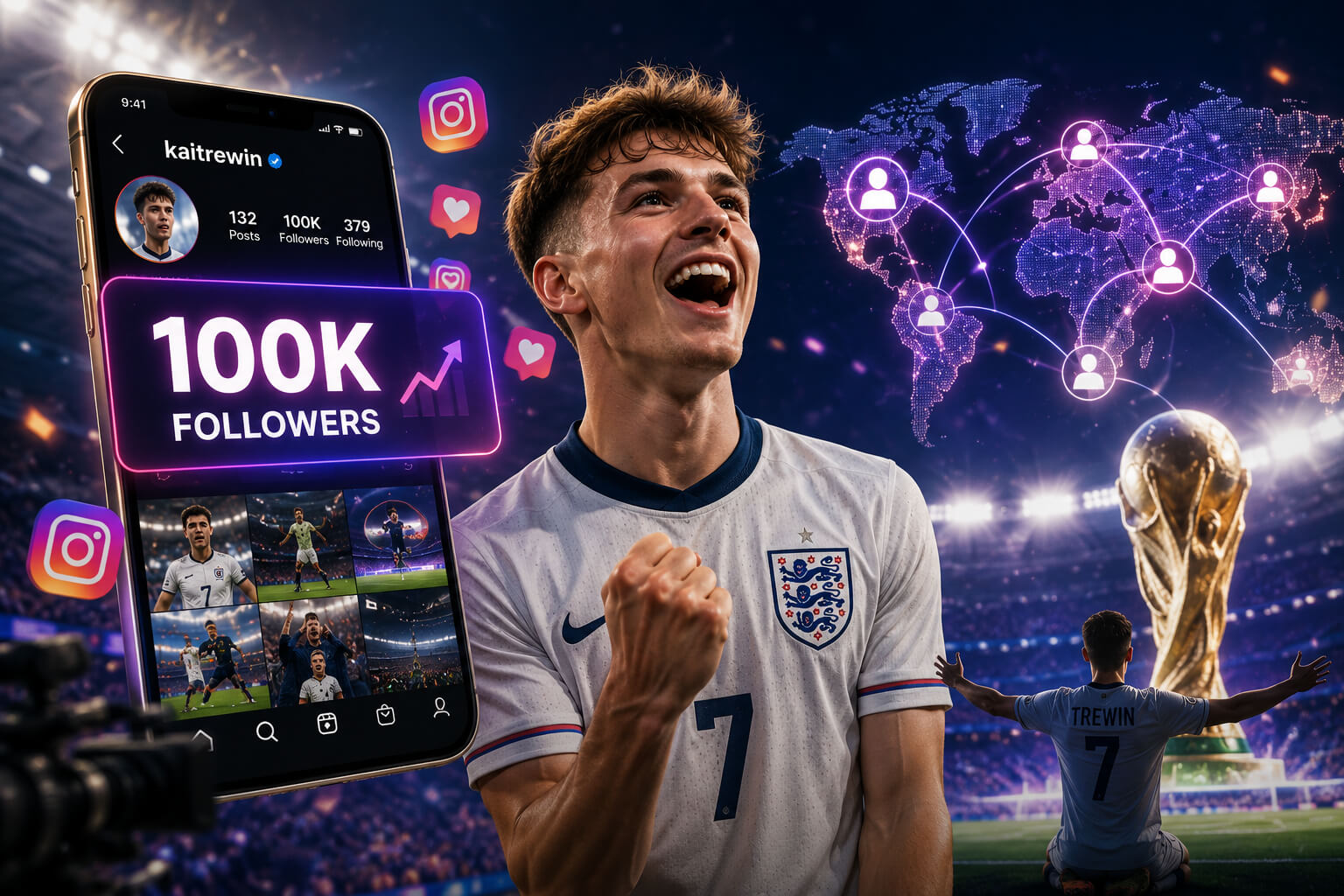
The latest athlete to enjoy a social media boost thanks to the efforts of a football creator is Australian footballer Kai Trewin, whose Instagram following increased by around 100,000 following a viral World Cup campaign.
The viral moment underscores the increasing influence of online creators and influencer communities in shaping the visibility of athletes, particularly during significant global events such as the 2026 World Cup.
Australia national team defender Trewin was the subject of a social media challenge, with football content creator RubikayTV asking his followers to show support for him online. The campaign quickly gained traction and turned the low-profile Socceroos player into a fast-rising name on Instagram.
Kai Trewin Gains 100K Instagram Followers After Viral Challenge
Before the campaign, Kai Trewin reportedly had only a few thousand followers on Instagram. After RubikayTV highlighted him to his online audience, Trewin’s follower count surged dramatically, adding around 100,000 new followers in a short period.
The campaign was framed around making Trewin one of the breakout social media names of the World Cup. RubikayTV compared the Australian player’s potential rise to the growing online attention around New Zealand footballer Tim Payne, who had also become the subject of a viral follower campaign.
For creators, the story highlights the power of fan-led growth and the ability of influencer communities to rapidly boost a public figure’s online presence.
How Football Creators Are Influencing Athlete Fame
The rise of Kai Trewin’s Instagram following is part of a wider trend where creators are no longer just commenting on sports culture. They are making it right now.
Football creators with engaged communities can now influence which players get visibility, conversation and followers. A single challenge, meme or creator-led campaign can push an athlete from relative obscurity into viral attention almost overnight.
That kind of growth is particularly powerful in the lead-up to major tournaments when fans are looking for fresh narratives, underdog characters and players to get behind. For athletes who are not yet globally-recognisable household names, creator attention can mean a big boost in visibility.
How RubikayTV Became Part of the Viral Campaign
RubikayTV’s role in shining a light on Trewin. The football content creator asked his fans to support the Australian player and help him gain followers on Instagram.
The campaign utilized a simple but successful creator strategy: present fans with a clear challenge, tie it into a compelling story, and make it easy for them to get involved. In this campaign, the call to action was clear — follow Kai Trewin and help turn him into a major online personality ahead of the World Cup.
It’s a great example of how creators can mobilize audiences quickly when the story is entertaining, timely and easy to share.
Tim Payne’s Viral Growth Sparked the Trend
Kai Trewin’s sudden Instagram rise followed another viral football story involving New Zealand defender Tim Payne.
Payne reportedly gained millions of followers after a separate influencer-led campaign encouraged fans to support him online. His rapid rise became a talking point and inspired similar efforts with other, less high-profile World Cup players.
Payne and Trewin’s comparison shows how quickly narratives can spread on social media across countries, fanbases and creator communities. When one campaign is successful, other creators often take the format and run with it, creating a chain reaction of viral attention.
Why This Matters For The Creator Economy
The Kai Trewin Instagram followers campaign is more than a funny football story. It’s yet another example of how creators are becoming powerful engines of public attention.
Influence in the creator economy is no longer confined to traditional media, clubs, leagues or sponsors. Independent content creators can drive trends, introduce audiences to new personalities and create massive spikes in visibility.
This can open up new possibilities for athletes. A larger social media following can lead to stronger fan engagement, increased sponsorship interest, and a more recognizable personal brand.
For creators, it highlights the value of community-led campaigns. When fans feel like they’re part of a movement, they’re more likely to engage, share and participate.
Kai Trewin’s viral rise also reflects a shift in athlete branding.
Once upon a time a player became famous through performance, media or club success. Today a player can become widely known through creator-driven storytelling and social media momentum.
This doesn’t replace performance on the field, but it adds another layer to modern sports fame. Personality, relatability, memes and fan participation can all play into an athlete’s public profile.
With the 2026 World Cup approaching, creator-led campaigns — not just more traditional sports coverage — could turn more players into viral sensations.
A New Era of Fan-Powered Sports Influence
Kai Trewin’s Instagram growth shows how fast online communities can change the public profile of an athlete.
With one creator challenge, a relatively low-profile footballer can become a trending name and gain thousands of new followers. The story also shows how sports creators are becoming important players in the attention economy.
For Breaking Creator and Influencer News, the key takeaway is clear: creators are not just covering the World Cup conversation — they are helping create it.
With football, social media and influencer culture increasingly intertwined, campaigns such as the one with Kai Trewin could become a regular feature of athletes building visibility in the digital age.
