

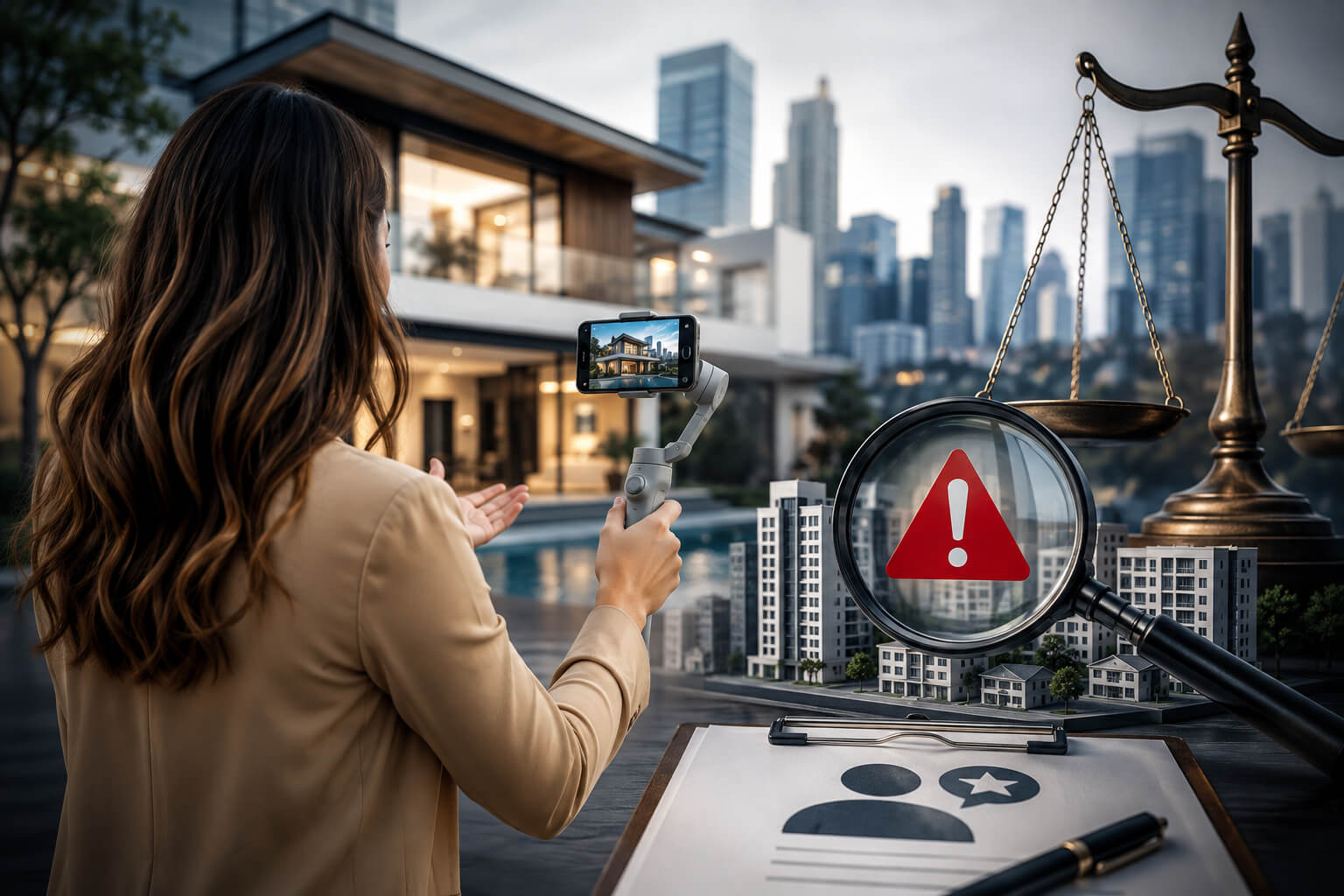
A glossy apartment tour can rack up hundreds of thousands of views before a traditional property advertisement gets much attention at all.
That reach is exactly why developers have embraced creators.
It is also why real estate influencer marketing is starting to attract uncomfortable questions in India.
Creators on Instagram, YouTube and other platforms increasingly promote residential towers, luxury developments, investment properties and upcoming projects. Some videos are clearly advertisements. Others look much more like personal recommendations: a creator walks through a property, talks about expected appreciation, praises the location and tells viewers why the project could be worth considering.
The problem starts when viewers cannot tell where an opinion ends and an advertisement begins.
Whalesbook reported on August 18, 2026 that regulators are increasing their attention on digital real estate promotion amid concerns around missing disclosures, questionable property offers and the growing reliance on social media when making expensive purchasing decisions.
Property Marketing Has Become Creator Content
Real estate marketing used to be fairly easy to recognize.
There were newspaper ads, billboards, property portals, television campaigns and brokers calling prospective buyers.
Now there are reels.
Creators tour furnished sample units, shoot drone footage over development sites and package properties into the same short-form storytelling used for restaurants, travel and consumer products.
That works. Property suddenly feels less like a sales brochure and more like something discovered through a trusted personality.
But a home is not a pair of sneakers.
A persuasive video can influence a decision involving years of savings, loans and substantial financial commitments. The consequences of incomplete information are much bigger.
And viewers do not necessarily know whether the creator discovered the project independently, received a free stay, earned a marketing fee, was offered a commission or has some other relationship with the developer.
The Disclosure Problem Is Hard to Ignore
India already has influencer advertising rules covering commercial relationships.
The Advertising Standards Council of India says promotional content requires disclosure when a “material connection” exists between an advertiser and an influencer. That connection is broader than a direct cash payment. Free products, discounts, gifts, trips and other benefits can also trigger disclosure requirements.
ASCI accepts labels including Ad, Sponsored, Collaboration, Partnership and Affiliate, along with relevant platform disclosure tools. The disclosure is supposed to be understandable and visible rather than hidden somewhere viewers are unlikely to notice.
That sounds straightforward.
Social media rarely is.
A cinematic walkthrough titled “Inside Mumbai’s Most Exciting New Luxury Project” can feel editorial even when money is behind it. A creator casually describing a development as a great investment can carry more persuasive weight than a conventional advertisement precisely because it does not look like one.
That distinction matters.
The same tension between trust, promotion and third-party influence is becoming more important across influencer marketing as creators increasingly shape how people discover and evaluate products and companies.
The Bigger Risk Comes When Promotion Starts Sounding Like Investment Advice
Real estate creator content becomes especially sensitive when creators move beyond showing properties and begin predicting returns.
Statements about rental yields, guaranteed appreciation, future resale value or a project being an unusually strong investment can influence viewers financially.
India has already taken a tougher approach to similar behavior in financial markets.
SEBI rules restrict regulated entities and their agents from associating with people who provide securities-related advice or recommendations without appropriate registration or permission. Restrictions also cover unauthorized claims about returns or performance.
Those securities-market rules do not automatically turn every property influencer into a regulated financial adviser.
Still, the direction is difficult to miss.
When creator content moves from entertainment or promotion into claims capable of driving major financial decisions, regulators pay closer attention.
Real estate may increasingly encounter the same question already surrounding financial influencers: what exactly is the creator selling — attention, advertising or advice?
A Viral Property Tour Is Not Due Diligence
This is probably the least exciting part of buying property, which makes it the most important.
A beautiful video does not confirm whether a development has the necessary registrations. It does not reveal every dispute involving a developer. It cannot guarantee construction schedules, future infrastructure or eventual returns.
Whalesbook’s report points to verification of Real Estate Regulatory Authority, or RERA, information as a critical step for prospective buyers rather than relying solely on social media endorsements.
That sounds obvious until the marketing is very good.
Creators are effective because they compress complicated decisions into something understandable. A fifteen-minute property video can make a project feel familiar before someone has ever visited the site.
Familiarity, though, is not verification.
The creator might genuinely like the property. The development could also be legitimate. Neither removes the buyer’s need to independently check project registration, construction status, documentation and the developer’s track record.
Developers Have Something to Lose Too
The regulatory risk does not sit entirely with influencers.
ASCI’s guidelines place responsibility on both sides of a commercial influencer relationship. Advertisers are expected to ensure influencer advertising complies with applicable guidelines, while creators are responsible for making required disclosures.
That changes the calculation for developers using creator campaigns.
Handing an influencer a brief and waiting for views is no longer enough.
Brands need to know what claims are being made, how sponsorship is disclosed and whether promotional language could create expectations that the developer cannot substantiate.
One viral reel can bring thousands of leads.
The same reel can also become a very public compliance problem.
Influencers May Need to Rethink the “Best Investment” Pitch
Creators have their own reputational risk.
Audiences follow influencers because they appear more personal than corporate advertising. Hidden sponsorships weaken that trust quickly.
The stakes rise further when creators confidently discuss investment potential without having access to all the information required to make that judgment.
There is nothing unusual about a creator showing a new development.
Calling it a guaranteed winner is something else.
Real estate creators may find that the safest long-term strategy is also the simplest one: disclose commercial relationships clearly, avoid presenting uncertain projections as facts and separate personal impressions from claims requiring professional or documented support.
Less exciting, perhaps.
Much harder to regret later.
Real Estate Influencer Marketing Is Growing Up
Influencer marketing did not create questionable property promotions, and traditional real estate advertising has never been immune from exaggeration.
What social media changed is the speed, scale and intimacy of the pitch.
A developer once needed a major advertising campaign to reach millions of potential buyers. Today, one creator with the right audience can do it from a phone.
That power makes disclosure more important, not less.
Real estate influencer marketing is unlikely to disappear because regulators are paying attention. Developers want the reach. Creators want the partnerships. Buyers increasingly discover properties through digital platforms.
The market will probably keep growing.
The casual era around it may not.
Sources
- Whalesbook — Real Estate Influencer Marketing Under Regulatory Lens as Risks Rise
- Advertising Standards Council of India — Guidelines for Influencer Advertising in Digital Media
- ASCI Social — Influencer Disclosure Guidance
- Securities and Exchange Board of India — Association of Persons Regulated by the Board and Their Agents With Certain Persons
- SEBI — Clarifications on Association With Persons Engaged in Prohibited Activities
