

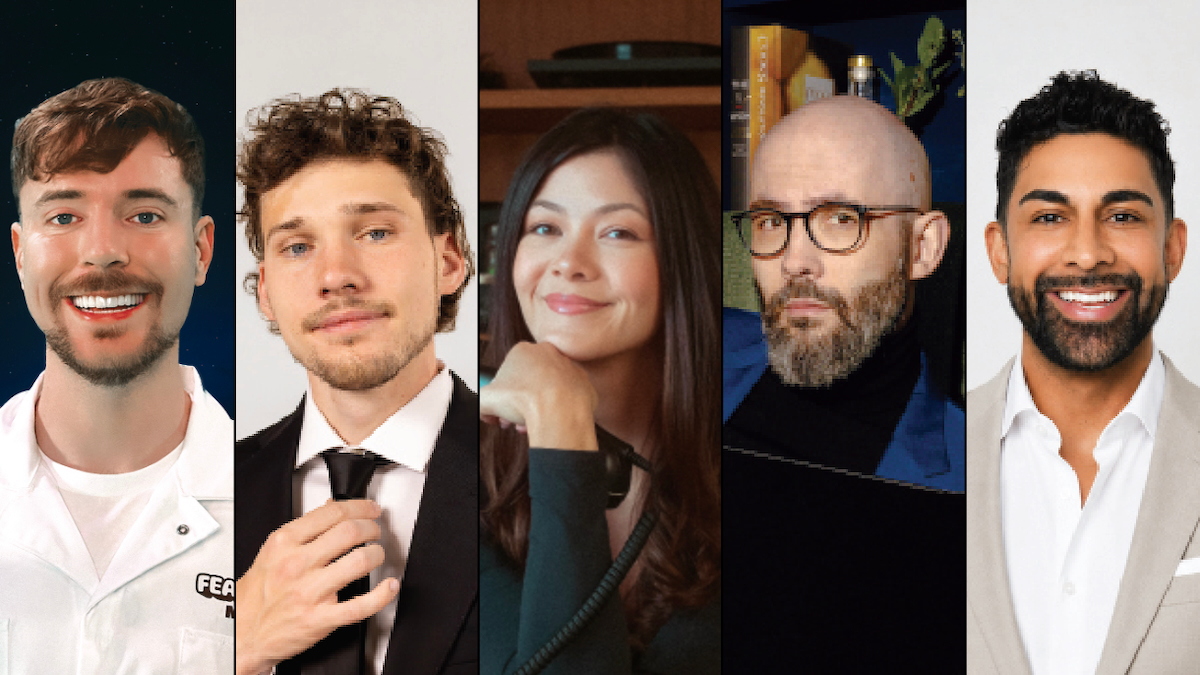
Being a successful creator used to mean building a big audience. Views mattered. Subscribers mattered even more. Today, we’re seeing creators becoming media companies, going beyond sponsorships and merchandise.
That playbook is getting much bigger.
Some of the world’s largest creators are no longer operating like individual influencers. They are building companies around their audiences. Those businesses now stretch into consumer products, entertainment, advertising, events, technology, and other industries.
MrBeast is the obvious example, but he isn’t alone.
Creators are hiring executives and creating parent companies. They’re launching brands and attracting outside capital. Some are starting to look remarkably similar to the media conglomerates they once competed against.
ADWEEK describes the trend as a turning point for the creator economy. In 2026, U.S. brands are expected to spend at least $21 billion on creators. That’s nearly double the amount spent in 2022.
MrBeast Is Building Much More Than a YouTube Channel
Jimmy Donaldson, better known as MrBeast, shows how far the creator business model has moved. He recently became the first person to pass 500 million YouTube subscribers. Yet subscriber numbers now tell only part of his story. Beast Industries has expanded into chocolate, toys, branded content, entertainment, financial services, and more. A mobile telecommunications platform is also planned. YouTube remains at the center, but the surrounding business looks increasingly like a diversified media company.
The Audience Comes First, Then the Businesses Arrive
The model sounds simple. Creators build audiences on platforms they don’t own. They then use that attention to create businesses they do own. Those businesses can include merchandise, food brands, live events, subscriptions, production studios, and consumer products. Social platforms become the distribution engine rather than the entire business. Andrew Graham of CAA Creators told ADWEEK that creators such as Hank Green and Mythical Entertainment were early examples of this approach. The difference today is scale.
Creator Businesses Are Getting More Corporate
Running several businesses requires something different from running a successful YouTube channel. That’s why creator companies are adding CEOs and experienced executives. They’re developing formal corporate structures and looking more closely at equity value. Some are also courting institutional investors. The creator may remain the public face, but a much larger organization can sit behind that personality. ADWEEK’s reporting shows this transition becoming more common among creators who want to scale beyond advertising revenue.
$21 Billion in Creator Spending Changes the Conversation
Money is helping accelerate the shift. U.S. brands are expected to spend at least $21 billion on creators during 2026, according to eMarketer figures cited by ADWEEK. That is nearly twice the 2022 level. The gap between creator earnings and web publishers’ programmatic display businesses is also shrinking. Publishers led creators by 44% in 2022. That gap has reportedly narrowed to around 26%. Creator media isn’t sitting on the edge of the advertising market anymore.
Creators Are Borrowing the Old Media Playbook
There is an interesting irony here. Creators became popular partly because they didn’t look like traditional media companies. Their content felt direct, personal, and native to social platforms. Now many are adopting familiar media strategies. They are diversifying revenue, producing entertainment franchises, hiring sales teams, and developing intellectual property. Live events are becoming part of the mix too. Independent media creators have begun expanding into events and experiential businesses, according to related reporting highlighted by ADWEEK.
Track Star Shows What a New Media Brand Can Look Like
The trend extends beyond creators with enormous subscriber counts. Track Star, the social video franchise led by Jack Coyne, offers another version of the model. Former Rolling Stone CEO Gus Wenner financially backed the business in January. The company plans to expand through new shows, live events, and digital products. It has also brought in its first chief revenue officer and outside talent. The interesting part is where the investment came from. A figure connected to legacy media is betting on a creator-led format as the foundation for a broader music media company.
Live Events Are Becoming Another Creator Revenue Stream
Creators aren’t limiting expansion to products and video. Events are becoming more attractive as well. News and media creators have started launching conferences, subscriber gatherings, and other in-person experiences. ADWEEK highlighted independent operators including Oliver Darcy, Alex Heath, Bryan Morrissey, and Emily Sundberg as examples of this trend. Events give creators another way to monetize communities without relying entirely on platform algorithms. They also create something social media can’t fully replicate: direct access to an audience in the physical world.
Traditional Media Is Moving Toward Creators Too
This isn’t a one-way takeover. Legacy media companies are moving toward creators at the same time. YouTube has been positioning creator-led entertainment as a major part of the modern television ecosystem. Netflix, Roku, Spotify, and other companies have also pursued creator partnerships. Fox announced Fox Creator Studios in 2026 to develop entertainment formats, talent, and intellectual property with creators. The line separating creator media from traditional entertainment keeps getting harder to draw.
The Hard Part Is Scaling a Business Built Around One Person
There is an obvious weakness in the creator conglomerate model. The audience often arrived because of one personality. Expanding that personality into dozens of products and businesses isn’t automatically easy. Every new venture still carries the creator’s reputation. A poorly received product or controversy can spread across the wider company quickly. Hiring executives can solve operational problems, but it doesn’t remove that dependence. The challenge is turning personal influence into a durable company without losing the connection that created the audience in the first place.
The Creator Economy Is Starting to Look Like the Media Industry
The creator economy spent years being described as an alternative to traditional media. That description feels increasingly outdated.
Creators now produce shows, launch consumer brands, hire executives, organize events, sell advertising, and build intellectual property. Capital is following them. Advertisers are following them too.
The structure looks familiar. The starting point doesn’t.
Old media companies built content and then searched for audiences. Creator businesses often begin with the audience already there.
That may be their biggest advantage.
The next generation of media conglomerates might not begin with television networks, newspapers, or movie studios. Some could begin with one person, one camera, and an audience that refuses to stop watching.
Sources
- ADWEEK — Creators Are Quietly Becoming Media Conglomerates
https://www.adweek.com/media/creators-media-conglomerates/ - The Gradient Group — Creators Are Quietly Becoming Media Conglomerates
https://gradientgroup.com/creators-are-quietly-becoming-media-conglomerates/
