

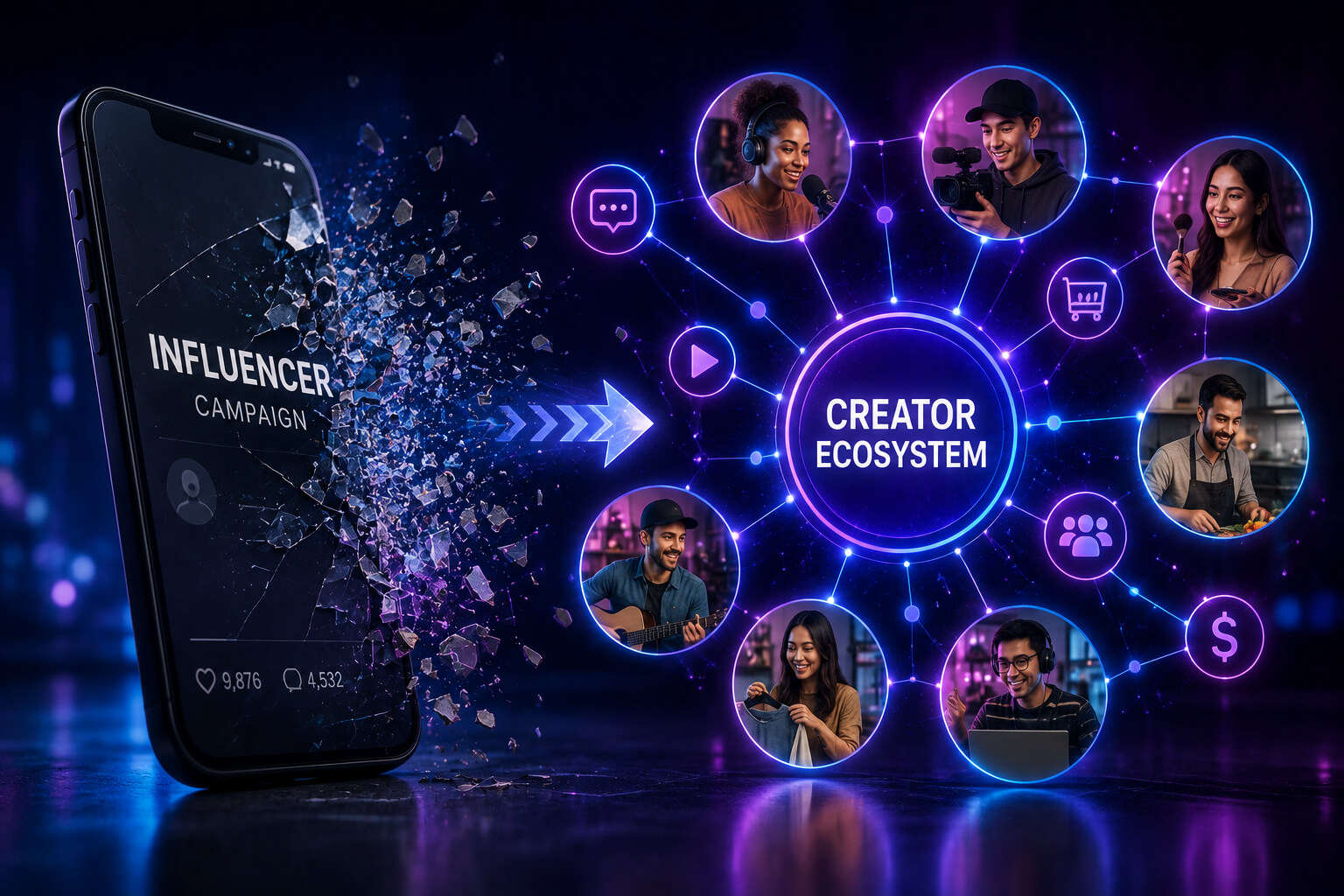
The influencer marketing playbook is starting to look tired. A brand sends out a brief. A group of creators publishes around the same time. The hashtag gets a temporary lift. Engagement spikes, screenshots are dropped into a campaign report, and everyone moves on.
A few days later, the audience has usually moved on too.
That short memory is becoming a serious problem for brands pouring larger budgets into creator-led advertising. India’s influencer marketing sector is already estimated to be worth between ₹3,000 crore and ₹3,600 crore, but bigger spending has not automatically produced stronger brand recall. The next phase of influencer marketing may have less to do with launching more campaigns and more to do with building permanent creator ecosystems.
One-Off Influencer Campaigns Have a Recall Problem
Influencer campaigns can still generate reach. That is not really in question. The weakness appears after the reach arrives.
A creator publishes a sponsored reel, collects views for a day or two and then returns to their normal content. The brand disappears from the story almost as quickly as it entered.
Audiences have also become good at spotting these arrangements. A creator suddenly praising a product they have never mentioned before does not always feel like a genuine discovery. It feels like a deliverable. One reel. One caption. One payment.
Done. That format treats creators like rented media space rather than people with ongoing narratives, communities and distinct cultural influence.
Creator Partnerships Still Feel Too Transactional
Creators do not build loyal audiences through isolated posts. They build them through repetition, personality and a recognisable point of view. Brands often step into that relationship for only a few seconds.
The creator receives a list of talking points. The product appears. The required disclosure is added. The partnership ends once the content is approved and published.
It is efficient, but efficiency is not the same thing as influence.
A brand is more likely to feel believable when it appears naturally across a creator’s wider journey. The audience sees the product being used, discussed and revisited rather than awkwardly inserted into a single sponsored moment. This is where creator ecosystems become more interesting than traditional influencer campaigns.
What Is a Creator Ecosystem?
A creator ecosystem is an interconnected network of creators who work with a brand over time and across different communities. The aim is not to make every creator repeat the same message. In fact, that would probably defeat the point.
A strong ecosystem gives different creators different roles. A major creator may become a long-term face of the brand. Regional creators can interpret the brand through local language and culture. Micro-influencers can introduce products inside tighter, more engaged communities. Meme pages can push brand moments into internet culture before the campaign language starts sounding too polished.
Some brands are even experimenting with virtual creators and AI-generated personalities, although human credibility remains a much harder thing to manufacture. The structure is deliberately uneven. Not every creator needs the same reach, audience or content style. They just need a believable reason to be there.
Repetition Builds What Virality Cannot
Virality can make a brand visible. Familiarity makes it memorable. A creator ecosystem allows a brand to show up repeatedly without publishing the exact same advertisement over and over again. One creator might use the product in a tutorial. Another may bring it into a personal story. A third might invite followers to an offline event or community challenge.
Over time, the brand stops looking like an interruption. It becomes part of the environment.
That shift matters because online culture is rarely shaped by a single post. It develops through recurring jokes, references, recommendations and shared experiences. Brands that only arrive during campaign windows struggle to participate in that process. They are present, but they are not embedded.
Brands Are Already Using the Ecosystem Model
Some of the strongest creator-led brands have operated this way for years, even when they did not call it a creator ecosystem. Red Bull has built a broad content identity around athletes, adventure creators and extreme sports communities. The creators do not simply hold up the product. They reinforce the world the brand wants to own.
Gymshark followed a similar route in fitness, growing through long-term relationships with athletes and creators whose audiences were already invested in training culture. In India, investment platform Groww has become closely associated with finance educators who explain intimidating financial topics to younger audiences.
Lululemon’s ambassador model goes further than conventional sponsored content. Fitness instructors, yoga teachers and wellness creators participate through classes, events and community activity as well as online posts.
The common thread is continuity. These brands are not constantly introducing themselves to a new group of influencers. They are building relationships with creators who can keep translating the brand for different audiences.
Regional and Micro-Creators May Become More Valuable
Large creators will still command attention, but creator ecosystems make room for influence that does not sit neatly inside follower counts.
Regional creators are especially important in culturally and linguistically diverse markets. A national campaign can struggle when every creator receives identical copy, references and humour. Local creators know which details need translating and which ones need replacing entirely. Micro-creators offer something else: density.
Their audiences may be smaller, but the relationship can feel closer. Comments are often more conversational. Recommendations may carry more weight because followers are not watching from such a distance. A brand ecosystem that combines national visibility with regional relevance and smaller communities can be messier to manage. It can also be far more difficult for competitors to copy.
Agencies Will Need to Manage Relationships, Not Just Campaigns
This shift creates a different job for influencer marketing agencies. Campaign management has traditionally focused on creator selection, negotiations, content approvals, publishing schedules and performance reports. Creator ecosystem management is broader.
Agencies may need to map communities, identify long-term creator roles, manage overlapping audiences and decide when a creator relationship is becoming stale. They will also have to balance brand consistency with the independence that makes creator content work in the first place.
Too much control and the ecosystem starts sounding like one large scripted advertisement. Too little direction and the brand becomes almost invisible. There is no perfectly tidy formula here.
Creator Marketing Is Moving Beyond the Campaign Calendar
Influencer campaigns are not disappearing. Brands will still use creators for launches, seasonal pushes, announcements and product drops. The difference is that campaigns may no longer be the centre of the strategy.
They may become moments inside a larger creator network. Brands that continue treating every collaboration as a short-term media purchase will probably keep seeing the same pattern: quick attention, attractive engagement numbers and weak memory.
Creator ecosystems ask for more patience. They require longer contracts, more trust and a willingness to let creators shape how the brand appears. That can feel risky. So can being forgotten three days after launch.
Source: Adgully — Beyond influencer campaigns: Why brands must start building creator ecosystems
