
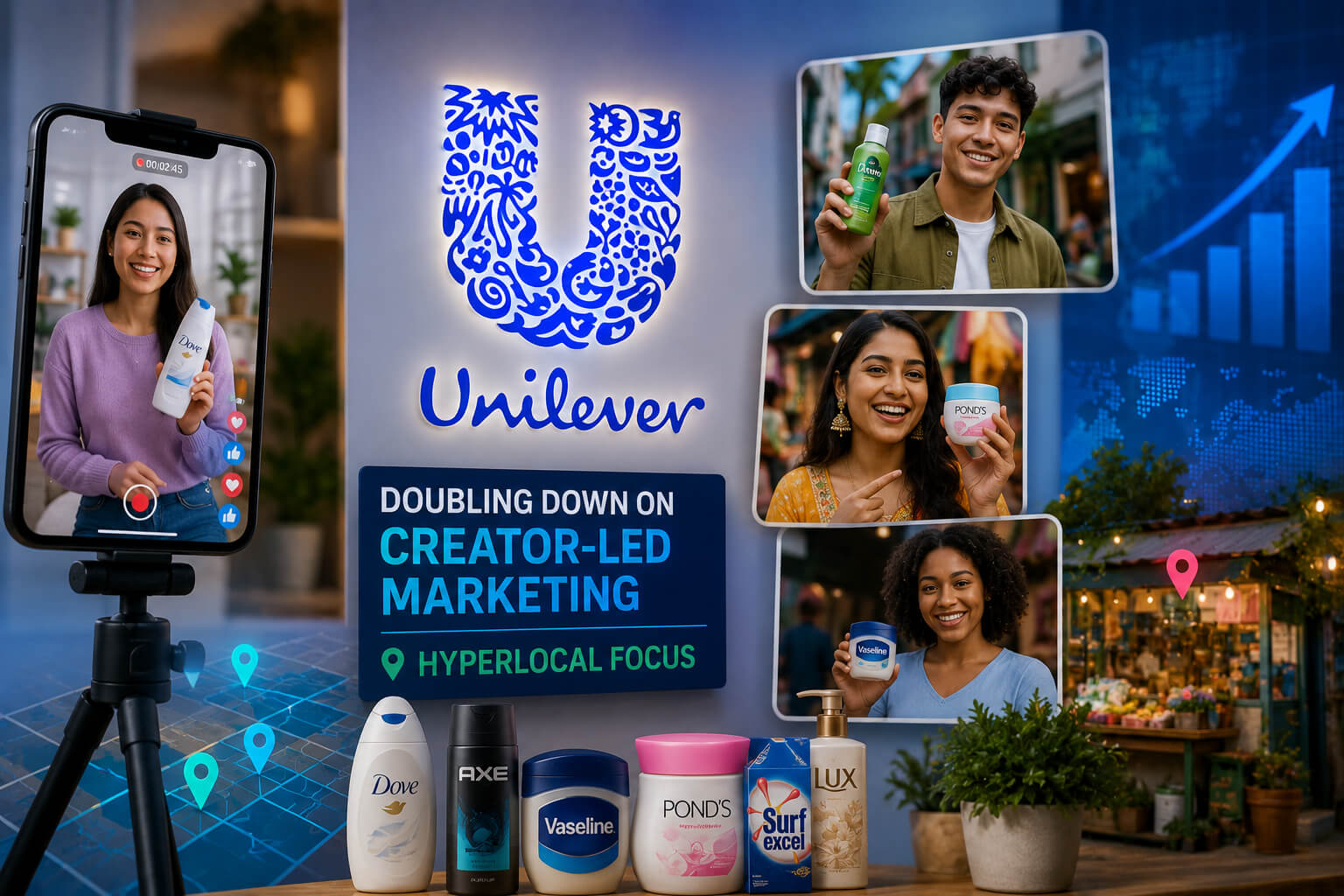
Unilever is pushing deeper into creator-led marketing, and this does not look like a small side experiment anymore. The company is leaning into creators as a serious part of how its brands show up, especially in markets where local language, culture, humor, habits, and community trust matter more than polished global advertising.
That is the part brands sometimes miss. A campaign can look expensive and still feel far away from the people it is trying to reach. Creator-led marketing fixes some of that gap because the message does not always come from the brand directly. It comes from people audiences already watch, trust, or at least recognize from their own digital spaces.
For Unilever, the shift signals a bigger change in consumer marketing. The old model of one big brand message pushed everywhere is starting to feel too blunt. People want relevance. They want something that sounds like it belongs where they live, not something translated from a global deck.
Why Hyperlocal Marketing Matters
Hyperlocal marketing is not just about geography. It is about context. A beauty routine in one city may not look the same in another. A food trend may explode in one region and barely move elsewhere. A household product may be talked about differently depending on income level, climate, family structure, or even local slang.
That is why creators are becoming useful for large consumer brands. They understand small cultural signals that big campaigns often flatten. They know how people actually talk. They know what feels forced. They know when a product mention sounds natural and when it sounds like an ad trying too hard.
Unilever’s hyperlocal focus suggests that scale alone is no longer enough. The company can reach millions through traditional media, but reach does not automatically create attention. And attention does not automatically create trust. Local creators can help brands land in a more human way, especially when the content feels built for a specific audience instead of sprayed across every platform.
The Move Fits Unilever’s Bigger Social-First Strategy
This creator push also fits into Unilever’s wider marketing reset. The company has been moving toward a more social-first model, with creators playing a bigger role in how its brands build relevance. Unilever’s leadership has spoken about the need to build desire, trust, and relevance in a world shaped by platforms and creators.
That matters because consumer attention is now scattered across short-form video, social commerce, creator communities, messaging apps, and niche digital spaces. People are not waiting for brand campaigns to arrive. They are discovering products through recommendations, routines, reviews, reactions, and casual creator content.
So the creator is not just an amplifier anymore. The creator is becoming part of the media system itself.
For Unilever, that means creator partnerships can support awareness, product education, cultural relevance, and even purchase behavior. A creator can introduce a product, show how it fits into daily life, respond to local trends, and make the brand feel less distant.
From Influencer Posts to Creator Infrastructure
There is a difference between hiring influencers and building creator infrastructure.
Hiring influencers means paying people to post. Building creator infrastructure means creating a system where creators are part of the brand’s ongoing content engine. That includes local creator networks, faster campaign approvals, stronger measurement, content usage rights, platform-specific formats, and the ability to move quickly when trends change.
Unilever appears to be moving toward the second model.
That is a much bigger commitment. It requires brands to stop treating creators as last-minute media add-ons. It also requires more trust. Creators need enough room to make content that feels like their own, not just a brand script with a face attached.
The risk is obvious. More creators means more complexity. More local content means more brand safety concerns. More speed means less control. But the reward is also clear: campaigns that feel alive, current, and closer to the consumer.
Why Global Brands Are Going Local Again
It sounds strange, but the more global marketing becomes, the more local it needs to feel.
Audiences can spot generic content quickly. They know when a campaign is trying to speak to everyone and, because of that, speaks to no one very well. This is especially true with younger consumers who spend more time with creators than with traditional brand channels.
A hyperlocal creator strategy lets a global company like Unilever keep its scale while giving campaigns a more personal edge. One product can have different stories in different markets. One brand can show up through beauty creators, family creators, food creators, lifestyle creators, or regional voices depending on what the audience actually cares about.
That is not always neat. But marketing is not neat anymore.
The creator economy has made brand communication messier, faster, and more fragmented. The upside is that it can also make it more believable.
The Trust Problem Brands Are Trying to Solve
Unilever’s creator-led direction also points to a larger trust issue in advertising. Consumers are more skeptical of direct brand messaging, especially when every company claims to be authentic, innovative, sustainable, or purpose-driven.
Creators can cut through some of that skepticism, but only when the partnership feels right. A creator who already talks about skincare can introduce a beauty product more naturally than a random celebrity placement. A local food creator can make a product feel familiar in a way a national TV spot may not. A parenting creator can explain everyday household use cases without turning the message into a corporate pitch.
That is the real value of creator-led marketing. It does not just place a product in front of people. It places the product inside a trusted conversation.
Of course, audiences are not naive. Bad influencer marketing still looks bad. Over-scripted creator content can feel worse than a normal ad. The brands that win here will be the ones that know when to guide and when to step back.
What This Means for Influencer Marketing
Unilever’s move shows where influencer marketing is heading. It is becoming less about one-off sponsored posts and more about distributed brand storytelling. The creator is no longer just a rented audience. The creator is becoming a local signal, a content partner, and sometimes even a testing ground for what a brand should say next.
For agencies, this means creator operations will become more important. For creators, it means brands may look for consistency, professionalism, and community connection, not just follower count. For marketers, it means campaign planning has to become more flexible.
The best creator-led campaigns will probably not feel like campaigns at all. They will feel like useful, entertaining, or familiar content that happens to carry a brand message.
That is a hard balance to get right. But it is exactly why companies like Unilever are investing more seriously in this space.
A Bigger Signal for Consumer Brands
Unilever doubling down on creator-led marketing with a hyperlocal focus is not just a Unilever story. It is a signal for the wider consumer goods industry.
The next phase of brand growth may depend less on louder advertising and more on sharper relevance. Not just being seen, but being seen in the right context. Not just reaching audiences, but reaching them through people and platforms they already trust.
For global brands, that changes the job. They still need scale, but scale now has to feel personal. They still need consistency, but not at the cost of local culture. They still need control, but too much control can kill the very thing that makes creator content work.
Unilever’s strategy points to a future where creator-led marketing is no longer treated as experimental. It is becoming part of the core marketing machine.
And honestly, that makes sense. The consumer has already moved there.
