

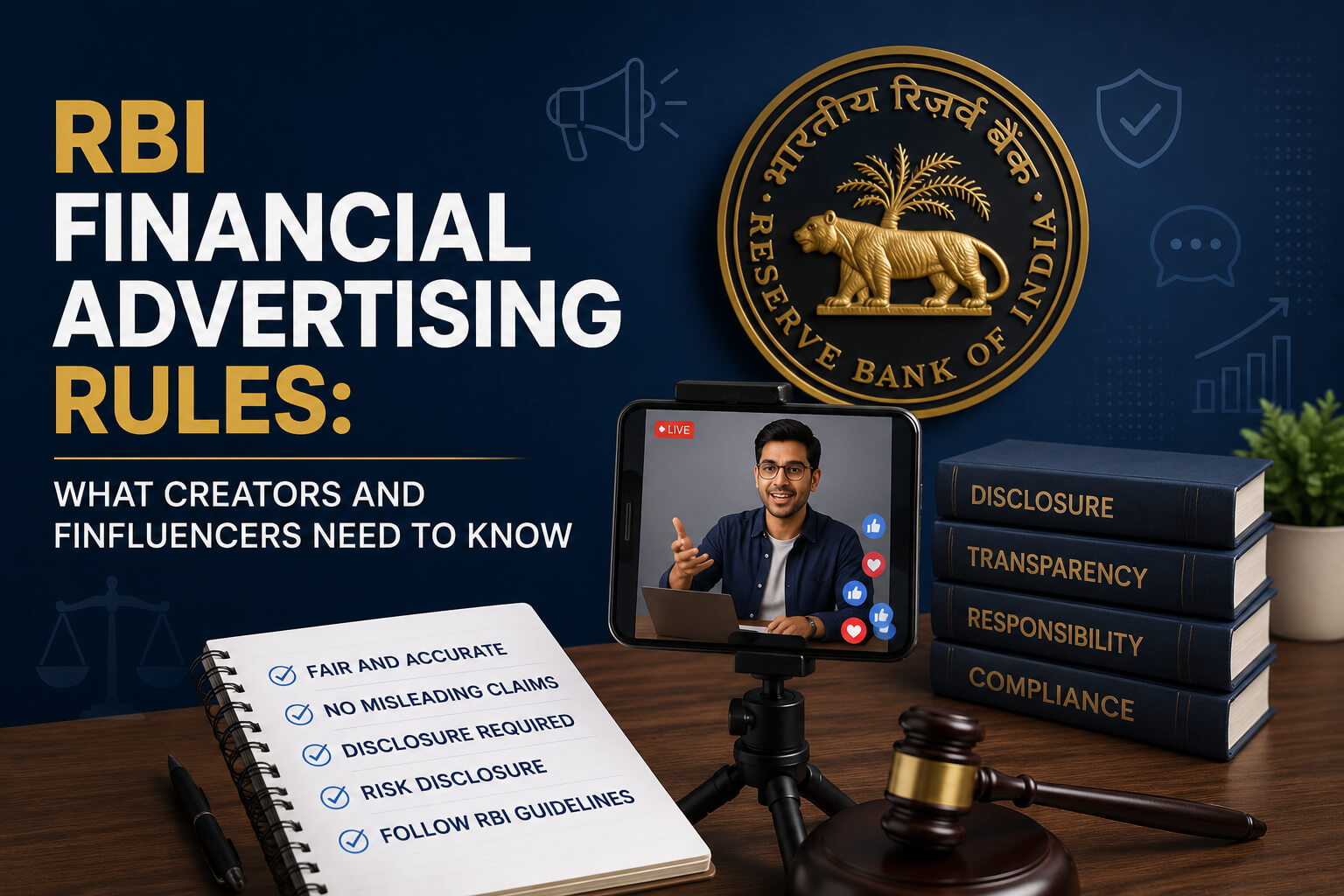
India’s financial content and influencer marketing space may be heading for a major compliance reset. The Reserve Bank of India has issued draft rules aimed at tightening how regulated financial entities advertise, market, and sell financial products and services.
For creators, influencers, agencies, banks, NBFCs, and fintech brands, the message is clear: financial promotions must become more transparent, more responsible, and less manipulative.
The proposed framework focuses on customer protection, clearer disclosures, consent-based selling, prevention of mis-selling, and a crackdown on deceptive online design practices known as dark patterns.
What Are the RBI Financial Advertising Rules?
The RBI’s draft directions seek to regulate advertising, marketing, and sales of financial products and services by regulated entities. These include banks, non-banking financial companies, housing finance companies, cooperative banks, and other RBI-regulated financial institutions.
The rules aim to prevent companies and influencers from pushing customers into unsuitable financial products through misleading claims, aggressive sales tactics, hidden terms, or promotions that blur the line between education and advertising.
This matters because financial content is no longer limited to bank branches, brochures, or TV commercials. Today, financial products are promoted through Instagram reels, YouTube videos, podcasts, Telegram channels, newsletters, comparison platforms, fintech apps, and creator-led campaigns.
Why RBI Is Tightening Financial Promotions
The rise of fintech marketing and financial influencers has made financial education more accessible. But it has also created risks.
Many consumers now discover loans, credit cards, insurance products, investment-linked offerings, and other financial services through digital content. In some cases, promotional content may appear educational, while actually pushing a paid product or brand partnership.
RBI’s draft rules aim to reduce the risk of customers being misled by incomplete information, hidden costs, forced bundling, exaggerated benefits, or designs that pressure users into giving consent.
For the creator economy, these rules could impose stricter expectations on how creators and brands promote financial products online.
Key Changes Proposed by RBI
1. Ban on Mis-Selling Financial Products
The RBI draft defines mis-selling broadly. Regulators may classify a product as mis-sold if it does not suit the customer, lacks complete information, uses misleading claims, lacks explicit consent, or comes bundled with another product without a genuine choice.
This is especially important for creators and finfluencers who promote financial products. Content that oversimplifies risk, hides fees, or presents a product as suitable for everyone could attract closer scrutiny.
2. Explicit Consent From Customers
RBI wants regulated entities to sell financial products and services only after customers give explicit consent.
Importantly, companies should not bundle consent for multiple products or services together. They must collect each consent separately, so users clearly understand what they are agreeing to.
For fintech apps and digital marketing campaigns, this could affect sign-up flows, lead generation forms, app permissions, and influencer-linked landing pages.
3. Crackdown on Dark Patterns
Dark patterns are deceptive design techniques that manipulate users into making decisions they may not have made otherwise.
Examples may include fake urgency, confusing opt-out buttons, hidden charges, disguised advertisements, pre-selected options, or misleading interface design.
RBI’s focus on dark patterns is a major signal for digital advertisers and fintech marketers. It suggests that compliance will not only apply to what a brand says, but also how the customer journey is designed.
4. Greater Accountability for DSAs and DMAs
The draft rules also cover Direct Sales Agents and Direct Marketing Agents. Regulated entities may need to maintain updated lists of such agents, ensure they follow a code of conduct, and take responsibility for their marketing and sales practices.
This could have implications for agencies, affiliate marketers, lead-generation partners, and creator networks working with financial brands.
5. Clearer Rules for Third-Party Financial Products
RBI also wants regulated entities to be clear when promoting third-party products. A bank or NBFC should not market a third-party product as if it were its own.
For influencer campaigns, this means brand relationships, product ownership, and commercial arrangements should be clearly communicated.
What This Means for Influencer Marketing
Financial influencer marketing is becoming harder to separate from regulated financial advice and product promotion.
Creators who make content around loans, credit cards, insurance, savings products, investments, or fintech apps may need to be more careful about the language they use.
A creator saying “this is the best product for everyone” may create compliance risk. A safer approach would be to explain features, risks, eligibility, costs, and limitations while avoiding exaggerated claims.
Influencers should also clearly disclose paid partnerships, avoid hidden promotions, and make sure their content does not create unrealistic expectations.
What Brands Should Do Now
Financial brands and fintech companies should review their influencer marketing policies before the rules take effect.
Brands should check whether their campaigns clearly disclose sponsorships, explain product risks, avoid misleading claims, and provide accurate information about fees, eligibility, repayment terms, lock-ins, penalties, and customer obligations.
They should also audit influencer scripts, affiliate content, landing pages, app flows, and lead-generation forms for dark patterns or forced consent.
What Creators Should Do Now
Creators working in finance, business, investing, fintech, or personal finance should prepare for a more regulated content environment.
Before promoting a financial product, creators should ask:
- Is this paid content clearly disclosed?
- Are the risks explained?
- Are the claims factual and verifiable?
- Is the product being presented as suitable for everyone?
- Are fees, terms, and limitations mentioned?
- Could the audience mistake this promotion for independent advice?
Creators who build trust through transparent, educational, and responsible content may benefit from the new rules. Those relying on hype, hidden promotions, or vague “money hack” messaging may face greater risk.
Why This Matters for the Creator Economy
The RBI’s draft rules show that influencer marketing is no longer just a brand visibility tool. In financial services, creators can directly influence consumer decisions involving money, debt, savings, insurance, and long-term financial security.
That influence brings responsibility.
As regulators pay closer attention to digital promotions, creators and brands will need to treat financial content with the same seriousness as traditional advertising.
Final Takeaway
RBI’s financial advertising rules could reshape how banks, NBFCs, fintech brands, and influencers promote financial products in India.
In particular, the biggest shift is toward transparency, explicit consent, customer suitability, and accountability. As a result, these standards may affect every stage of promotion, from influencer content to app design.
For creators, this is not the end of financial content. Instead, it signals that financial influence must become more responsible, more clearly disclosed, and more compliant.
In the next phase of creator-led financial marketing, trust will matter more than virality.
