
OpenAI is putting creators much closer to the center of ChatGPT’s growth strategy.
The company has been expanding its influencer marketing push across Instagram and other social platforms, but the interesting part is not simply the number of sponsored posts. It is who OpenAI is working with.
Tech creators are only one piece of it.
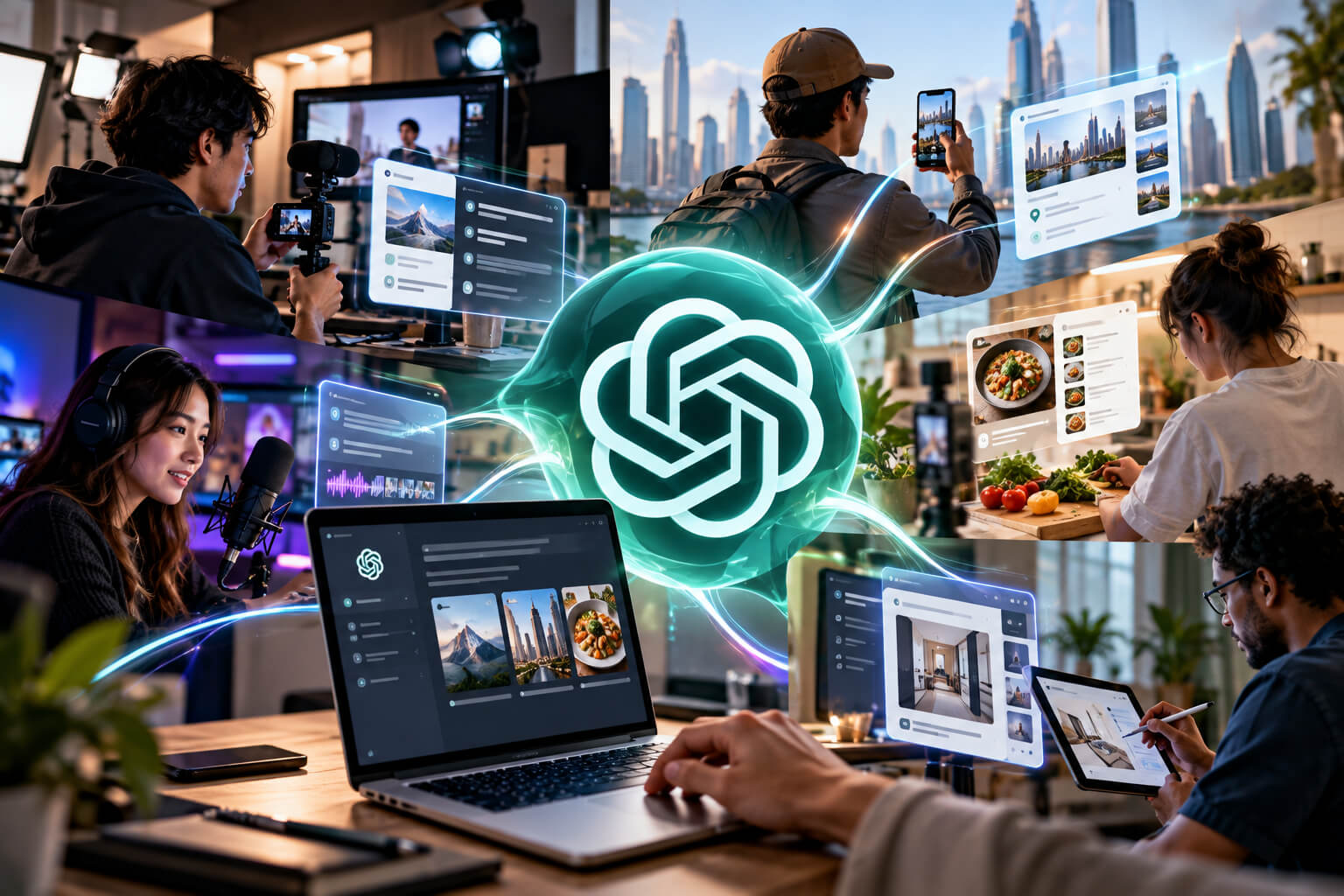
Parenting influencers, fitness creators, entrepreneurs, educators, travel accounts and lifestyle personalities are increasingly showing their audiences how ChatGPT fits into ordinary routines — homework, presentations, workouts, shopping, travel planning and running a business.
That gives OpenAI something conventional advertising struggles to replicate: thousands of potential demonstrations of what ChatGPT actually looks like in someone’s life.
OpenAI’s Creator Push Is Getting Bigger
OpenAI’s creator marketing activity has grown quickly in 2026, with sponsored ChatGPT content becoming more visible across Instagram and other creator platforms. HypeAuditor data cited by Business Insider found 61 Instagram posts carrying the hashtags #chatgpt_partner or #chatgptpartner in June 2026. That increased to 122 posts in July and reached 141 in August, suggesting OpenAI has been steadily widening the number of creators involved in promoting the product.
Those figures represent identified sponsored posts rather than the full scale of OpenAI’s creator programme, and they do not reveal total campaign reach, conversions or advertising spend. Still, the increase points to a deliberate shift. OpenAI is no longer relying only on product launches, press coverage and traditional digital marketing to keep ChatGPT visible. Creators are becoming part of the distribution strategy.
Business Insider reviewed dozens of sponsored ChatGPT posts and spoke with creators and talent managers involved in OpenAI campaigns. The content stretched across coding, productivity, careers, health, travel, education, content creation, shopping and home projects. The common thread was not technical explanation. Most creators were simply showing something useful they had done with ChatGPT.
Creators Are Showing ChatGPT Instead of Explaining AI
ChatGPT no longer needs a long introduction for many audiences. Millions of people already know the name, and many have tried the product at least once. That creates a different marketing problem for OpenAI. Awareness alone is not enough. The company needs people to find new reasons to keep opening the app.
Creators are useful in that environment because they can turn an abstract AI product into something practical. A sponsored post can show ChatGPT helping with a presentation, planning a workout, organizing a holiday or breaking down schoolwork without spending several paragraphs explaining how a large language model works.
Marketing and technology creator Natasha Badger, for example, partnered with OpenAI on content around ChatGPT Work. Her sponsored video showed the platform being used to create a presentation. Badger told Business Insider that many people following creators in her space already use ChatGPT, so the challenge is often less about introducing the product and more about encouraging users to make it their default AI tool.
That changes the creator’s role. They are not simply promoting a brand. They are demonstrating habits that OpenAI hopes audiences will copy.
OpenAI Is Moving Beyond the Tech Creator Bubble
OpenAI’s creator strategy is becoming increasingly broad, reaching audiences that may not actively follow artificial intelligence, model releases or technology news. That matters because mainstream adoption rarely comes from the most technical users alone.
The Shade Room offered one example. The entertainment and culture publisher, which reaches a massive Instagram audience, ran sponsored ChatGPT content built around a word-search puzzle created with the platform. It was not a complex AI demonstration. There were no benchmark charts, coding examples or lengthy prompt tutorials. It simply placed ChatGPT inside entertainment content people were already consuming.
Parenting creators provide another route into everyday usage. Creator Martha Dove partnered with OpenAI for back-to-school content showing how ChatGPT could support her children with mathematics homework. The campaign also highlighted Study Mode and teen safety features.
Fitness creators can demonstrate training plans. Travel creators can build itineraries. Business creators can create pitches or organize projects. The technology stays the same, but every niche produces a different reason to use it.
OpenAI Is Building a More Formal Creator Operation
The scale of OpenAI’s creator activity suggests these partnerships are becoming more structured rather than remaining a loose collection of sponsorships. The company has been hiring executives with experience in social platforms, partnerships and digital culture while also working with external influencer marketing agencies.
One of the most notable hires was Charles Porch, the former Instagram vice president of global partnerships, who joined OpenAI in 2026 as vice president of global creative partnerships. His background places him directly at the intersection of social platforms, creators and large-scale partnership programmes.
Business Insider also reported that OpenAI has worked with influencer marketing agency Viral Nation on parts of its creator campaigns. That points to a more organized approach to identifying creators, coordinating campaigns and extending ChatGPT into different online communities.
OpenAI has also framed creators as more than advertising inventory. Creative communities can provide product feedback, test new workflows and reveal how AI tools are actually being used outside technical circles. That gives creator partnerships a second function: marketing on the front end, product learning on the back end.
The Strategy Comes With a Creator Trust Problem
Creators can give OpenAI access to audiences that traditional ads cannot reach as effectively, but that advantage comes with risk. Creator marketing depends heavily on trust. When followers believe a sponsorship feels forced, inconsistent or out of character, the campaign can attract scrutiny almost immediately.
That became visible after OpenAI hosted a creator event in New York in August. TechCrunch reported that some participating influencers faced criticism in their comment sections, with followers questioning their decision to work with OpenAI and raising concerns around AI’s environmental impact and wider social effects.
OpenAI said the event was designed to give creators hands-on experience with its products and described it as education-led rather than purely promotional. Even so, the reaction exposed one of the tensions at the center of AI influencer marketing.
A conventional ad can be ignored. A creator partnership is more personal. Audiences often judge the creator as much as the company behind the sponsorship.
AI Companies Are Competing for Creator Attention
OpenAI is not the only artificial intelligence company trying to build relationships with creators. As AI products become easier to access and more similar in some consumer use cases, brand familiarity and cultural visibility are becoming more important parts of the competition.
Talent managers are already seeing that shift in their inboxes. Amanda Acevedo of G&B Digital Management told Business Insider that AI-related partnership pitches have become a regular part of creator campaigns.
That means creators are gaining a new kind of leverage in the AI market. They are not developing the models or operating the infrastructure, but they can influence which products their audiences see repeatedly and what those products appear useful for.
The competition is not only about which AI system produces the best benchmark score. It is also about which brand becomes the tool people remember when they need help writing something, planning something, studying something or creating something.
ChatGPT Is Trying to Become a Habit
The bigger story behind OpenAI’s creator strategy is habit formation. ChatGPT is already one of the most recognizable products in generative AI. The next challenge is keeping it embedded in everyday behavior.
Creators can help with that because every niche offers a new reason to return. A runner may use ChatGPT for a training plan. A student may use it to study. A parent may use it to explain homework. A founder may use it for a pitch deck. A creator may use it for scripts, research or content planning.
OpenAI does not need every campaign to explain artificial intelligence from scratch. It needs enough creators showing enough practical uses that ChatGPT starts to feel like a normal tool rather than a novelty.
For the creator economy, that shift creates another advertising category with growing budgets and intense competition. It also creates a more complicated relationship between creators and AI companies, particularly as audiences become more critical of sponsorships and more aware of the debates surrounding AI.
OpenAI’s creator push is therefore doing more than advertising ChatGPT.
It is testing whether creator influence can turn a famous AI product into an everyday habit.
Sources
Business Insider
https://www.businessinsider.com/inside-open-ai-influencer-marketing-strategy-chatgpt-ads-sponsorships-instagram-2026-9
TechCrunch
https://techcrunch.com/2026/08/03/influencers-draw-backlash-for-attending-openais-first-luxury-trip/
OpenAI — Introducing ChatGPT Futures: Class of 2026
https://openai.com/index/introducing-chatgpt-futures-class-of-2026/
