

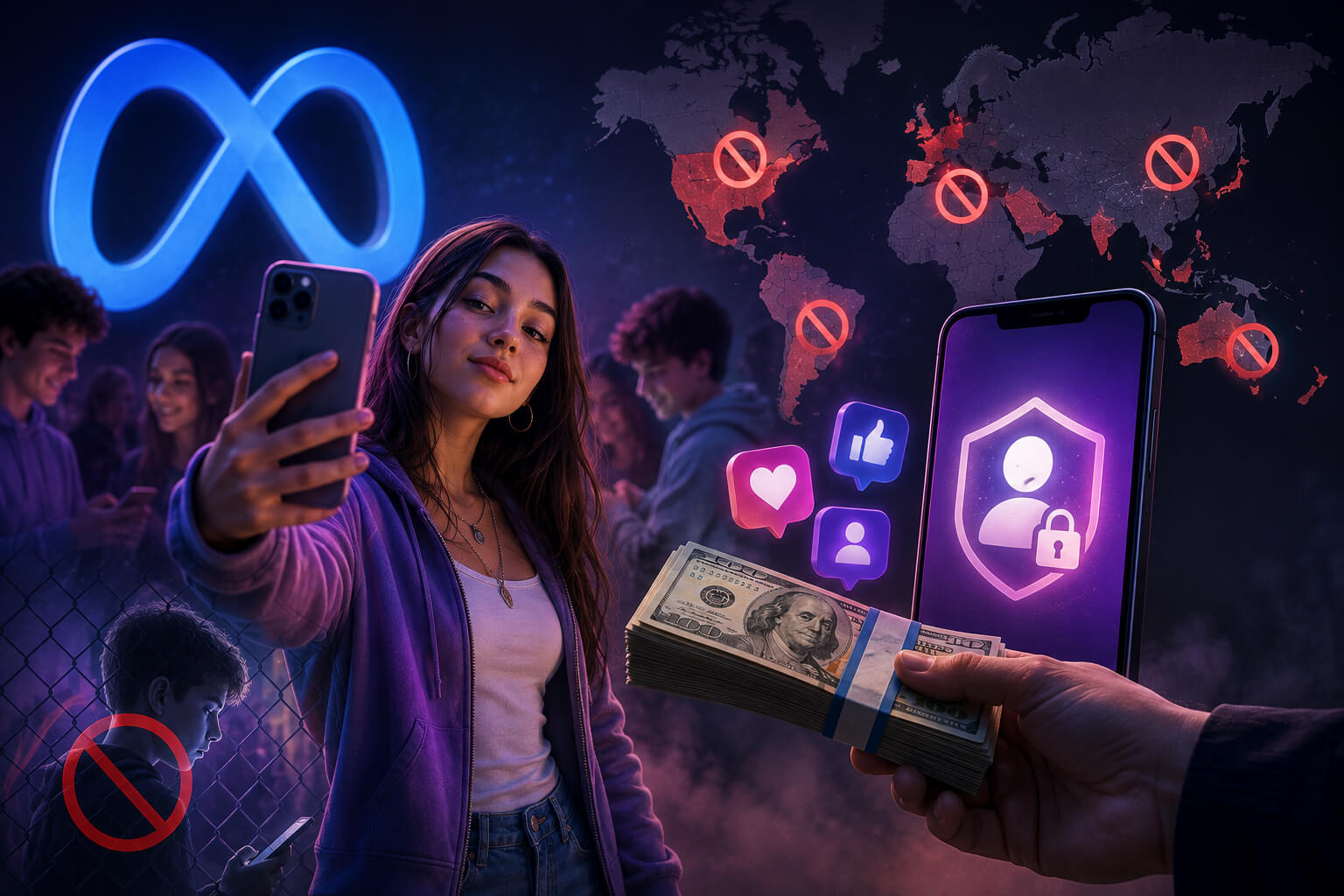
Meta is fighting the global push for tougher teen social media rules in a very Meta way: with creators. Recent reports have revealed that Meta pays influencers to promote teen accounts as part of its strategy.
A new report from the Tech Transparency Project says Meta has recruited influencers across multiple countries to promote Instagram’s safety features and Teen Accounts, particularly in markets where governments are considering bans or tighter restrictions on young people’s social media use. Some creators received paid partnerships or sponsored-post deals.
This isn’t just another influencer campaign built around a product launch.
The people Meta is trying to reach are parents, policymakers and families deciding whether Instagram and Facebook should have a place in teenagers’ lives at all.
Meta Has Turned Creators Into Part of Its Teen Safety Campaign
According to The Guardian and the Tech Transparency Project, Meta has been working with parenting, lifestyle and mental health creators since at least 2024 to talk about tools designed for younger Instagram users.
The strategy became particularly visible in Australia.
In July 2025, Meta brought parenting influencers together for an Instagram-branded “Screen Smart” event in Sydney. The event arrived months before Australia’s under-16 social media restrictions were due to take effect.
Some attendees later published sponsored content highlighting Instagram Teen Accounts and features such as parental supervision, tighter messaging settings and restrictions on sensitive content.
Meta does not publicly disclose the individual financial terms of those creator partnerships.
That detail matters.
Influencer marketing usually helps a company sell clothing, beauty products, software or travel. Here, creator relationships are being used inside a much larger argument over regulation.
Australia Put Meta Under Real Pressure
Australia became the first country to introduce a nationwide social media minimum age of 16, with the rules taking effect in December 2025.
Meta complied.
As of June 30, 2026, the company said it had removed access to more than 750,000 Facebook and Instagram accounts in Australia that it assessed as belonging to users under 16.
The company has also been surprisingly vocal about its disagreement with blanket bans.
Meta argues that simply excluding teenagers from established platforms could push them toward less regulated services. Its preferred approach revolves around age-appropriate accounts, parental controls and stronger age-detection technology.
Its Australian enforcement efforts now include AI systems that examine contextual signals in profiles, simplified reporting of suspected underage users and measures designed to stop removed users from simply registering again.
So Meta is complying with the law while simultaneously arguing that the law isn’t the best answer.
Creators have become one of the channels carrying that second message.
The Influencer Strategy Isn’t Limited to Australia
This is where the story becomes much bigger than a single campaign.
The Tech Transparency Project found similar activity in countries where governments were debating tougher rules for minors.
The Guardian reported that Meta ran versions of its creator outreach in markets including Indonesia and India. In India, parenting influencers published paid Instagram content demonstrating Teen Accounts after political discussions around age-based restrictions intensified.
Indonesia also became an important battleground as authorities moved toward stricter rules around children’s access to social platforms.
Different country. Similar playbook.
Find creators trusted by parents. Show them the safety features. Put those features into everyday social content rather than another corporate policy statement.
That last part is probably the most interesting piece for the creator economy.
Why Meta Needs Influencers for This Message
A safety announcement from Meta and a parenting Reel explaining Instagram controls don’t land the same way.
Creators bring something corporate communications teams struggle to manufacture: an existing relationship with an audience.
A parenting influencer can demonstrate a setting while talking about raising teenagers. A mental health creator can discuss online wellbeing without the post immediately looking like a technology company’s lobbying message. An actor with a family-focused audience can bring the discussion to millions of people who would never read Meta’s policy blog.
That makes creator trust unusually valuable.
It also makes disclosure unusually important.
When posts discussing children’s safety and proposed government regulation are sponsored by the platform affected by those regulations, audiences need to understand that commercial relationship clearly.
This is influencer marketing crossing into public policy.
That broader shift fits with how influencer marketing is becoming part of discovery, trust and decision-making rather than simply promotion.
Critics Say Teen Accounts Don’t Solve the Bigger Problem
Meta’s campaign has plenty of critics.
Former Facebook safety employee and whistleblower Arturo Bejar has argued that Instagram’s safeguards can still allow young users to find harmful material. Critics also question whether platform-controlled protections are enough when the platforms themselves have a commercial incentive to keep people engaged. Meta rejects the idea that its safety work is merely cosmetic.
The company says Teen Accounts offer stronger default protections, including limitations around who can contact teenagers and what types of sensitive content they encounter. It says its partnerships are intended to make parents aware that those controls exist. Neither side of this debate is disappearing anytime soon.
Governments are experimenting with bans, age verification and parental-consent requirements. Platforms are building more restrictions into teen accounts. Families are stuck somewhere in the middle trying to work out what actually keeps children safer. And creators are now being pulled directly into that fight.
Creator Marketing Is Becoming a Policy Tool
For the creator industry, this may be the bigger story. Influencers aren’t only being hired to move products anymore. Their credibility can be used to explain regulation, defend corporate positions and shape how audiences understand controversial technology policies.
Brands have known for years that a recommendation coming from a familiar creator can feel more persuasive than a conventional advertisement. Technology companies clearly know it too.
That puts creators in a more complicated position. A sponsored Instagram Reel about a phone case is straightforward. A sponsored Reel discussing whether teenagers need to be banned from social media carries a different level of responsibility.
Creators accepting these campaigns may face greater scrutiny over sponsorship disclosure, evidence behind safety claims and whether audiences understand who is paying for the message.
The growing overlap between creator influence and broader information ecosystems is also visible in brands using creators as part of their AI search strategies, where third-party content can shape how companies are discovered and understood beyond social feeds.
Meta’s Influencer Campaign Could Be a Sign of What’s Coming
The battle over teen social media is moving quickly from one country to another.
Australia has already forced major platforms to remove under-16 accounts. Other governments are considering their own versions of age restrictions, verification requirements and parental controls.
Meta’s response offers a glimpse at how major platforms may fight those policies.
- Not only through lawyers.
- Not only through lobbyists.
- Through creators.
That makes influencer marketing part of a regulatory strategy — and it could become much more common as governments begin asking harder questions about social platforms, artificial intelligence and children’s online safety.
For creators, agencies and marketers, that’s worth watching closely. The next big brand partnership might not be about selling anything at all.
It might be about changing how millions of people think about a law.
Sources
- The Guardian — “Meta is paying influencers to promote teen accounts”
- Tech Transparency Project — “Inside Meta’s Global Playbook for Fighting Child Safety Laws”
- Meta Newsroom — “Meta’s Compliance with Australia’s Social Media Ban”
