

AI is already everywhere in marketing. Social posts, retail media, ad testing, campaign reporting, content drafts — most teams are using it somewhere.
But influencer marketing? Brands are moving slower.
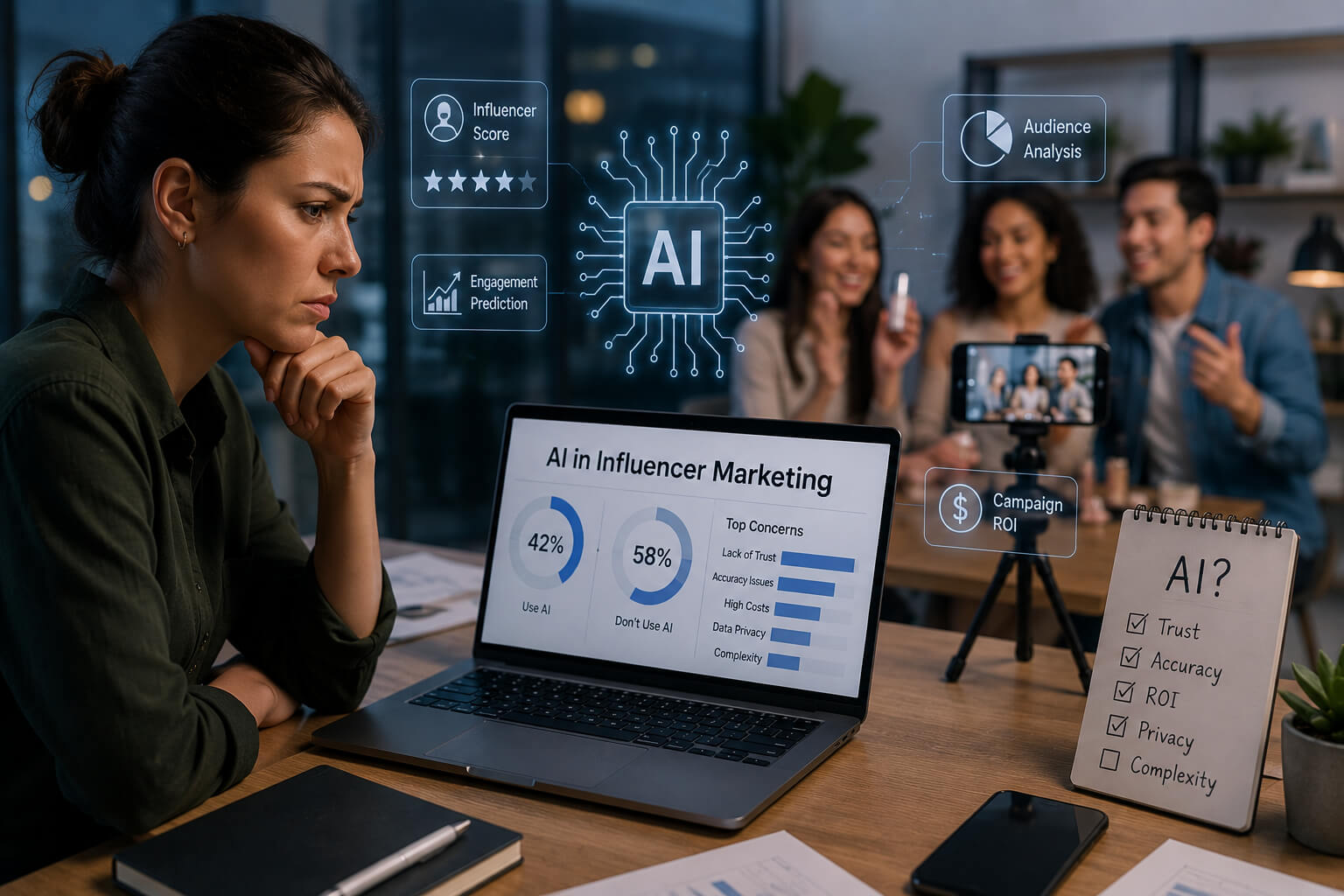
According to Digiday+ Research, only 25% of marketers said they use AI for influencer marketing work, based on a survey of more than 100 marketing professionals in the first quarter of 2026. That is low compared with other parts of digital marketing, especially social media and retail media, where AI adoption is moving faster.
Influencer Marketing Has a Trust Problem With AI
The hesitation is not hard to understand.
Influencer marketing still depends on something AI cannot fake easily: the feeling that a real person is speaking from real experience. A creator’s audience wants to believe the recommendation came from someone who actually tried the product, liked it, and chose to talk about it.
That becomes harder when AI enters the room.
Digiday pointed to a World Federation of Advertisers study from April 2025 showing that 96% of brands with no plans to work with virtual influencers cited consumer trust concerns as a reason for caution.
That number says a lot. Brands are curious about AI, yes. But they also know influencer marketing can collapse quickly if followers feel tricked.
AI Is Being Used, Just Not Everywhere Yet
Among marketers already using AI for influencer campaigns, the most common use is not replacing creators. It is analyzing data.
Digiday’s survey found that 75% of marketers using AI in influencer work use it for data analysis. Another 63% use it to create content, while 56% use it for influencer outreach.
That feels like the more realistic near-term future.
AI may help brands sort through creator lists, review engagement history, match influencers with campaign briefs, write outreach messages, or understand which audiences are more likely to respond. It does not necessarily mean brands want to replace human creators with digital avatars.
At least not yet.
Brands Want Scale, But Creators Still Need to Feel Human
Influencer campaigns are getting harder to manage manually.
Brands are no longer working with one or two big names and calling it a campaign. Many now want dozens, sometimes hundreds, of smaller creators across platforms, niches, regions, and audience types.
That is where AI becomes useful.
Digiday noted that Later uses AI to discover human creators for brands by matching campaign briefs with influencers and modeling possible performance using historic engagement data. Later CEO Scott Sutton told Digiday that brands increasingly need more creators, often smaller to mid-sized ones, in a more targeted way.
That is not glamorous. It is campaign plumbing. But it matters.
Finding the right creator at the right price, for the right audience, with the right likely performance, is exactly the kind of messy marketing task where AI can save time.
Creators Are Already Using AI Behind the Scenes
The funny part is that creators may be adopting AI faster than some marketers think.
Digiday cited Wondercraft data saying 80% of creators use AI at some point in their workflow.
That could mean script ideas, captions, thumbnails, audio, editing, translations, pitch emails, or brand deal organization. Not every AI use is obvious to the audience, and not every use makes the content feel fake.
For creators, AI is often less about pretending to be someone else and more about surviving the workload. Posting regularly, replying to fans, negotiating deals, editing videos, tracking trends, and chasing algorithms can become exhausting fast.
That is why creator tools are also moving toward AI agents and workflow automation. Digiday reported that POP.STORE launched an AI ECHO ME program designed to help creators identify revenue opportunities, generate content, and engage with fans.
Virtual Influencers Still Make Brands Nervous
Virtual influencers get attention because they look futuristic. They also give brands more control. No scheduling conflicts. No public scandals from a real person. No unpredictable creator opinions.
But control is not the same as trust.
A human influencer can be messy, inconsistent, and imperfect. That is part of why people believe them. A fully AI-generated personality can look polished but still feel hollow if audiences know every move is managed behind the curtain.
This is where brands have to be careful. AI can help influencer marketing become smarter. It can also make it feel colder.
The Real Shift Is Not Creator Replacement
The loudest version of this story is “AI will replace influencers.” That is probably too simple.
The more practical version is this: AI will change how influencer campaigns are planned, measured, pitched, and scaled.
Brands may use AI to find better creator matches. Agencies may use it to manage larger rosters. Creators may use it to handle admin work and speed up production. Platforms may use AI to connect content, commerce, and audience behavior more directly.
But the creator’s relationship with followers still matters. Maybe even more than before.
Why This Matters for Influencer Marketing
The Digiday research shows a clear gap. Marketers are interested in AI, but influencer marketing is not just another ad channel. It is built on personality, trust, and the belief that someone real is behind the recommendation.
That makes AI adoption slower.
Still, the direction is obvious. AI will keep entering influencer marketing, just not always in the flashy “virtual influencer” way. Much of it will happen quietly in the background: analytics, outreach, campaign matching, content support, and deal discovery.
For brands, the challenge is simple but uncomfortable. Use AI to make influencer marketing more efficient without stripping out the human reason people follow creators in the first place.
