

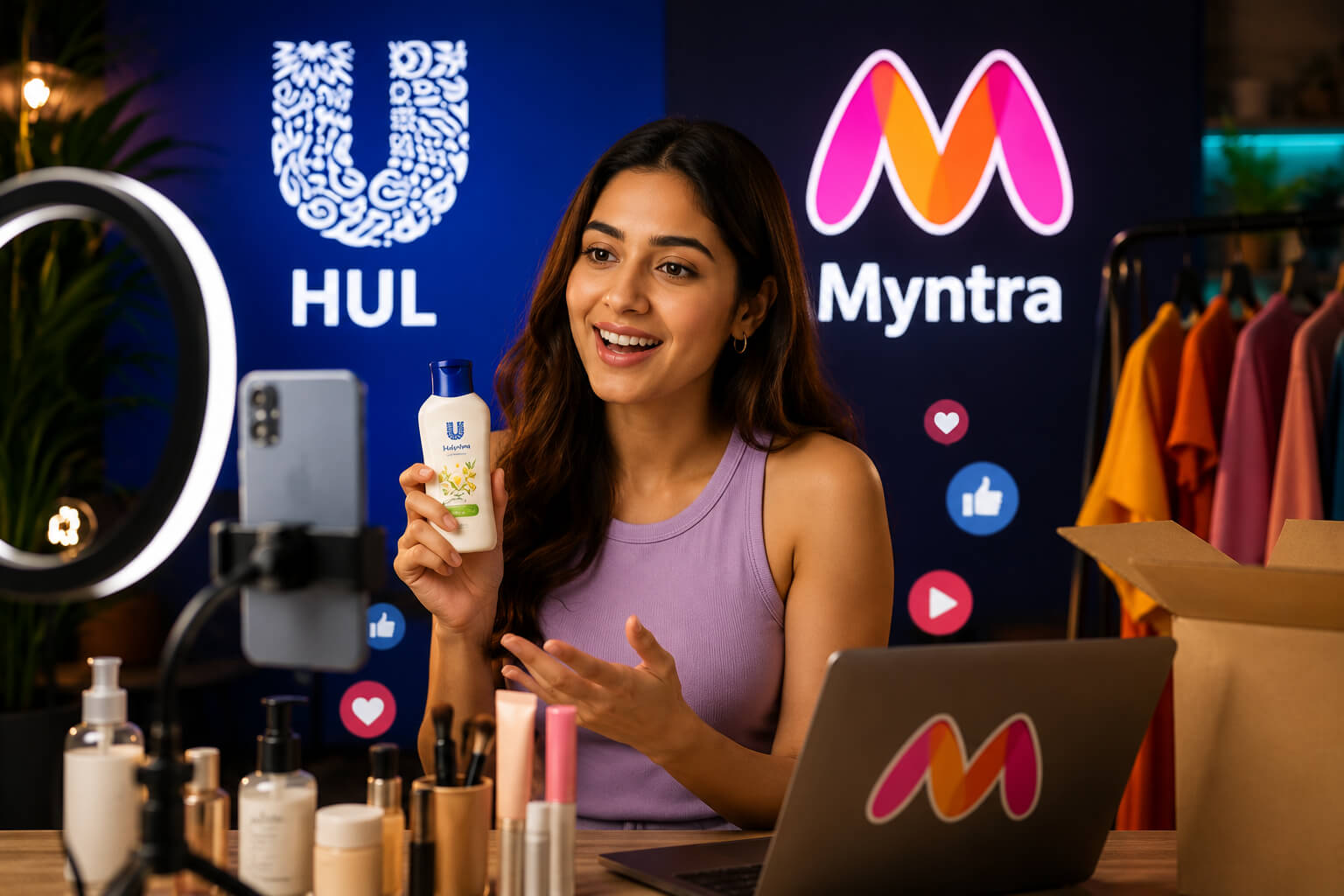
Influencer marketing is no longer sitting in the “experimental” corner of brand budgets. Developing an effective influencer marketing strategy is now essential for brands looking to maximise their reach and engagement.
For some companies, it has become part of the main machine. Not a side campaign. Not a Diwali add-on. Not a few Instagram reels because the social team asked for it. A serious marketing channel.
But not every brand is rushing in.
India’s consumer companies are now showing two very different moods. Hindustan Unilever, Marico, Myntra and Flipkart are expanding their creator-led marketing efforts to stay visible on Instagram, YouTube and social commerce feeds. Amul and Perfetti Van Melle, meanwhile, are still leaning on older brand-building playbooks, arguing that influencer content cannot replace distinctive storytelling built over years.
Influencer Marketing Strategy Is Becoming a Real Divide
The split says a lot about where brand marketing is heading.
On one side, large consumer and e-commerce companies are treating creators as a way to stay close to younger shoppers. These customers do not always discover products through TV ads or search bars anymore. Sometimes they see a lipstick in a reel. A kurta in a haul video. A snack in a comedy sketch. A skincare product in someone’s night routine.
That kind of discovery is messy, fast, and very hard to control.
Still, brands want in.
HUL and Marico are reportedly among the companies scaling creator networks, while Myntra and Flipkart are pushing further into social commerce and creator-led visibility. The logic is simple enough: if attention has moved to creator feeds, brands have to follow it.
Myntra Shows Why Creator Commerce Is Getting Serious
Myntra is one of the clearest examples of why brands are taking this seriously.
The fashion platform has said creator-led content now contributes around 10% of its overall revenue, with social commerce growing sharply in recent months. Myntra also counts millions of shopper-creators, with Gen Z making up a major share of that ecosystem.
That is not just “engagement.”
That is money.
Fashion is especially suited for this kind of marketing because people want to see products in motion. How does it fit? How does it look outside a studio shoot? Can someone style it with normal clothes, not just campaign-perfect outfits?
Creators answer those questions in a way polished advertising often does not.
Flipkart and Meta Are Also Moving Into Creator-Led Commerce
Flipkart Group has also partnered with Meta to expand creator-led commerce in India, allowing creators to tag Flipkart and Myntra products in social media content. The goal is clear: make the gap between watching and buying much shorter.
This is where influencer marketing stops being only about brand awareness.
It becomes shopping infrastructure.
A creator posts. A viewer taps. A product page opens. The sale happens before the shopper even thinks of opening a marketplace app.
For brands, that is tempting. Very tempting.
Amul and Perfetti Are Not Convinced
Then there is the other side.
Amul and Perfetti Van Melle are not abandoning classic advertising logic. Their argument is not that creators are useless. It is more that influencer marketing cannot replace a brand voice people already recognize and trust.
And honestly, that is not a weak argument.
Amul has built decades of recall through topical ads, humor and consistent visual identity. Perfetti Van Melle has also relied heavily on memorable campaigns and brand characters. For companies like these, jumping into influencer content too aggressively could make the brand feel less distinct.
A creator can bring reach. Maybe even credibility.
But can they carry a brand’s long-term memory?
That is the harder question.
The Risk: Everyone Starts Sounding the Same
There is a danger in the creator rush.
When every brand works with the same kind of influencer, uses the same content formats, pushes the same “relatable” scripts and tracks the same performance metrics, the work starts blending together.
Another unboxing. Another “things I loved this week.” Another discount-led reel. Another forced casual recommendation.
Audiences notice.
They may not say it in marketing language, but they feel when a post is too clean, too paid, too obviously briefed by a brand manager. That is where influencer marketing loses its magic.
The more brands scale creator campaigns, the harder authenticity becomes to protect.
Still, Brands Cannot Ignore Creator Culture
Even with the risks, brands cannot pretend the shift is not happening.
Young consumers spend a huge part of their attention inside creator-led platforms. They discover trends there. They compare products there. They trust certain personalities more than traditional ads. Sometimes they do not even separate entertainment from shopping anymore.
That is why creator marketing keeps growing.
But the smartest brands may not be the ones hiring the most influencers. They may be the ones that know when to use creators, when to stay quiet, and when to let the brand itself do the talking.
The Future Is Not Influencers Versus Advertising
The debate is often framed too neatly.
Influencers on one side. Traditional advertising on the other.
Real marketing is not that clean.
HUL, Myntra, Marico and Flipkart are chasing attention where it now lives. Amul and Perfetti Van Melle are protecting brand equity that took decades to build. Both moves make sense, depending on the brand, the category and the customer.
The bigger lesson is this: influencer marketing is no longer optional background noise. It is now a strategic choice.
Use it badly, and the brand becomes forgettable.
Use it well, and a creator can do what a polished ad sometimes cannot: make a product feel like it already belongs in someone’s life.
Source: Economic Times
