

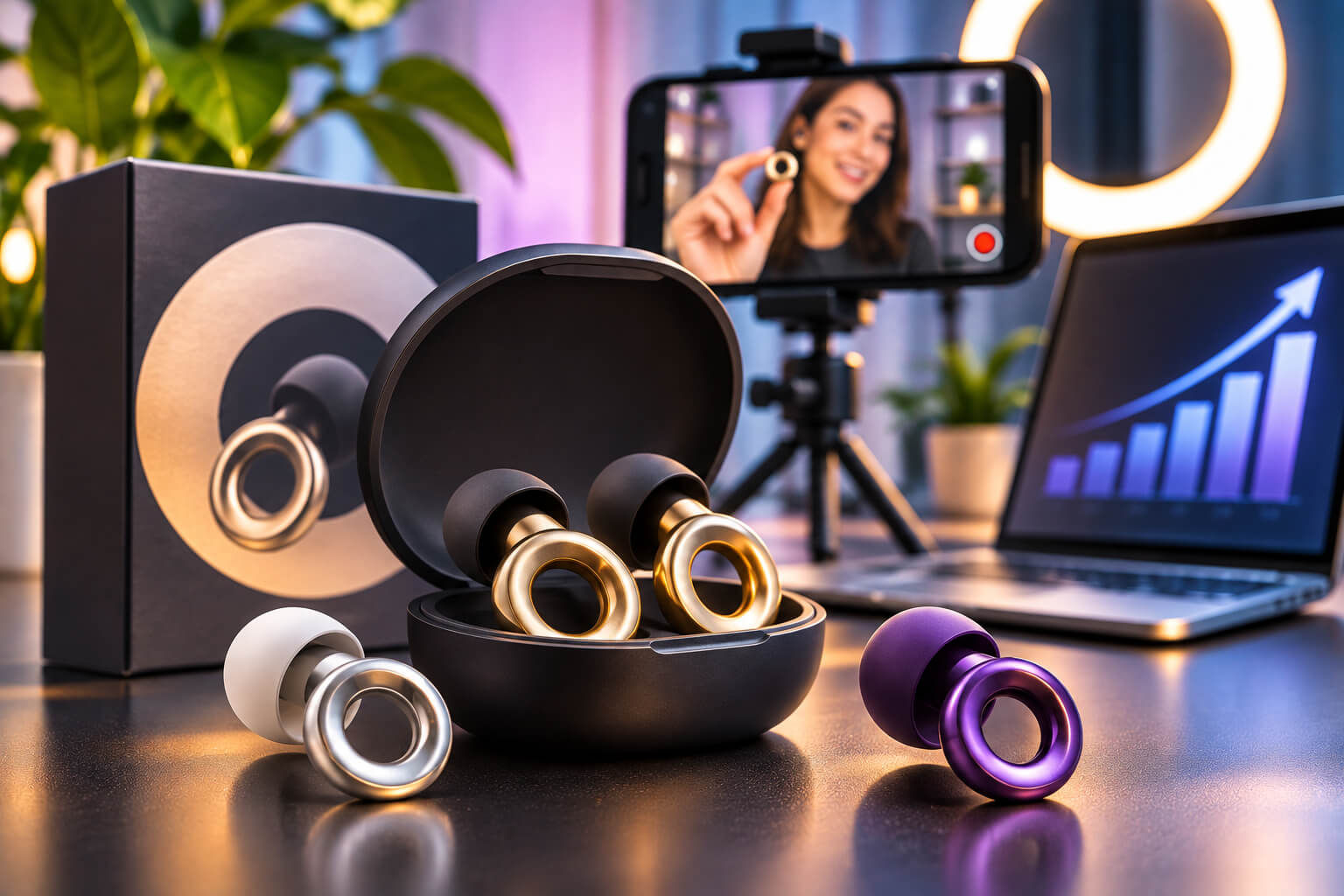
Loop Earplugs is showing how creator marketing can help build a consumer brand without relying entirely on paid advertising. The Belgian earplug company has grown from approximately $100 million in annual revenue three years ago and is now targeting between $240 million and $250 million in 2026.
The company’s approach goes beyond paying influencers to promote products. It combines creator partnerships, celebrity collaborations, experimental marketing budgets and a willingness to measure success over longer periods.
Rob Weston, Chief Commercial and Marketing Officer at Loop Earplugs, recently discussed the company’s growth strategy on the D2C Diaries podcast. His comments, highlighted in a November 1 report by Net Influencer, reveal six lessons for brands trying to make creator marketing a more sustainable part of their business.
One point stands out: not every creator campaign needs to generate immediate sales to justify its existence. But brands still need to know what they’re paying for.
Loop Earplugs Moves Beyond Meta Ads to Build a Stronger Marketing Strategy
When Weston joined Loop around three years ago, the company was generating approximately $100 million annually, with Meta advertising driving much of its customer acquisition. Facebook and Instagram campaigns had helped establish a successful direct-to-consumer business, but relying too heavily on one advertising ecosystem presented long-term risks.
Weston recognized that Meta’s advertising performance might not continue delivering the same results indefinitely. Rising acquisition costs, competition and changes in consumer behaviour could eventually limit growth. Loop needed other ways to introduce its products to customers.
The company began expanding its marketing activities across YouTube, Google, creator partnerships, cultural events and celebrity collaborations. These investments complemented its existing performance campaigns rather than replacing them.
Loop’s broader strategy also involved strengthening its brand identity and expanding into physical retail. The goal was to build a business that could attract customers through several channels instead of depending on one advertising platform.
Lesson 1: Allocate a Dedicated Budget for Creator Marketing Experiments
Loop made an important change by separating part of its marketing budget from conventional performance advertising. According to Weston, approximately 10% of the company’s marketing spending went toward experimentation, giving the team more flexibility to explore creator partnerships and other brand-building activities.
Traditional performance campaigns typically targeted a return on ad spend between 2.5 and 3. Experimental campaigns operated with an initial ROAS expectation closer to 1. That difference allowed Loop to test ideas that might not produce immediate purchases but could introduce the brand to valuable audiences.
Creators selected for their influence, cultural relevance or audience relationships could receive funding through this experimental allocation. The company didn’t need to judge every collaboration against the same financial targets used for direct-response advertising.
For brands, the lesson is straightforward. Creator marketing becomes difficult to develop when every campaign must prove its value through immediate conversions. A dedicated experimental budget provides room to discover what works without putting the entire marketing operation at risk.
Lesson 2: Keep Creator Marketing Accountable Without Obsessing Over Immediate ROI
Loop’s experimental budget wasn’t an excuse to spend money without measuring results. Weston emphasized that marketers still need accountability, even when campaigns focus on awareness or long-term brand development.
The challenge is deciding which measurements make sense for each activity. A creator partnership intended to introduce a product to a new audience shouldn’t necessarily face the same expectations as an advertisement designed to generate purchases that day.
A video might reach thousands of potential customers who have never heard of Loop. Some viewers could become interested immediately, while others might remember the product and purchase weeks later. Traditional conversion tracking may struggle to capture that influence.
Weston’s approach recognizes that marketing results don’t always appear at the same speed. Campaigns can contribute to awareness, consideration and eventual sales without producing an immediate measurable return.
That doesn’t make every creator partnership valuable. Brands still need evidence that their investments are moving in the right direction. The difference is allowing the campaign’s purpose to determine how success gets measured.
Lesson 3: Agree on Marketing Performance Metrics Before Launching Campaigns
Loop also changed how it approached marketing experiments with longer customer journeys. When the company tested YouTube and Google campaigns, Weston worked with its CEO and CFO to establish performance expectations before the campaigns began.
The team considered an attribution period of at least 12 weeks rather than relying entirely on short conversion windows. During that time, Loop monitored early indicators such as website traffic, branded search activity, brand lift and conversion lift.
These signals helped the company evaluate whether its investment was gaining momentum before the full financial impact became clear. If the indicators suggested progress, the team could continue investing instead of ending the campaign prematurely.
Weston acknowledged that some brand-building effects may take as long as 18 months to develop. That’s difficult for companies operating under pressure to deliver quarterly results, particularly those backed by investors.
Loop’s solution was to establish expectations in advance and maintain communication between marketing and finance teams. For creator marketing programs, this approach can prevent disagreements that arise when executives expect immediate revenue from campaigns designed primarily to build awareness.
Lesson 4: Partner With Creators and Celebrities Who Already Use the Product
Loop’s celebrity marketing strategy places considerable value on genuine product familiarity. Instead of selecting partners solely because of their popularity, the company has looked for personalities who already use its earplugs.
Weston recalled seeing Harry Styles wearing Loop products at Glastonbury before the company established a partnership with him. The team also noticed Formula 1 driver Lando Norris using its earplugs before developing a formal relationship.
Paris Hilton followed a similar pattern. According to Weston, she was already interested in Loop before the brand approached her about collaborating. The relationship later included a limited-edition Loop Engage product released in August 2026 and involvement in an ADHD-focused creator summit hosted by Hilton in October.
These connections gave Loop a more credible foundation for its partnerships. Rather than asking celebrities to promote unfamiliar products, the company could work with people who already understood their appeal.
That distinction matters as audiences become more accustomed to sponsored content. A recognizable name can attract attention, but an authentic connection between the creator and the product may make the recommendation more convincing.
Lesson 5: Structure Creator Collaborations Around Product Sales and Revenue Sharing
Celebrity collaborations can generate attention, but they can also become expensive. Loop addressed that risk by developing commercial agreements tied to product sales rather than relying entirely on publicity value.
Weston described arrangements in which partners received a minimum payment followed by a share of revenue. Before launching a co-branded product, Loop calculated how many units it needed to sell to recover the collaboration’s costs.
Once the product reached that break-even point, additional sales could contribute to profitability. Public relations coverage, social media engagement and increased brand recognition became additional benefits rather than the only justification for the investment.
This structure gave Loop a clearer financial argument for collaborations that might otherwise be difficult to evaluate. It also connected the partnership’s commercial performance to actual consumer demand.
For creators, revenue-sharing agreements can provide opportunities beyond fixed sponsorship payments. For brands, they offer a way to link creative partnerships with measurable business outcomes.
The model isn’t risk-free. Product development, manufacturing expenses and uncertain demand still affect profitability. But it demonstrates how creator collaborations can operate as commercial partnerships rather than one-off promotional arrangements.
Lesson 6: Coordinate Creator Campaigns Across Multiple Marketing Channels
Loop also learned that creator partnerships can become more effective when brands coordinate promotional activity across several channels. During its Harry Styles collaboration, the company brought together public relations, outdoor advertising near Wembley, influencer activity and paid campaigns around a shared launch date.
The idea was to concentrate attention instead of spreading promotional efforts across unrelated moments. Someone might encounter the collaboration through a creator, notice advertising outside a venue and later see another campaign online.
Weston pointed to a Vaseline campaign involving approximately 450 creators as another example of how coordinated activity can create widespread visibility.
However, involving more creators also increases the difficulty of maintaining consistent messaging. Loop encountered situations where performance-focused affiliate creators described its products using aggressive discount language that didn’t match the brand’s positioning.
Some promotional posts made the products appear as though they were part of a clearance sale. Weston considered that approach unacceptable because it risked damaging the image Loop had worked to establish.
The experience highlights a common challenge in influencer marketing. Brands need creators to communicate naturally, but they also need clear standards that protect product accuracy and brand identity.
Why Measuring Creator Marketing Remains Difficult for Loop Earplugs
Despite Loop’s success in expanding its marketing strategy, Weston acknowledged that measuring individual creator contributions remains challenging. A creator might introduce a product to thousands of viewers without generating purchases that can be directly attributed to the original post.
Loop has worked with influencer marketing platform The Cirqle to evaluate performance-focused creator campaigns. Such tools can help track conversions and campaign results, but they don’t necessarily capture every interaction that influences a purchasing decision.
Someone might discover Loop through an influencer, encounter another recommendation later and eventually purchase through a Google search or retail store. The final transaction may appear connected to the last interaction, even though the original creator helped generate interest.
This creates a measurement problem for brands investing in awareness-focused partnerships. Traditional attribution systems can identify some commercial outcomes while missing the longer-term influence of repeated exposure.
Weston’s position reflects that uncertainty. He supports continued investment in the creator economy while recognizing that marketers still lack perfect tools for measuring every creator’s contribution.
Loop Earplugs’ Growth Shows the Value of Diversified Creator Marketing
Loop’s journey from approximately $100 million in annual revenue to a projected $240 million to $250 million in 2026 illustrates the potential of a marketing strategy that combines several approaches.
The company has continued using performance advertising while investing in creators, celebrity partnerships, cultural events and retail expansion. Collaborations involving Harry Styles, Paris Hilton, McLaren and major music festivals have helped connect Loop with audiences beyond traditional hearing protection customers.
Those relationships also support the company’s effort to position earplugs as lifestyle accessories associated with music, entertainment and personal comfort.
Creator marketing is only one part of that growth. Product development, distribution, retail partnerships and other advertising investments have also contributed to the company’s expansion. The projected revenue figure doesn’t establish how much additional revenue creator campaigns generated independently.
What makes Loop’s approach noteworthy is its willingness to fund experimentation while maintaining financial accountability. The company gives marketing activities time to develop, but it also establishes performance indicators and commercial expectations.
What Brands and Creators Can Learn From Loop’s $250 Million Growth Strategy
Loop Earplugs offers a practical example of how creator marketing can become a more established part of a company’s growth strategy.
Its experience suggests that brands need to move beyond choosing influencers based only on follower counts or judging every campaign by immediate sales. Relevant partnerships, clear financial structures and realistic measurement periods can make creator investments easier to manage.
The company also demonstrates the importance of coordination. A creator campaign can reach audiences through social media, paid advertising, events and retail, but the message needs to remain consistent across those channels.
For creators, the growing use of co-branded products and revenue-sharing agreements could create opportunities to develop longer-term business relationships.
For marketers, the biggest challenge remains balancing short-term performance with brand development. Companies need measurable results, but they also need to recognize that customer demand can develop gradually.
Loop’s projected $250 million revenue target for 2026 is not yet a confirmed full-year result. Even so, its growth strategy provides a useful case study in how brands can combine creator influence, disciplined experimentation and commercial planning.
The takeaway isn’t that every business should copy Loop’s marketing budget or celebrity partnerships. It’s that creator marketing works best when companies understand what each collaboration is supposed to achieve and give it an appropriate way to prove its value.
Sources
- Net Influencer – How Loop Earplugs Grew From $100M to $250M: 6 Creator Marketing Lessons From Its CMO
- D2C Diaries Podcast – The Playbook That Took Loop Earplugs From $100M to $250M With CMO Rob Weston
- Hanson Search – Leadership Lessons: Rob Weston
