

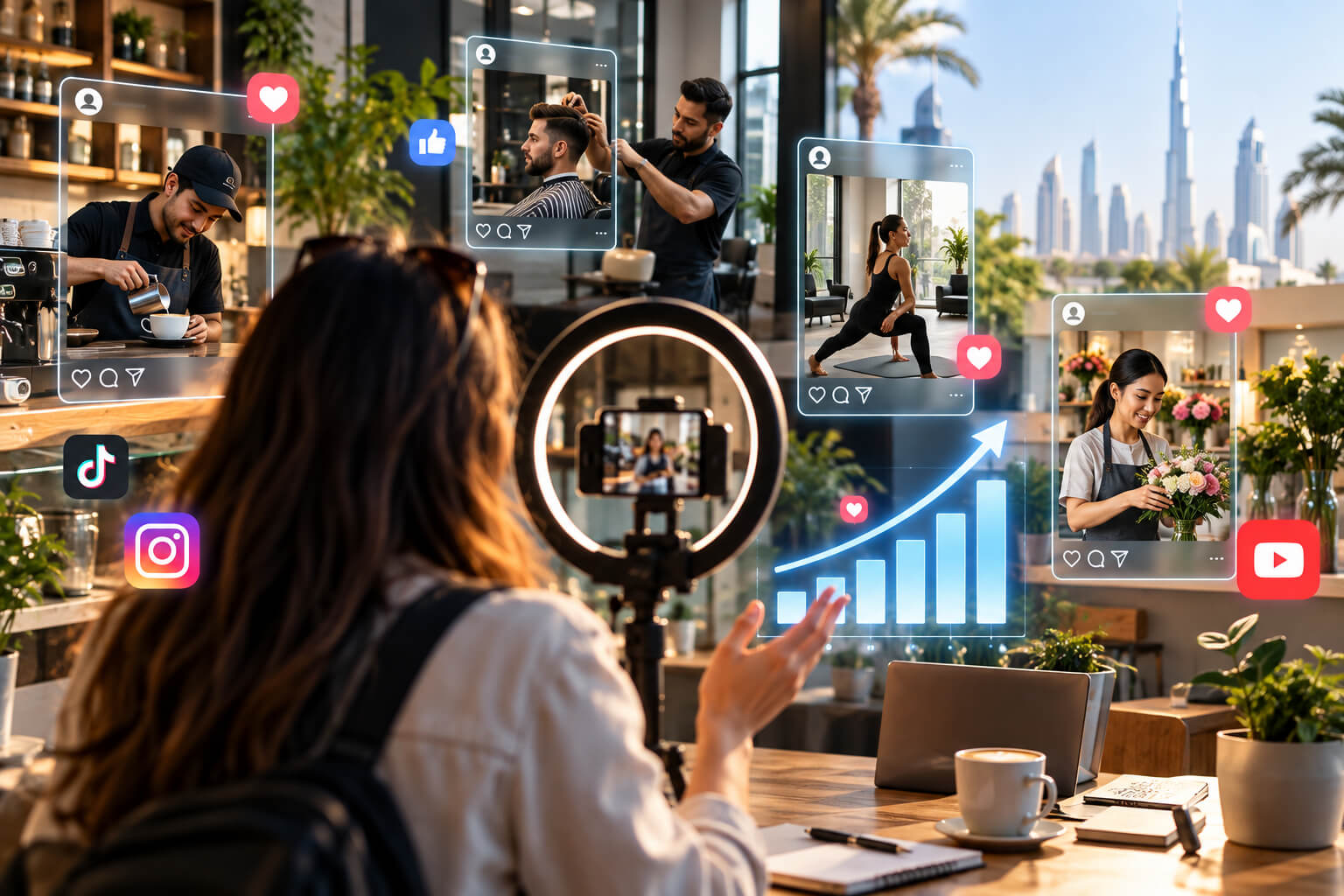
Creator marketing is getting much more local.
For years, influencer campaigns mostly brought to mind fashion labels, beauty companies, restaurants and consumer brands paying creators to put products in front of huge online audiences. That model still exists. But in 2026, a quieter version of creator marketing is starting to make sense for plumbers, cleaners, landscapers, contractors, repair companies and other businesses that only need to reach people within a relatively small geographic area.
The logic is simple. A creator does not necessarily need hundreds of thousands of followers to influence purchasing decisions. Sometimes a few thousand followers concentrated in the right city, neighborhood or community can be far more useful.
That changes the calculation for local businesses and gives nano and micro creators another potential source of commercial partnerships.
Local Word of Mouth Has Moved Onto Social Media
Local recommendations are not new, but the place where people discover them has changed. A homeowner might once have asked a neighbor which contractor they used. Now that same recommendation can appear in a TikTok renovation video, an Instagram Reel showing a before-and-after cleaning job, or a creator’s post about businesses worth trying in their city.
For a local service provider, that kind of reach can be surprisingly valuable. A creator with a modest but geographically concentrated audience may put the business in front of people who can actually book the service. That can matter more than generating tens of thousands of views from users scattered across different cities or countries.
The opportunity is especially relevant because small businesses make up the overwhelming majority of companies in markets such as the United States. Those businesses are constantly competing for local attention, and creator recommendations give them something traditional search advertising often struggles to reproduce: a familiar person showing what the service actually looks like in real life.
Audience Location Matters More Than Creator Size
Traditional influencer metrics can become misleading when the business only serves a limited area. A local contractor does not necessarily need the biggest creator available. It needs the creator whose audience overlaps with the contractor’s service area.
Imagine a landscaping company operating around one metropolitan area. A lifestyle creator with 500,000 followers sounds impressive, but that audience becomes much less useful if only a tiny percentage lives nearby. A local home-and-garden creator with 8,000 followers may be a stronger fit if a significant share of those followers live within the company’s actual service radius.
That is why geographic concentration is becoming one of the most important considerations in local creator campaigns. Businesses should look beyond total follower numbers and ask where those followers actually live, because relevance often matters more than scale.
Nano and Micro Creators Fit the Local Business Model
Nano and micro creators are especially well suited to local campaigns because they often build audiences around highly specific communities. Their content may focus on a city, neighborhood, university, parenting community, local food scene, property market or particular hobby.
Their numbers may look small on a media kit, but their relevance can be unusually high. A local business does not need to reach everyone. It only needs to reach enough potential customers in the right area.
This also fits the broader shift in influencer marketing toward measurable outcomes. Brands increasingly want creator campaigns tied to conversions, inquiries, bookings and sales instead of relying on impressions alone. Local businesses often have an advantage because they can see the impact more directly when customers begin mentioning a creator or arriving through a campaign link.
For creators, this opens up a wider pool of possible brand relationships beyond national consumer companies.
The Best Local Creator May Not Be in the Same Industry
Finding the right creator does not always mean searching for someone who talks directly about the exact service being promoted. In many cases, category adjacency works better.
A cleaning company could collaborate with a home-organization creator. A landscaper could work with a local property creator. A renovation account might be a strong match for electricians, painters, flooring companies or contractors. A parenting creator with a highly local audience could also introduce family-oriented services to exactly the type of customers those businesses want to reach.
The creator’s audience needs to make sense for the purchase. That sounds obvious, but follower counts can still distract marketers from the question that matters most: are these viewers realistic customers for the business?
Engagement Quality Still Needs a Human Check
Audience data tells part of the story, but the comment section often tells the rest. Before signing a creator, local businesses should look through recent posts rather than relying entirely on headline engagement rates.
If followers ask specific questions, discuss local places, tag friends or request recommendations, that can indicate a strong community relationship. It also matters whether the creator actually responds and interacts with those followers.
Those signals often reveal more than a follower total. A creator with 6,000 followers and an active local audience can potentially deliver more useful attention than an account with 60,000 followers and little meaningful interaction.
Local campaigns reward relevance and trust. Scale comes second.
Service Businesses Have a Natural Content Advantage
Many local service businesses are naturally suited to creator content because their work produces visible transformations. Pressure washing, landscaping, painting, detailing, cleaning, remodeling, flooring and home repairs all create clear before-and-after moments.
That structure fits short-form video particularly well. There is a problem at the beginning, a process in the middle and an obvious result at the end.
Instead of forcing a creator to deliver a polished advertising script, a business can allow the service itself to become the content. The creator can document the experience, show the work being done and then share an opinion afterward.
That tends to feel more like a recommendation than a commercial, which is important because audiences can usually tell when a brand message feels overly scripted.
Local Businesses Do Not Need Complicated Creator Campaigns
A local business does not need to build an elaborate influencer program to get started. The first campaign can be small and fairly straightforward.
A company could identify creators on TikTok or Instagram who regularly post about its city, then narrow the list based on audience location, content relevance and engagement quality. Even a handful of carefully selected creators may be enough to test whether the strategy works.
The partnership structure can also stay simple. Depending on the service and creator, the collaboration could involve a paid partnership, a complimentary service, a discounted service or an affiliate arrangement. What matters is that the commercial relationship remains transparent and follows relevant disclosure rules.
The creator should also have enough freedom to make the content feel natural. Businesses can provide key information, but over-controlling the script often makes the promotion feel less believable.
Track Bookings, Not Just Views
Local businesses should avoid judging creator campaigns only by views, likes or reach. Those numbers can look impressive without producing meaningful business results.
A video might reach 100,000 people, but that has limited value if nobody requests a quote or books a service.
The more useful signals are website visits, calls, inquiry forms, booking activity, promotional codes, tracked links and customers mentioning the creator directly. Businesses can also simply ask new customers how they heard about the company.
That kind of basic attribution can reveal whether creator marketing is generating actual business rather than attractive social media statistics.
Views matter, but local intent matters more.
Creators Could Become Part of the Local Marketing Stack
The bigger opportunity may come from repeat partnerships rather than a single successful post.
A local business could gradually build a small network of creators across its community. One collaboration might happen this month, another several weeks later, and another with a returning creator toward the end of the year.
Over time, those appearances can make the business feel familiar within local online communities. It stops looking like a company that simply bought one influencer post and starts becoming a name people repeatedly encounter through trusted voices.
For creators, this can also lead to more recurring commercial relationships with nearby businesses. Local companies may have smaller individual budgets than major consumer brands, but there are far more of them, and many need ongoing content, social proof and customer acquisition support.
What This Means for the Creator Economy
Creator marketing has spent years chasing scale. Local campaigns move in a different direction.
The most valuable creator may not be the one with the largest following. It may simply be the person with the right audience, in the right place, with enough credibility to influence a real purchasing decision.
That creates opportunities for creators who might never describe themselves as traditional influencers. Local property accounts, food creators, parents, DIY channels, community pages and city-focused personalities can all become useful marketing partners when their audiences overlap with actual demand.
For local businesses, the takeaway is equally simple. Do not start with follower count. Start with relevance.
A creator followed by several thousand people living close to your business may be far more valuable than a much larger creator whose audience is spread across the world.
Sources
TechBuzzIreland — Creator Marketing for Local Service Businesses: What’s Actually Working in 2026
https://techbuzzireland.com/2026/09/08/creator-marketing-for-local-service-businesses-whats-actually-working-in-2026/
U.S. Small Business Administration — Small Business Profiles
https://advocacy.sba.gov/
