

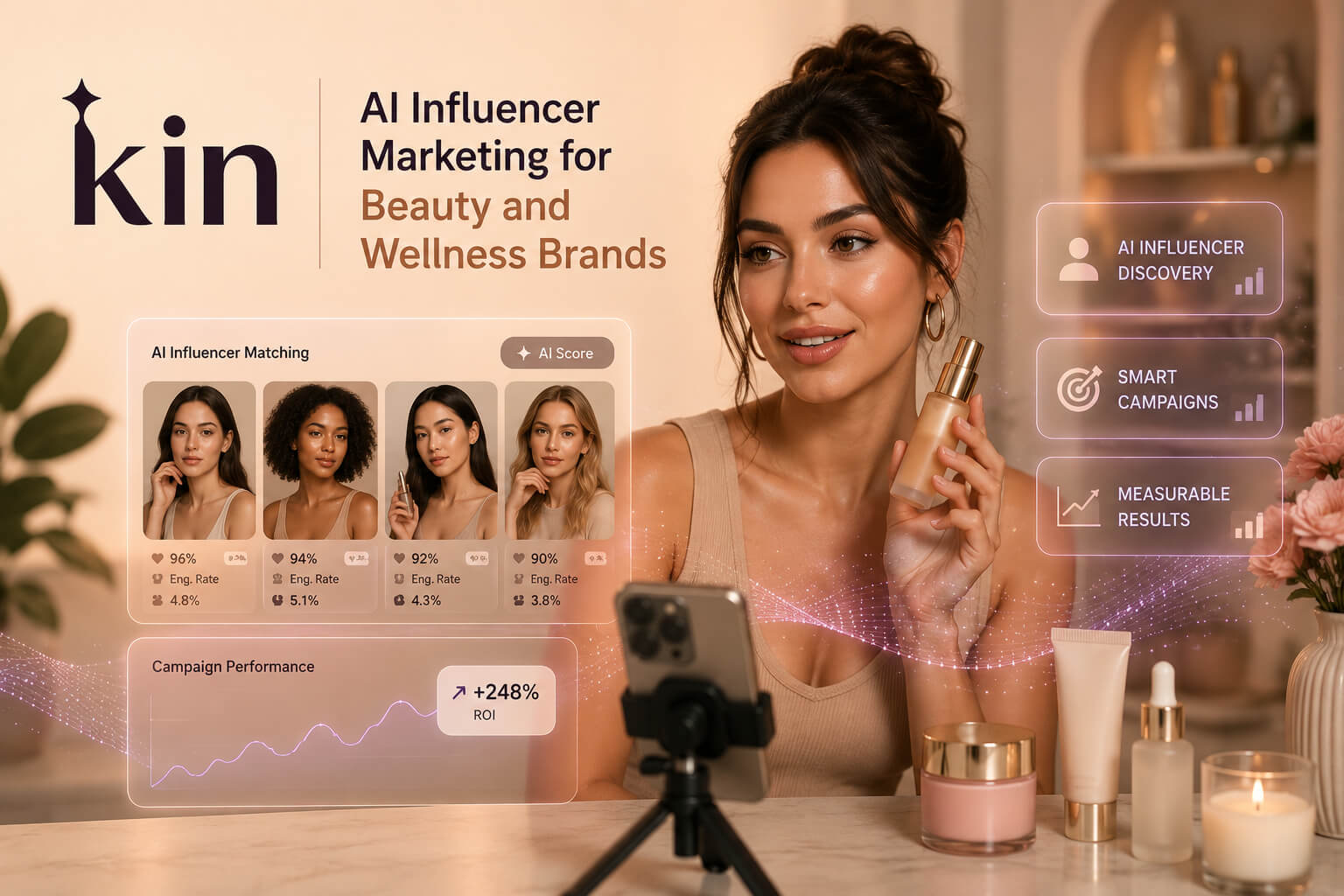
Artificial intelligence is becoming a bigger part of the creator economy, and beauty and wellness brands are now getting more specialized tools to manage influencer partnerships. Kin, an AI-native creator marketing platform, is positioning itself as a solution for brands that want to build stronger, more authentic relationships with creators while improving campaign efficiency.
The platform focuses on helping beauty and wellness companies discover creators, manage collaborations, and organize influencer marketing workflows in one place. As creator partnerships become more important for product discovery, brand trust, and social commerce, tools like Kin reflect a wider shift in how brands approach influencer marketing.
AI Is Changing Influencer Marketing
Influencer marketing has become more data-driven in recent years. Brands no longer rely only on follower counts or surface-level engagement when choosing creators. Instead, they are looking for creators who match their audience, values, content style, and long-term brand goals.
An AI influencer marketing platform can help brands analyze creator fit more quickly. This may include reviewing content themes, audience relevance, engagement quality, and potential campaign performance. For beauty and wellness companies, this matters because consumers often look for creators who feel credible, relatable, and knowledgeable.
In categories like skincare, cosmetics, supplements, fitness, and self-care, trust is especially important. A creator’s recommendation can influence buying decisions, but only if the partnership feels authentic.
Why Beauty and Wellness Brands Need Smarter Creator Tools
Beauty and wellness brands often work with large networks of creators, from micro-influencers and skincare educators to lifestyle creators and professional experts. Managing those relationships manually can become time-consuming.
Kin aims to support this process by giving brands a more organized way to manage creator partnerships. Instead of treating influencer marketing as a one-off campaign strategy, the platform appears designed around ongoing creator relationship management.
That approach reflects where the industry is heading. Brands are increasingly focused on long-term partnerships, community building, and measurable creator-led commerce rather than short-term sponsored posts.
Authenticity Remains the Biggest Challenge
Even as AI becomes more useful in creator marketing, authenticity remains a major concern. Consumers are becoming more aware of AI-generated content, paid partnerships, and overly polished influencer campaigns.
For beauty and wellness brands, this creates a delicate balance. AI can help brands work faster and make better decisions, but the human side of influencer marketing still matters. Audiences want real experiences, honest opinions, and relatable content.
This is why the most successful AI influencer marketing platforms will likely focus on supporting human creators rather than replacing them. AI can help with discovery, organization, performance tracking, and campaign planning, while creators continue to provide the personal storytelling that drives trust.
What Kin’s Platform Could Mean for the Creator Economy
Kin’s entry into the beauty and wellness space highlights a growing demand for niche creator marketing technology. Instead of offering a broad influencer database for every industry, specialized platforms can serve the unique needs of specific categories.
For beauty brands, that may mean finding creators who understand product education, skin concerns, makeup application, ingredient claims, or wellness routines. For wellness companies, it may mean identifying creators who can communicate lifestyle benefits while staying credible and compliant.
As more brands invest in influencer marketing, platforms that combine AI with relationship management could become increasingly valuable.
The Future of AI in Influencer Marketing
AI is not just changing how brands create content. It is changing how they choose partners, measure results, and build creator communities.
The rise of platforms like Kin suggests that influencer marketing is moving into a more intelligent and structured phase. Brands want better tools, creators want better partnerships, and audiences want content that feels useful and real.
For beauty and wellness brands, the next stage of influencer marketing may depend on finding the right balance between automation and authenticity. AI can make creator marketing more efficient, but trust will remain the most important factor.
As the creator economy continues to evolve, Kin’s AI influencer marketing platform shows how beauty and wellness companies are preparing for a future where technology and human influence work together.
