

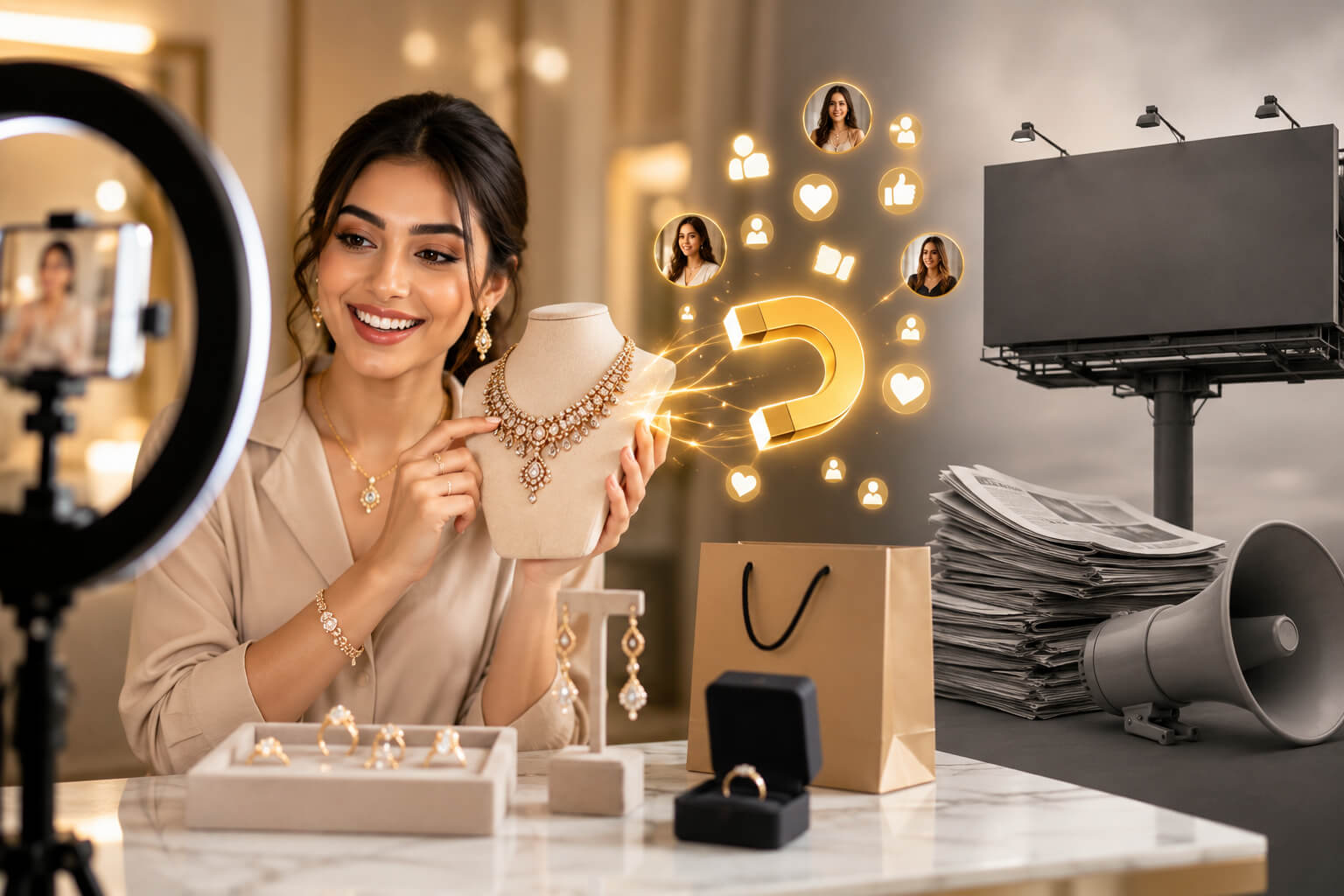
The jewellery industry is undergoing a significant shift in marketing strategy. Luxury and fashion jewellery brands are gradually moving away from traditional advertising methods such as television commercials, magazine ads, and billboards. Instead, they are investing heavily in influencer marketing and creator partnerships to connect with modern consumers.
This transformation is being driven by changing consumer habits, the rapid growth of social commerce, and increasing demand for authentic storytelling. In 2026, influencers are no longer viewed as simple promotional tools — they are becoming long-term brand ambassadors and major revenue drivers for jewellery companies worldwide.
Consumers Trust Influencers More Than Traditional Advertising
Modern consumers, particularly Millennials and Gen Z audiences, are becoming less responsive to polished corporate advertising. Instead, they trust recommendations from creators they follow regularly on platforms like Instagram, TikTok, and YouTube.
Industry research shows that influencer recommendations strongly affect purchasing decisions because audiences often perceive creators as more relatable and authentic compared to celebrities or traditional advertisements.
This level of trust is especially important for jewellery brands. Jewellery products are emotional, highly visual, and personal purchases. Consumers want to see how jewellery pieces appear in real-life situations, how they are styled, and how they fit into everyday lifestyles. Influencers help deliver that experience through storytelling and relatable content.
Instagram and TikTok Are Becoming Jewellery Storefronts
Social media platforms have effectively become digital storefronts for jewellery brands. Instagram Reels, TikTok videos, and creator-led styling content are now producing stronger engagement than many traditional advertising campaigns.
Brands are increasingly using creators to produce content such as:
- Jewellery styling tutorials
- “Get Ready With Me” videos
- Product reviews
- Unboxing content
- Wedding and luxury lifestyle campaigns
- User-generated content initiatives
Marketing experts note that Instagram remains one of the most powerful platforms for jewellery discovery because of its visual-focused format and integrated shopping features.
TikTok is also rapidly influencing jewellery sales through viral trends and creator storytelling. Many consumers now discover jewellery brands through short-form videos rather than television advertisements or print campaigns.
Micro-Influencers Are Producing Better Results
One of the biggest reasons jewellery brands are shifting budgets toward influencers is improved return on investment. Rather than spending massive amounts on large-scale advertising campaigns, companies are achieving stronger engagement through micro and niche creators.
Micro-influencers typically offer:
- Smaller but highly engaged audiences
- Stronger community trust
- Higher conversion rates
- Lower collaboration costs
Research suggests that nano and micro-influencers frequently outperform celebrity creators when it comes to engagement and audience authenticity.
As a result, many jewellery brands are now focusing on long-term creator partnerships instead of relying only on celebrity endorsements. This strategy helps build stronger loyalty and more consistent brand visibility over time.
Storytelling Has Become More Important Than Traditional Ads
Traditional advertising often relies on polished visuals and scripted messaging. Influencer marketing, however, focuses more on storytelling and emotional connection.
Jewellery brands are increasingly collaborating with creators to tell stories related to:
- Sustainability
- Ethical sourcing
- Personal milestones
- Fashion identity
- Self-expression
- Craftsmanship
Experts believe storytelling helps consumers develop stronger emotional connections with jewellery pieces, which is especially important in a category associated with memories, celebrations, and identity.
Creators also generate ongoing content that feels natural and engaging rather than overtly promotional.
Social Commerce Is Reshaping Jewellery Shopping
Social commerce is another major factor driving this marketing evolution. Consumers can now discover, evaluate, and purchase jewellery products directly within social media platforms.
Influencer campaigns frequently lead to:
- Instant product purchases
- Affiliate-based sales
- Limited-edition collaborations
- Livestream shopping experiences
- Exclusive creator discount codes
This creates a smoother purchasing journey that traditional advertising often cannot deliver.
As a result, influencer marketing is becoming a core strategy for jewellery businesses rather than simply a supporting tactic.
Jewellery Brands Are Building Long-Term Creator Relationships
The industry is also moving beyond one-time sponsored posts. Many jewellery brands are now developing deeper creator relationships through:
- Brand ambassador programs
- Capsule collections
- Influencer-designed jewellery lines
- Event collaborations
- Community-driven campaigns
These long-term partnerships help brands maintain authenticity while continuously engaging audiences over time.
Success metrics are also evolving. Brands are now measuring campaigns based on:
- Earned media value (EMV)
- Engagement quality
- Conversion performance
- Community growth
- User-generated content
- Customer loyalty
The Future of Jewellery Marketing
The future of jewellery marketing will likely continue revolving around creators, influencers, and community-based storytelling. While traditional advertising still remains important for luxury positioning, influencer marketing is proving to be more flexible, measurable, and relatable for digital-first audiences.
As consumer trust increasingly shifts toward authentic online personalities, jewellery brands are expected to invest even more heavily in creator partnerships over the coming years.
For jewellery companies aiming to remain competitive in 2026 and beyond, influencer marketing is no longer optional — it has become an essential part of modern brand strategy.
