

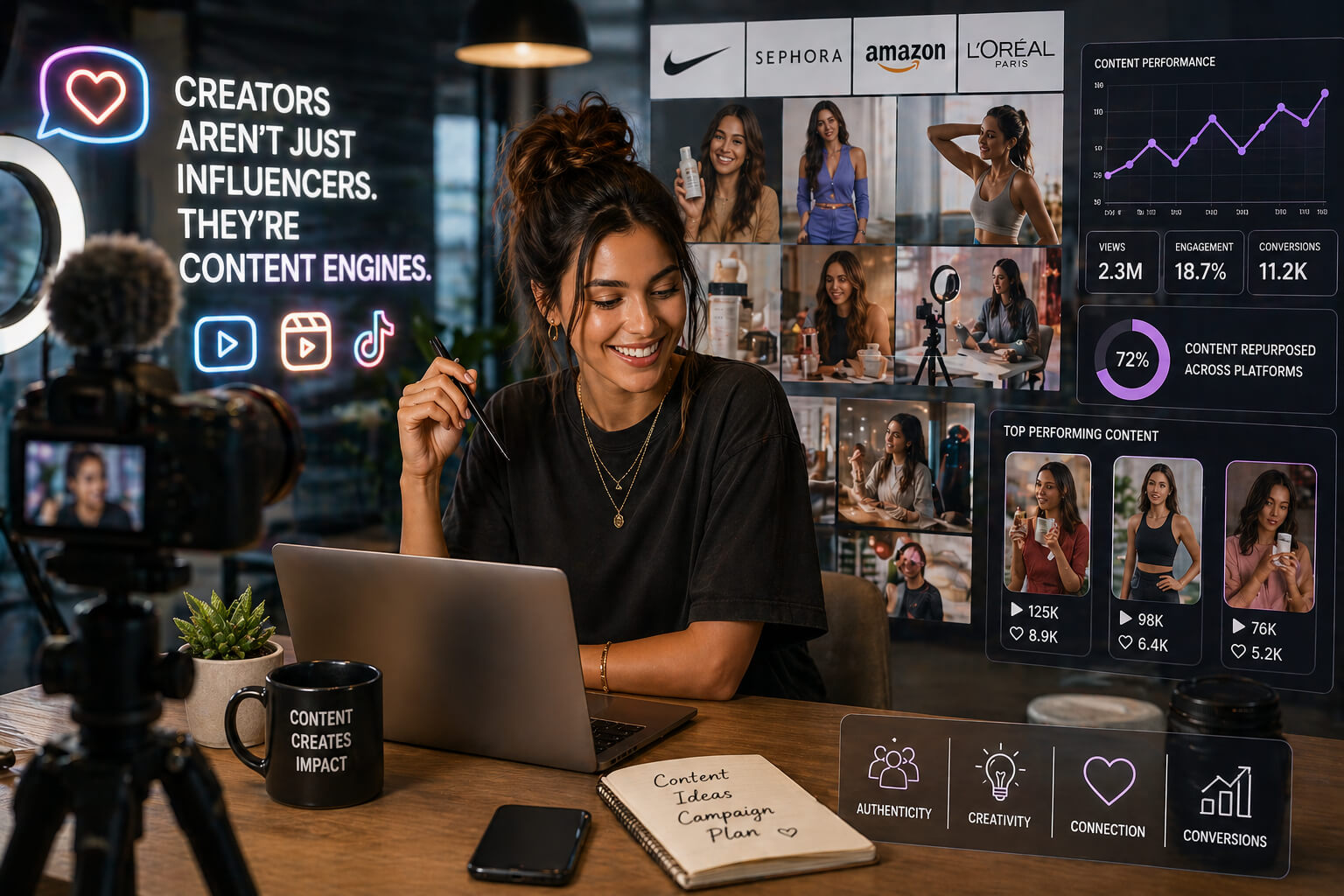
Today, influencer marketing has changed dramatically, moving from posting sponsored content to implementing an advanced content engine strategy. The latter requires heavy investments from brands but is perceived by creators as a great chance to become a partner to brands instead of a distributor.
From Posting Sponsored Contents to Becoming Content Powerhouses
Brands are thinking differently today, considering creators not only as a way to distribute information or advertisements but as content creators that power marketing ecosystems.
Marketing managers consider partnerships with influencers as a critical component of marketing strategies, and in many cases, influencer-created content works even better than paid advertisements in terms of engagement and conversion rates.
Such a perspective means that followers matter less for creators today than before because brands care about:
- content quality;
- storytelling skills;
- conversion capabilities.
Reasons Why Brands Prefer “Content Engines”
The main change in the influencer marketing field is that brands look for consistent and scalable creators.
So instead of paying for each post, companies:
- repurpose content created by influencers and use it as paid advertisements;
- reuse influencers’ video content on different platforms;
- implement long-term collaborations.
That’s why influencers should think like engines constantly producing assets required to power marketing campaigns.
According to experts’ observations, today, brands pay more attention to how creators can produce content that can grab people’s attention and convert them compared to the size of the audience they reach.
The Role of Micro-Influencers and Authenticity
Interestingly enough, micro- and mid-tier influencers play the leading role in such a process.
And the reason behind that is that brands value micro-influencers for their authenticity and reliability. Thus:
50% of millennials prefer influencers to celebrities as sources of information;
86% of people have visited a restaurant they saw promoted on social media.
For brands, such results prove that micro- and mid-tier creators can be more useful than famous people.
It means that for creators, the following recommendations apply:
- you don’t need a million followers anymore;
- you should focus on creating high-quality and engaging content.
Collaboration and Co-Creation Become Popular
A trend that also appears to be promising is collaboration and co-creation. Brands today allow their partners more freedom regarding creating concepts and implementing them. It means that collaboration between creators and marketers leads to organic content and better results.
For example, according to experts’ opinions, the most successful influencer marketing initiatives are based on authentic storytelling.
Measuring ROI and Challenges Ahead
Despite the growing popularity of influencers, measuring ROI becomes harder and harder due to the development of artificial intelligence technologies and changes in consumer behavior. But still, the potential benefits remain considerable. Namely:
successful influencer marketing campaigns often return high profits;
the same content can be used in various marketing activities;
engagement rates of posts created by influencers exceed engagement rates of paid advertisements.
What Does It Mean for Creators and Influencers?
To be successful in 2026, creators should consider several recommendations:
- think about yourself not as a content promoter but as a content producer;
- care more about the quality of your posts than about the number of followers;
- create long-term partnerships with brands;
- produce authentic content.
Concluding Thoughts
Currently, the era of being content promoters comes to its end, while the next phase of the influencer economy begins. And creators that are able to position themselves as reliable content engines will succeed.
