
Influencer marketing is entering a new phase in 2026, with brands shifting away from simple flat-fee posts and moving toward performance-based influencer marketing deals tied to measurable results.
As creator advertising spend continues to rise, marketers are no longer satisfied with paying creators only for visibility. Instead, brands want proof that influencer campaigns can drive clicks, conversions, sales, and long-term customer growth.
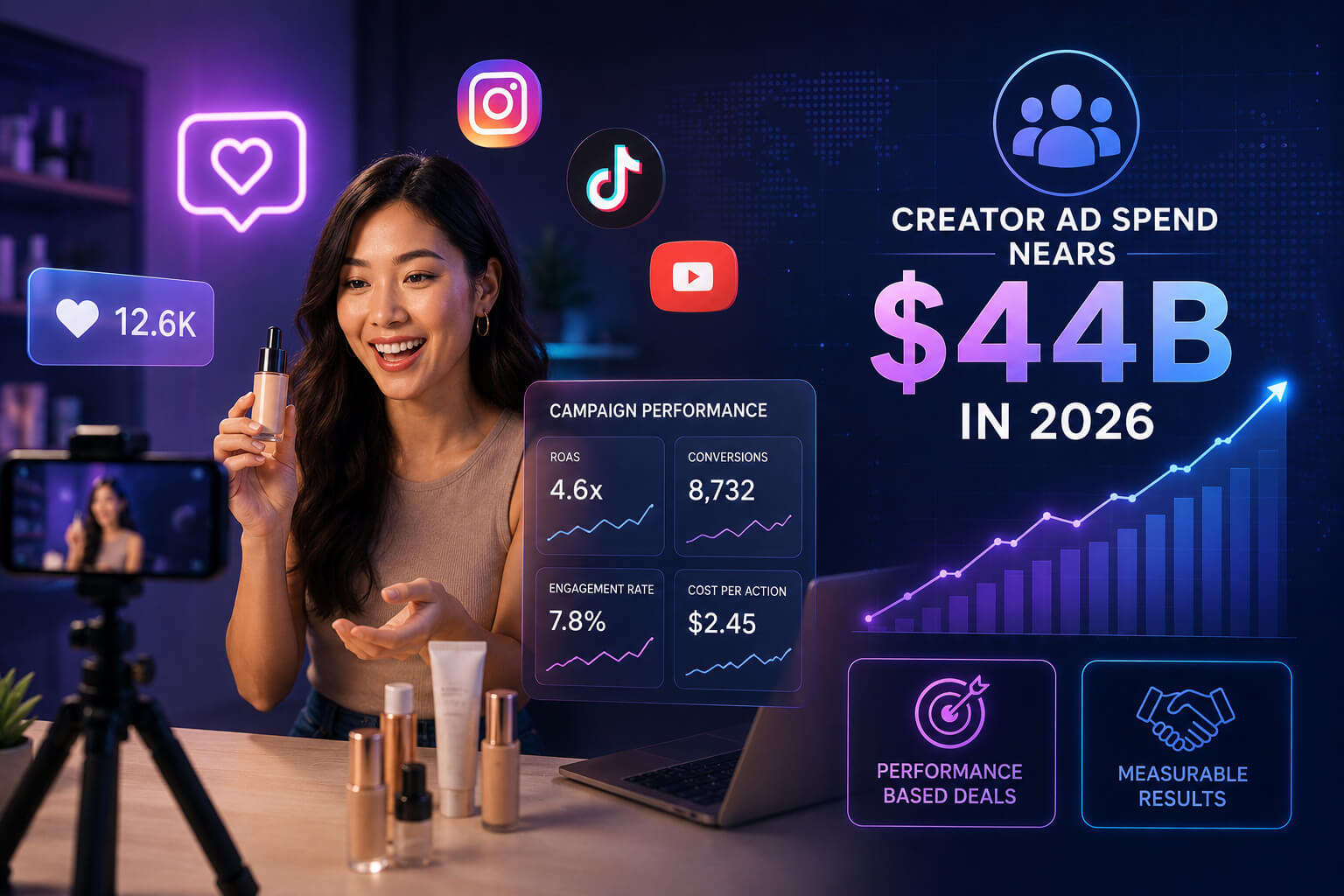
According to industry projections, U.S. creator ad spend is expected to reach nearly $44 billion in 2026, showing how important creators have become in modern digital marketing. But as more money flows into the creator economy, brands are also becoming more demanding about return on investment.
Why Influencer Marketing Is Changing in 2026
For years, influencer marketing often relied on flat-fee partnerships. A creator might charge a fixed rate for an Instagram post, TikTok video, YouTube mention, or bundled social media package.
That model helped brands build awareness, but it also created a major challenge: many companies could not clearly measure whether influencer content actually produced revenue.
Now, brands are under pressure to justify every marketing dollar. This is pushing influencer campaigns toward performance-based structures where creator earnings are connected to measurable business outcomes.
Performance-based influencer marketing can include affiliate commissions, revenue-sharing deals, sales bonuses, discount-code tracking, or hybrid partnerships that combine a base fee with performance incentives.
Creator Ad Spend Is Still Growing Fast
The shift toward performance-based deals does not mean influencer marketing is slowing down. In fact, creator marketing continues to grow as brands move budgets away from traditional advertising channels and into creator-led content.
Creator partnerships are becoming a key part of digital strategy because audiences often trust creators more than traditional ads. Influencers can help brands reach niche communities, explain products naturally, and turn social engagement into purchase intent.
As ad spend approaches the $44 billion mark in 2026, influencer marketing is becoming less experimental and more performance-focused.
What Performance-Based Influencer Deals Look Like
Performance-based influencer marketing can take several forms. One of the most common models is a hybrid deal, where creators receive an upfront base payment plus commission on sales.
This structure gives creators some guaranteed income while allowing brands to reward strong results. For example, a creator may receive a smaller flat fee than usual, then earn additional money for each sale generated through a tracked link or discount code.
Another model is pure affiliate marketing, where creators are paid only when they drive a sale or conversion. This can work well for products with strong demand, clear tracking, and a smooth checkout experience.
Some brands are also using tiered bonus systems. In this model, creators earn extra payments after reaching specific sales or revenue milestones.
Why Brands Prefer Performance-Based Influencer Marketing
Brands are adopting performance-based influencer deals because they offer more accountability. Instead of paying only for impressions or engagement, companies can connect creator partnerships directly to revenue.
This is especially important for mid-size brands with limited marketing budgets. A flat-fee campaign can be risky if the brand cannot track results. Performance-based deals make spending more predictable because payment is tied to actual outcomes.
These deals also help brands identify which creators are truly driving value. Over time, companies can build stronger long-term partnerships with creators who consistently convert their audiences into customers.
Why Creators Are Still Cautious
While brands are embracing performance-based influencer marketing, many creators remain careful about affiliate-only deals.
Creators know that sales are not always fully within their control. Algorithm changes, poor website performance, limited inventory, pricing issues, or competing discounts can all affect conversions.
Because of this, many influencers prefer hybrid agreements that include both upfront payment and commission. This allows creators to be fairly compensated for content production while still sharing in the upside if a campaign performs well.
For creators, the best performance-based deals are transparent, trackable, and built on realistic expectations.
What This Means for the Creator Economy
The rise of performance-based influencer marketing shows that the creator economy is becoming more mature. Brands are no longer treating influencer campaigns as one-off awareness experiments. Instead, they are building creator programs that operate more like measurable sales channels.
This shift could create new opportunities for creators who understand their audience, produce high-converting content, and can prove their impact.
At the same time, creators may need to become more business-minded. Understanding analytics, affiliate tracking, conversion rates, and campaign performance will become increasingly important.
The Future of Influencer Partnerships
In 2026, successful influencer marketing will likely depend on balance. Brands want measurable ROI, while creators want fair compensation for their time, audience, and creative work.
The strongest partnerships will combine both priorities. Hybrid deals, long-term creator relationships, and clear performance tracking may become the new standard across the industry.
As creator ad spend continues to grow, performance-based influencer marketing is set to reshape how brands and creators work together. The future of influencer marketing will not just be about who has the biggest audience, but who can drive real results.
Key Takeaway
Influencer marketing is moving from flat-fee content deals to performance-based partnerships. With creator ad spend nearing $44 billion in 2026, brands are focusing more on measurable ROI, while creators are looking for compensation models that reward both content creation and campaign results.
