

Influencer marketing has long been one of the creator economy’s most powerful growth engines. But for many brands, one question has remained difficult to answer: does influencer marketing actually drive sales?
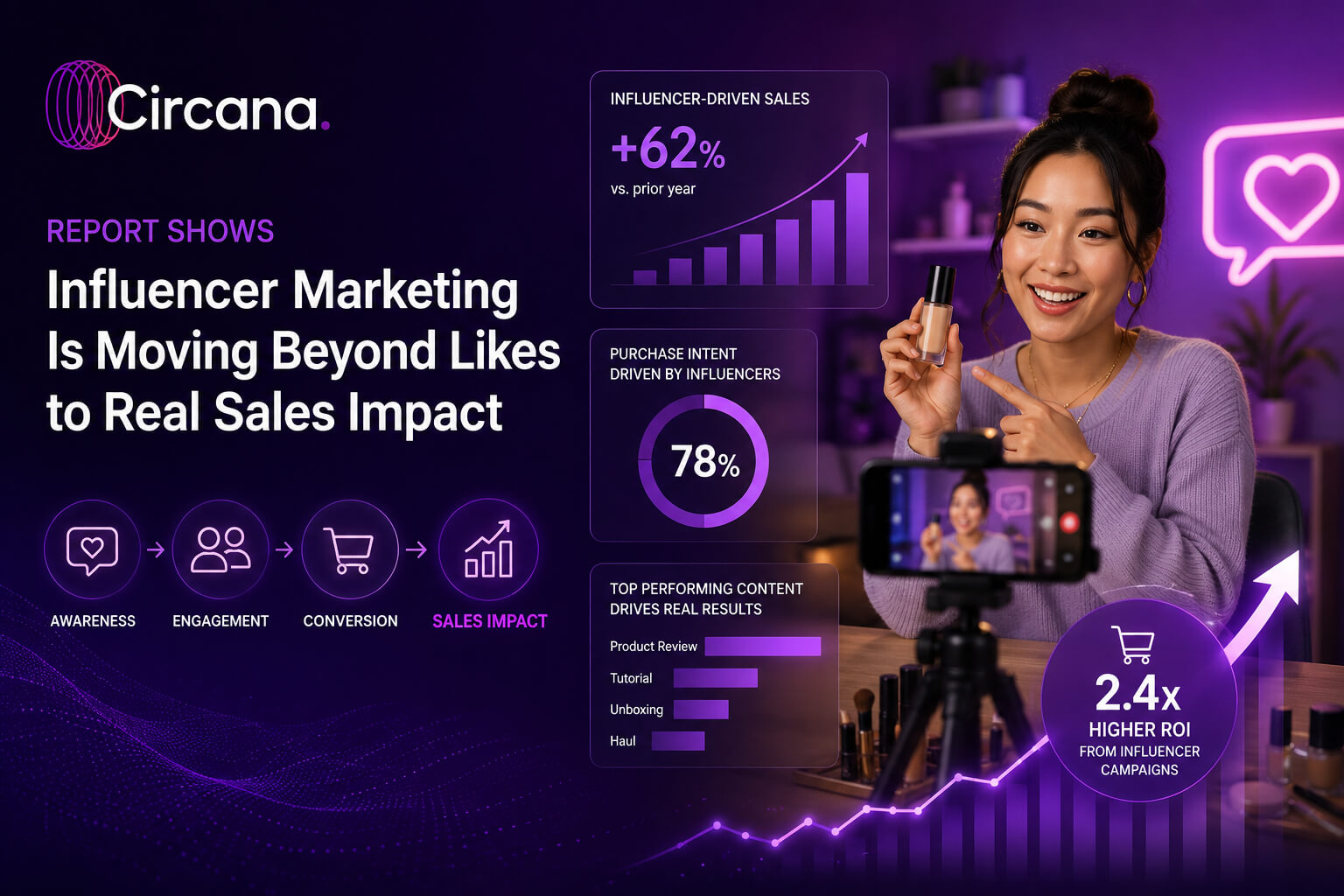
A new report from Circana, titled “The Value of Influence,” aims to answer that question with data. Instead of focusing only on likes, shares, comments, and follower counts, Circana’s research connects creator activity to measurable commercial outcomes, including sales lift and return on investment.
For brands, creators, influencers, agencies, and marketers, the message is clear: influencer marketing is no longer just a brand-awareness tool. It is becoming a measurable performance channel.
Influencer Marketing Is Entering a New ROI Era
For years, influencer campaigns were often judged by surface-level engagement. A post with thousands of likes or a viral video could look successful, but those numbers did not always prove that consumers actually purchased a product.
Circana’s report shifts the conversation from attention to action. By using advanced analytics and retail data, the company says brands can better understand how influencer campaigns contribute to real business results.
This is an important change for the creator economy. As brands increase their spending on creators, executives want proof that influencer partnerships are delivering measurable returns. Circana’s findings suggest that influencer marketing can now be evaluated with the same seriousness as traditional advertising channels such as television, paid search, and retail media.
Why Circana’s Influencer Marketing Data Matters
Circana is known for its consumer behavior and retail measurement capabilities. Its Liquid Data platform tracks trillions of dollars in consumer retail spending globally, giving the company a broad view of how shoppers behave across categories and retailers.
That matters because influencer marketing often sits between brand storytelling and direct sales. A creator may introduce a product through a tutorial, review, unboxing, recipe, or lifestyle post. The challenge for brands has been proving whether that content actually moved shoppers to buy.
Circana’s approach uses marketing mix modeling and purchase data to help isolate the impact of influencer campaigns. In simple terms, the goal is to show whether creator content produced incremental sales beyond what would have happened without the campaign.
For marketing teams, this makes influencer marketing easier to defend in budget conversations. Instead of presenting screenshots of engagement metrics, teams can point to sales performance, ROI, and growth potential.
Small and Mid-Sized Brands Could Benefit Most
One of the most interesting takeaways from Circana’s research is that small and mid-sized brands may have major opportunities in influencer marketing.
Large companies often have bigger budgets and broader campaigns, but smaller brands can benefit from creator partnerships that feel more authentic, niche, and community-driven. This is especially true when they work with nano-influencers and micro-influencers who have highly engaged audiences.
Micro-influencers may not have celebrity-level reach, but they often have stronger trust with their followers. Their recommendations can feel more personal and more relevant, especially in categories where consumers rely heavily on reviews, demonstrations, and peer recommendations.
For emerging brands, this can make influencer marketing a cost-effective path to growth. Rather than paying for broad awareness, companies can work with creators who speak directly to specific customer communities.
Beauty and Specialty Retail Stand Out
Circana’s report also points to strong opportunities in beauty and specialty retail. These categories are naturally suited to influencer marketing because shoppers often want to see products in use before making a purchase.
Beauty creators, for example, regularly produce tutorials, product comparisons, reviews, before-and-after content, and routine-based videos. This type of content does more than entertain. It helps consumers understand how a product works and whether it fits their needs.
That is why creator recommendations can be especially powerful in beauty. A trusted influencer can turn a product launch into a shopping moment by showing real-world use, explaining benefits, and answering common consumer questions through content.
For specialty retail brands, influencer campaigns can also help introduce products to niche audiences that traditional advertising may struggle to reach efficiently.
75% of Brands May Still Have Room to Scale Influencer Investment
Another major finding from Circana’s research is that many brands may still be underinvesting in influencer marketing. According to the report, 75% of brands have meaningful room to increase influencer investment and drive additional growth.
This does not mean every brand should immediately spend more on influencers. Instead, it suggests that many companies have not yet reached the full potential of the channel.
The key is measurement. Brands need to understand which creators, platforms, content formats, and campaign strategies are actually driving results. Without that data, influencer marketing can look risky. With better measurement, brands can identify where to scale and where to adjust.
What This Means for Creators and Influencers
Circana’s findings are also important for creators. As influencer marketing becomes more measurable, creators who can show business impact may become more valuable to brand partners.
This could benefit creators who understand their audience, produce high-converting content, and build long-term trust. Brands may increasingly look beyond follower count and focus on creators who can influence real consumer behavior.
For influencers, this means performance data, audience quality, niche authority, and content authenticity may become even more important. A creator with a smaller but highly engaged community could be more attractive than a larger account with weaker purchase influence.
Influencer Marketing Is Becoming a Business Growth Channel
The creator economy is maturing. Brands are no longer asking only whether influencers can generate attention. They are asking whether creators can help drive revenue, market share, and long-term growth.
Circana’s report supports a larger industry shift: influencer marketing is moving from experimental spending to accountable media investment.
For brands, this means creator partnerships should be planned with clear goals, strong measurement, and a strategy that connects content to commerce. For creators, it means the ability to drive trust and action will matter more than vanity metrics.
The future of influencer marketing will not be defined by likes alone. It will be defined by measurable influence, real consumer behavior, and the ability of creators to turn attention into sales.
