

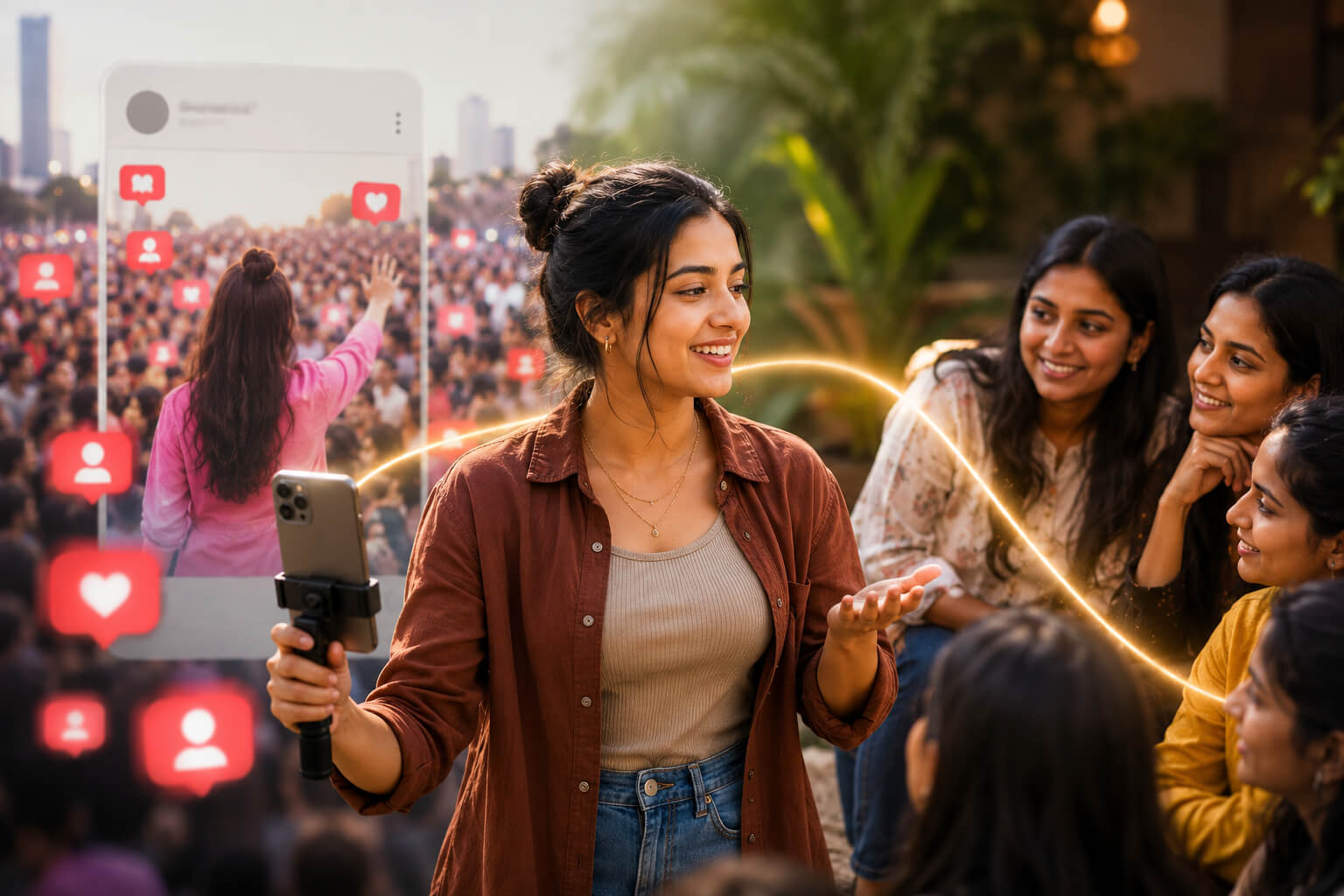
India’s influencer marketing industry is about to evolve. For a long time, it was normal for brands to judge an influencer’s value based on reach, following, and video views. However, a new wave is expected due to brands’ growing demands towards proving influencer spend’s ROI.
According to industry experts mentioned in exchange4media’s report, today’s marketers are looking beyond vanity metrics such as saves, shares, comments, conversions, and even audience’s quality as social platforms fight fake and inactive accounts.
Why Followers Count Is No Longer An Indicator Of Influence
Being a part of a massive audience doesn’t mean that a content creator can make an impression. According to the report, Instagram recently decided to remove millions of inactive or fake accounts, showing that sometimes big numbers may distort your understanding of an audience.
That is why brands start to question the value of macro-influencers who may not have enough audience engagement, relevance, or authority. As a result, marketers have to ask themselves tough questions prior to launching any influencer-based campaign.
Questions include:
- Is the audience real?
- Does the influencer have a meaningful interaction rate?
- Could he/she make users engage in buying something or think about the mentioned brand?
- Are the videos authentic or just yet another paid advertisement?
Micro-Influencers Are Gaining Popularity
One of the main trends shaping the Indian influencer marketing market is the rising role of micro creators. Today, businesses don’t prefer investing their money into just one macro-influencer and prefer to distribute their budget across hundreds, or thousands, of small influencers.
Why? Because micro influencers tend to enjoy greater community trust. People who follow them consider them equals and can easily believe in their recommendation since they know that there is no chance of getting money.
According to industry experts, this is what turns influencer marketing from a scalability-first activity into trust-first initiative. Instead of reaching maximum audience with minimum efforts, marketers try to convince people.
Shoppable Reels Enable Users To Buy Something They See
Today, many social media platforms work on the idea of creating seamless experience. It is possible to learn something, get familiar with its characteristics, and eventually buy the same item you’ve just learned with minimum clicks.
One of the most exciting features is shoppable reels, which provide users with possibility to buy something they watched on an influencer account’s reel without leaving social network.
This feature turns influencer content into shoppable, making it even more valuable for brands. As a result, businesses can easily measure what type of creator, format, story, or product moment triggers a buying decision.
Influencer Marketing In India Is Getting More Performance-Based
With increased investment into measuring the success of influencer marketing campaigns, brands are trying to get closer to performance media. They consider influencers as individual channels and evaluate their value based on engagement quality, audience relevance, and ability to convert people.
Moreover, the increase of influencer marketing campaigns’ size also requires introducing automation and tech-based solutions, which enable marketers to effectively discover creators, execute campaigns and analyze their performance.
Audiences Don’t Like Obvious Ads
The creative side of influencer marketing is also undergoing changes since people can recognize an advertisement very easily, especially when it looks as another paid promotion.
To overcome that challenge, brands try to come up with other formats that look less like advertisements and can be more appealing. These formats include student campaigns, on-campus campaigns, UGC campaigns, peer-to-peer recommendations, and micro dramas.
As for Generation Z audiences, native content can be even more influential than the branded and polished promotions, made by celebrities. So, brands prefer creating content related to the environment that appeals to GenZ.
Lessons For Marketers In India
New trend in India influencer marketing industry forces marketers to pay more attention to some specific things. First of all, brands shouldn’t be misled by huge audiences and follower counts of creators anymore.
On the contrary, they need to focus on engagement rates, influencer’s ability to sell their product and audience’s quality. Also, it is crucial for brands to understand what type of format may work best with the target audiences.
Conclusion
It is easy to notice that today’s India’s influencer marketing market is built upon trust rather than popularity. While earlier it was enough to attract large audiences, now influencers have to prove that people actually trust them and ready to do something after watching a particular video.
