

Influencer marketing looks huge from the outside. Creators are on every platform, every launch, every trip, every product drop, every festival campaign, every “day in my life” brand plug that somehow ends with a discount code.
But behind the noise, the money story is not as wild as it looks.
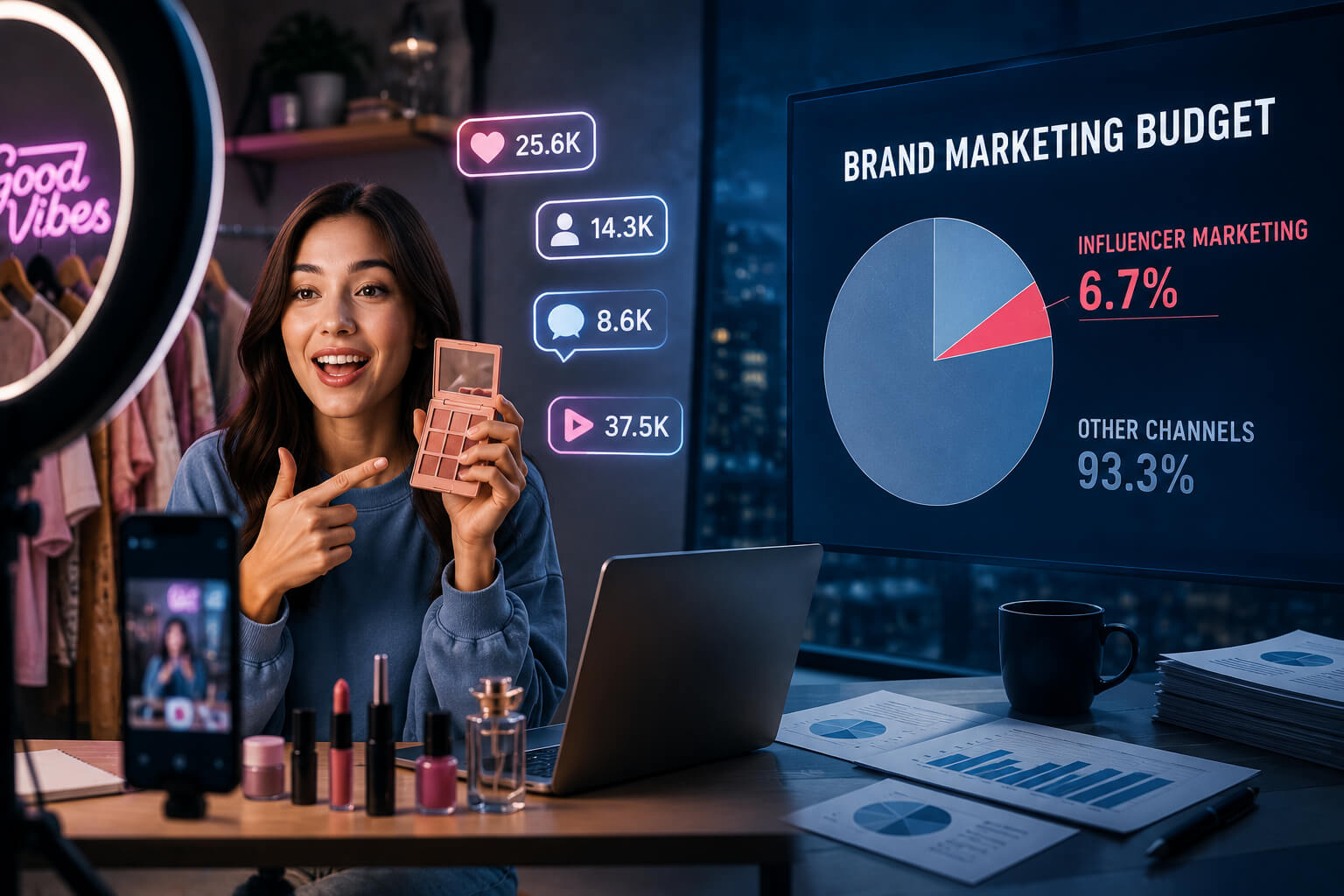
According to Exchange4media, marketers say influencer marketing is becoming a regular part of the media mix, but it still accounts for a relatively small share of many brand budgets, often around 3% to 10% of ad spends. Some brands are going even lower, depending on category, performance goals, and how much proof they need before increasing spend.
Creators Are Everywhere, But Not Always the Main Budget
The creator economy has made influencer marketing feel unavoidable. Global brands are flying creators to major sporting events, building influencer-led product moments, and treating social-first content as a serious part of brand visibility.
That has created a strong impression that influencer marketing now dominates advertising budgets.
Not quite.
Exchange4media reported that while global players such as Unilever, L’Oréal, P&G, and PepsiCo have expanded creator partnerships, Indian marketers across sectors like insurance, retail, beauty, and automobiles are still treating influencer campaigns as one part of a much wider strategy, not the whole engine.
That detail matters. Because the public sees the creators. The budgets still sit across digital, television, performance media, print, retail, events, search, and brand campaigns.
Influencer marketing may be loud. It is not always the biggest line item.
Brands Want Authenticity, Not Just Reach
A recurring point from marketers is that creator campaigns cannot survive on visibility alone. Brands want creators who actually fit the product, the audience, and the message. The old approach of paying someone with followers to say nice things is starting to look tired.
TATA AIG General Insurance Company, for example, reportedly keeps influencer marketing at around 3% to 5% of its marketing budget. The company’s approach is built around genuine product experience rather than paid praise that feels forced.
That is the line many brands are trying to walk now.
They want creator content, yes. But not content that smells like a script.
Consumers can spot lazy influencer marketing quickly. A random creator suddenly “loving” an insurance product, skincare brand, or luxury car without any real connection? People scroll past that. Or worse, they remember it for the wrong reason.
IKEA India Keeps Creator Spending Practical
IKEA India also takes a careful approach. Exchange4media reported that the brand spends roughly 5% to 10% of its digital marketing budget on influencer marketing, but its focus is not on promotional shouting.
The brand looks for creators who already use IKEA products and can naturally show how the brand fits into everyday life. That is a much more believable play than handing someone a campaign brief and asking for excitement on demand.
This is where influencer marketing starts to mature.
The best content often does not feel like a hard sell. It feels lived in. A creator showing a product because it already belongs in their home, routine, style, workspace, or personal taste usually lands better than a polished ad pretending to be casual.
Fixderma Shows the Performance-First Side
Not every brand is ready to throw more money into influencer marketing just because the category is hot.
Fixderma is taking a more conservative route. The skincare brand reportedly keeps creator spending at around 2% of its digital spend and measures results through direct sales from creator-led affiliate links.
That is a very different mood from the usual creator economy hype.
The brand is open to increasing influencer spend, but only if the numbers make sense. Visibility is not enough. Likes are not enough. A campaign has to show impact.
This is becoming a bigger theme across influencer marketing. Brands are asking sharper questions. Did the creator drive sales? Did the content build trust? Did it move people closer to purchase? Did it do anything beyond looking nice on Instagram?
Luxury Brands Are Using Creators Differently
For premium and luxury categories, the influencer strategy becomes more layered.
MG Select, the luxury offering from JSW MG Motor India, is not simply chasing the biggest travel creator or the widest reach. The brand is reportedly prioritizing lifestyle creators because they sit inside the daily content habits of luxury consumers. Finance creators and category experts also play a role, especially when buyers need education around premium vehicles and ownership.
That makes sense. A luxury purchase is not usually triggered by one viral reel.
It is built through awareness, aspiration, credibility, comparison, and trust. Different creators can support different parts of that journey. A lifestyle creator may keep the brand visible. A finance creator may explain value. A category expert may help a buyer feel more confident.
Influencer marketing is not one thing anymore. It depends on what the brand is trying to make people do.
The Hype Is Big, But Spending Is Still Controlled
The more interesting story here is not that influencer marketing is growing. Everyone already knows that.
The real story is that brands are becoming more selective.
Many marketers are not increasing creator budgets just because influencer campaigns look trendy. They are asking for proof, fit, credibility, and measurable returns. In some categories, creators are useful for awareness. In others, they are used for education or trust-building. For performance-led brands, affiliate links and direct sales matter more than impressions.
So yes, influencer marketing is everywhere.
But everywhere does not mean unlimited spending.
For brands, the creator economy is no longer just about who has the biggest following. It is about who can make the message believable, who can connect with the right audience, and who can prove that the campaign actually did something.
That is a healthier version of influencer marketing. Less noise. More accountability. Fewer random endorsements. Better creator-brand fit.
And probably, better results.
