

Influencer marketing has no shortage of software.
There are discovery tools, campaign dashboards, affiliate platforms, creator marketplaces, outreach systems and spreadsheets that somehow refuse to disappear.
Influencer Hero wants more of that work happening in one place.
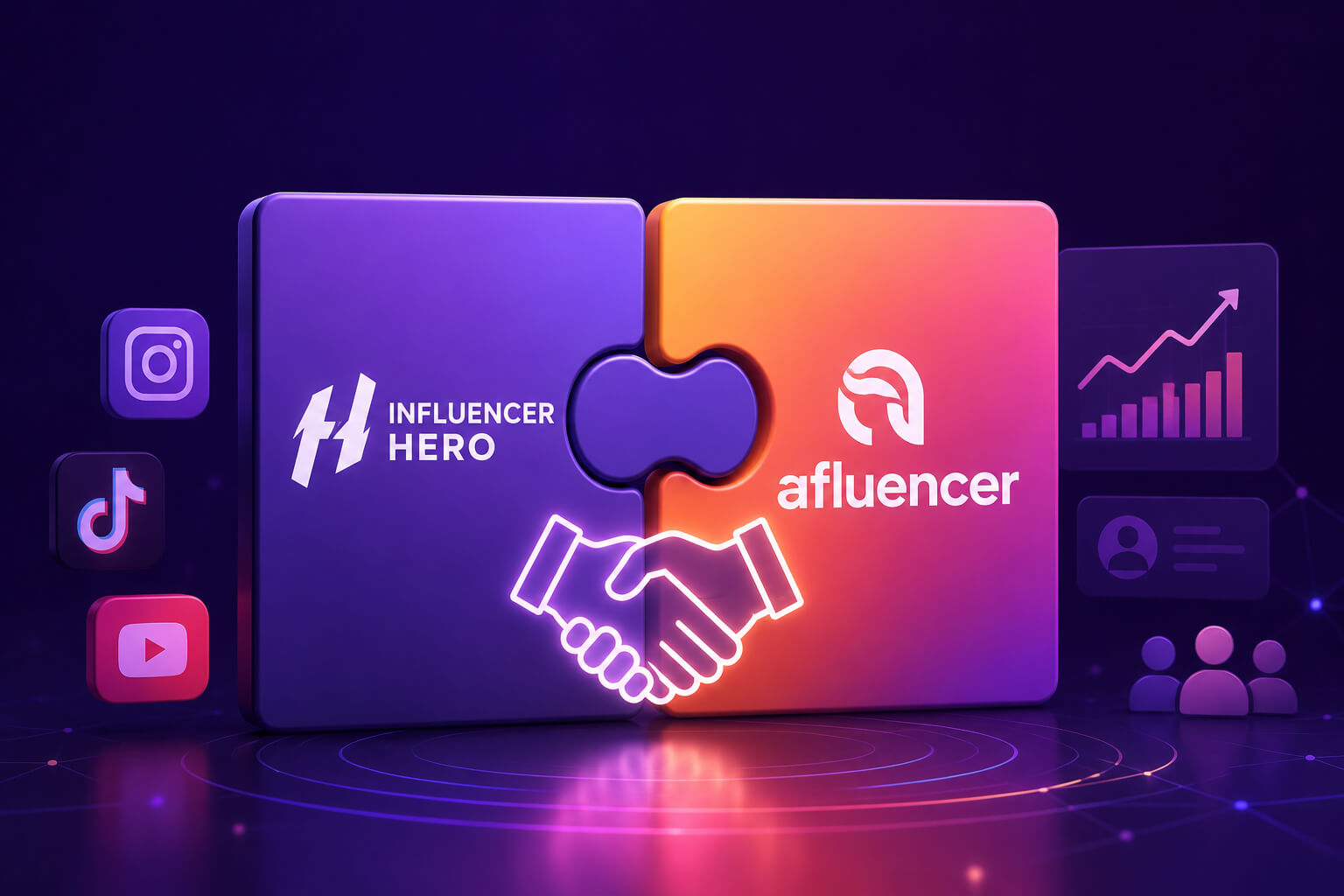
The influencer marketing software company has acquired Afluencer, a creator marketplace with more than 17,000 registered members, including approximately 3,500 brands. The deal brings Afluencer’s marketplace into the broader Influencer Hero ecosystem while keeping the platform running as a standalone service.
No dramatic shutdown. No immediate migration deadline.
At least for now, the two platforms will serve different stages of the same creator marketing journey.
Afluencer Gives Influencer Hero a Simpler Entry Point
Influencer Hero already offers tools for brands running structured creator programs. Its platform covers influencer discovery, automated outreach, creator relationship management, affiliate tracking, campaign management, content collection and performance reporting.
That is useful once a brand has moved beyond occasional sponsored posts.
Afluencer sits closer to the beginning.
Brands can post collaboration opportunities on the marketplace and connect directly with creators without first building a large influencer marketing operation. Smaller companies, new ecommerce brands and teams testing creator campaigns can start there without dealing with a heavy software setup.
The acquisition gives Influencer Hero access to that early-stage audience.
A brand might begin by finding a handful of creators through Afluencer. If those partnerships start producing sales or usable content, the company can then move into more advanced campaign management through Influencer Hero.
It is a fairly obvious funnel when you look at it that way.
Afluencer Will Continue Operating as a Standalone Marketplace
Influencer Hero says Afluencer will continue operating independently, although it will now receive support from Influencer Hero’s technology, product infrastructure and team.
That detail matters.
Acquisitions often create immediate uncertainty for existing users. Creators wonder whether profiles will disappear. Brands worry about price changes, feature removals or forced account migrations.
The announcement does not point to that kind of disruption.
Afluencer will remain a self-service marketplace where brands can publish collaboration opportunities and creators can find potential partnerships. Influencer Hero will focus on the more operational side of influencer marketing, including outreach automation, relationship management, affiliate performance and campaign scaling.
The platforms are being connected, not simply collapsed into one product overnight.
Influencer Hero Wants to Cover the Entire Creator Campaign Lifecycle
Influencer Hero co-founder and director Peter Nettesheim described the two companies as complementary.
His argument is straightforward: Afluencer helps brands begin working with creators, while Influencer Hero helps those brands manage the complexity that appears when a few collaborations turn into hundreds or thousands.
That complexity arrives quickly.
Emails get lost. Discount codes become difficult to track. Product samples go to the wrong addresses. Contracts sit in different folders. Nobody remembers which creator submitted content, posted on time or actually generated sales.
A creator campaign can look simple from the outside. Behind the scenes, it often becomes an operations problem.
Influencer Hero is betting that brands will prefer a connected system rather than stitching together separate tools for recruitment, communication, affiliate links, payments and reporting.
The Acquisition Reflects a Bigger Shift in Influencer Marketing
The creator economy is moving away from isolated sponsored posts.
Brands still pay creators for individual campaigns, of course. That model is not disappearing. Yet more companies now want ongoing relationships, recurring content, affiliate sales and creator communities that function as a permanent marketing channel.
One post becomes three. Three creators become 30. Eventually, the marketing team needs something more organized than an inbox and a spreadsheet.
That shift is creating demand for platforms that can support the entire relationship, from the first introduction to performance measurement.
Influencer Hero’s acquisition of Afluencer fits directly into that trend. The company is not only buying a database of creators. It is adding an established marketplace where brands are already looking for partnerships.
The community may prove more valuable than any individual software feature.
Creator databases can be built. Active marketplaces are harder.
What the Deal Could Mean for Creators
For creators already using Afluencer, the immediate experience may remain largely familiar.
They can continue browsing collaboration opportunities and connecting with brands through the marketplace. Over time, Influencer Hero’s infrastructure could bring more sophisticated campaigns into that environment.
That may mean longer-term brand relationships, affiliate programs, structured content requests or campaigns with clearer performance tracking.
There is another side to it.
More tracking and automation can make creator programs easier to manage, but they can also make the process more performance-driven. Brands may pay closer attention to conversions, affiliate revenue, content output and response times.
For creators, a polished profile will still matter. So will audience trust and content quality.
Increasingly, though, brands also want proof that a collaboration produced something measurable.
What the Acquisition Could Mean for Brands
The value proposition for brands is convenience.
A company testing influencer marketing can use Afluencer to find potential partners and launch its first collaborations. If the program expands, Influencer Hero can handle outreach, campaign workflows, affiliate tracking, creator communication and reporting.
That reduces the need to switch between disconnected tools.
It also gives Influencer Hero a way to reach businesses earlier. Instead of waiting until a brand needs enterprise-style campaign software, the company can enter the relationship while that brand is still searching for its first creators.
Whether the integration feels smooth will matter more than the announcement itself.
Creator marketing platforms often promise an all-in-one experience. The difficult part is making discovery, communication, payments, content management and analytics work together without adding another layer of complexity.
That is the test ahead.
Creator Marketing Software Is Entering Its Consolidation Phase
This acquisition is not happening in isolation.
Influencer marketing has grown into a significant business category, and the software around it remains fragmented. Some platforms specialize in large creator databases. Others focus on affiliate marketing, campaign analytics, content licensing or direct collaboration marketplaces.
The boundaries are beginning to blur.
Platforms want more of the workflow. Brands want fewer subscriptions. Investors and operators can see the appeal of combining marketplaces with campaign management tools.
Influencer Hero’s acquisition of Afluencer is a relatively clean example of that consolidation.
One platform brings the community and an easy starting point. The other brings automation and the infrastructure needed to scale.
The strategy makes sense on paper.
Now comes the less glamorous part: connecting the products without losing what made Afluencer useful in the first place.
