

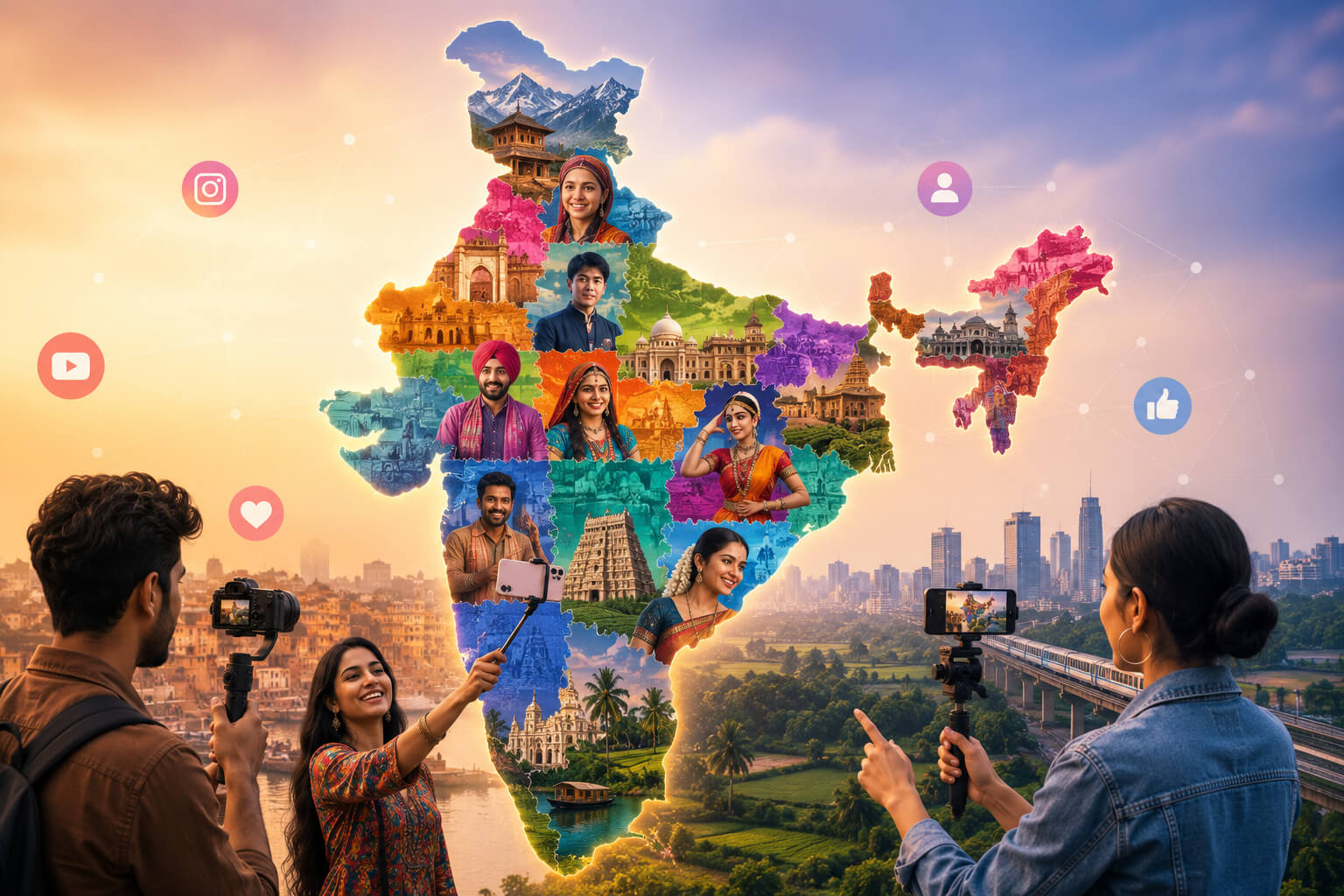
India’s influencer marketing industry spent years chasing scale.
Big creators. Metro audiences. One campaign idea stretched across an enormous country.
That approach worked when brands simply wanted visibility. It becomes much less useful when the goal is trust, relevance or an actual response from the audience.
The market is now moving in a different direction. Influencer campaigns may still have national ambitions, but the strategy behind them is becoming far more local. Brands are working with creators who understand specific languages, customs, humour and community expectations rather than relying on a single message designed for everyone.
India’s influencer marketing industry is reportedly growing by around 20% to 25% annually. When direct collaborations between brands and creators are included, total spending across the ecosystem is estimated to have surpassed ₹10,000 crore.
The size of the market matters. Where that growth is coming from matters more.
India Is Not a Single Influencer Market
Calling India one audience has always been convenient. It has rarely been accurate.
Someone watching a beauty creator in Chennai may respond to completely different references, language choices and product concerns than a viewer in Delhi, Kolkata or Ahmedabad. Even when two communities use the same platform, the content that feels natural to them can be worlds apart.
That gap is pushing brands away from national campaigns that receive a few regional edits at the end. The stronger model starts locally.
A campaign may need several creative narratives, not one translated caption. Each version has to feel as though it came from the community rather than from a central marketing team trying to imitate it.
Regional creators fit naturally into that structure. They already know which topics feel relevant, which jokes will land and which brand claims might sound forced.
Local Language Alone Is Not Enough
Regional influencer marketing is sometimes reduced to language.
Hire a creator who speaks Tamil, Telugu, Bengali or Marathi, translate the talking points and publish the video. Job done.
Except it is not.
Language helps people understand a message. Cultural familiarity makes them believe it.
A creator’s value often comes from small details that a national brief cannot easily manufacture. It could be a reference to a local festival, a familiar family dynamic, the way people shop in a particular city or even the tone used when discussing money, food or personal care.
Audiences notice when those details feel authentic. They also notice when a script sounds like it travelled through several approval meetings before reaching the creator.
That is why regional creators are becoming more than distribution partners. In many campaigns, they are effectively cultural interpreters.
South India Is Showing Where the Market May Go Next
South India has become one of the clearest examples of this shift.
The region contributes roughly 30% of India’s influencer marketing ecosystem, according to the original industry analysis. It also continues to attract platform and brand investment because regional creators often generate strong engagement within highly active communities.
This is not simply about audience size.
Creators across South India frequently produce content that feels deeply connected to everyday culture. The delivery is often more conversational. Viewers respond, debate, share stories and recommend creators to others in the same community.
That behaviour gives brands something a huge follower count cannot guarantee: participation.
It also explains why smaller regional creators can sometimes outperform national personalities. A creator with a modest but tightly connected audience may influence real buying decisions more effectively than someone reaching millions of loosely interested viewers.
Brands Are Beginning With Regional Insight
The old campaign structure usually started with a national concept.
Marketing teams developed the main message, chose the visual direction and approved the campaign language. Regional versions came later, often after the central idea had already been locked.
That order is beginning to reverse.
Brands are increasingly building campaigns from regional insight and then expanding the strongest ideas across multiple markets. The difference may look subtle on a planning document. In execution, it changes nearly everything.
Creators get more room to shape the message. Local behaviour influences the campaign rather than being treated as a final adjustment. Brands also avoid spending money on content that technically reaches a region but never truly connects with it.
One campaign may still serve a national business objective. It just does not need to look identical everywhere.
Smaller Creators Are Winning Through Trust
Reach remains useful. It is no longer enough on its own.
Brands are paying closer attention to whether audiences believe a creator, whether followers ask meaningful questions and whether the content influences consideration or purchase.
That gives regional micro-influencers and niche creators a stronger position.
Their communities may be smaller, but the relationship often feels more personal. Followers know the creator’s routines, preferences and history with certain products. A recommendation therefore arrives with context rather than appearing as an isolated advertisement.
Of course, smaller creators are not automatically more authentic. Some fill their feeds with sponsorships just as quickly as large influencers do.
Still, when the match between creator, audience and product feels right, the campaign usually has a better chance of earning attention instead of interrupting it.
Regional Campaigns Need More Than Translation
This shift creates new work for brands and agencies.
Managing a national celebrity can be complicated. Coordinating dozens or even hundreds of regional creators introduces a different kind of complexity.
Contracts, content approvals, payment schedules and disclosure rules must work across a much larger creator network. Brands also need reliable ways to compare performance between regions without forcing every campaign into the same measurement model.
Creative control becomes another difficult question.
Too much control can remove the personality that made the creator valuable. Too little can expose the brand to inconsistent messaging, unsupported claims or content that misses the campaign objective.
The strongest partnerships will probably sit somewhere in between: clear brand boundaries, followed by enough creative space for the creator to sound like themselves.
National Influence Will Come From Connected Micro-Markets
India’s influencer economy is not abandoning national campaigns.
It is rebuilding them.
Instead of treating regional creators as smaller extensions of a metro-led strategy, brands are starting to recognise them as the foundation of broader market growth. National reach may come from connecting several strong local campaigns rather than pushing one generic idea across the country.
That approach is slower. It can be harder to manage. It may also require more listening than many marketing teams are used to.
But India is too culturally varied for influencer marketing to remain centred on a few cities, languages and celebrity creators.
The next phase will belong to brands that understand the difference between appearing in a region and actually belonging in the conversation.
Source: Adgully – India’s influencer marketing future is national in scale, regional in strategy
