
The creator economy is no longer a side category within advertising. It has become a major business engine for brands, agencies, platforms, creators, and media companies. As influencer marketing matures, global holding companies are moving quickly to own more of the creator economy value chain.
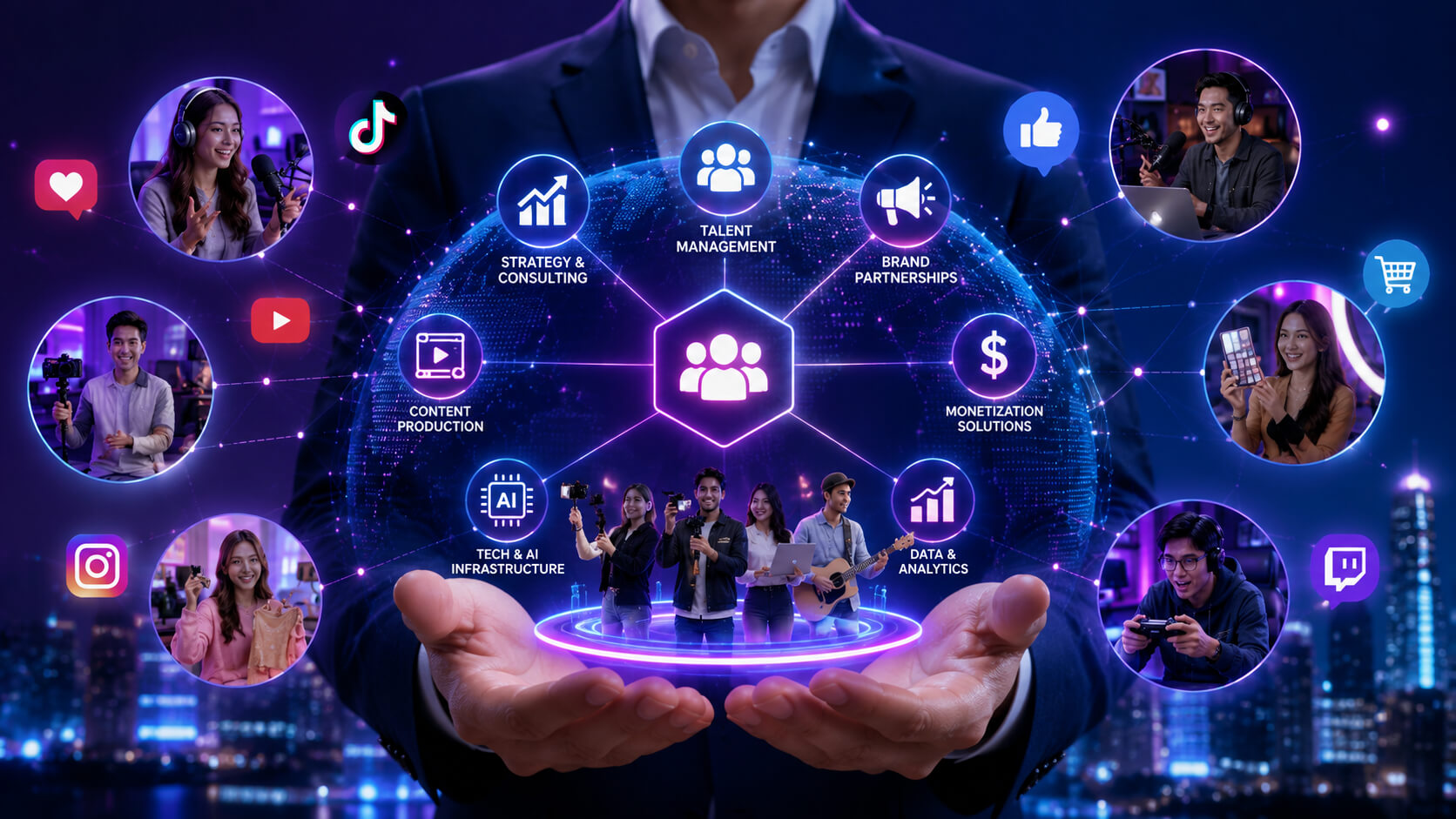
Instead of operating only as traditional advertising agency networks, major holding companies are building connected ecosystems that bring together creator talent, social media strategy, content production, data analytics, commerce, influencer marketing, and technology platforms. This shift reflects a larger transformation in the marketing industry, where creators now play a central role in how brands reach and influence consumers.
Holding Companies Move Beyond Traditional Agency Models
For decades, holding companies built their strength through advertising, media buying, public relations, creative services, and brand strategy. That model still matters, but the rise of creators has changed how marketing works.
Today, brands do not only need campaigns. They need access to online communities, social-first storytelling, creator partnerships, performance insights, and content that can move quickly across platforms such as Instagram, TikTok, YouTube, Snapchat, LinkedIn, and emerging social channels.
This is why holding companies are no longer treating influencer marketing as a small service inside a larger media plan. They are investing in creator-led businesses, specialist agencies, social content studios, creator marketplaces, influencer technology, and commerce solutions.
The goal is clear: control more of the creator economy ecosystem from strategy to execution.
Why the Creator Economy Matters to Big Agency Groups
The creator economy has become too large for holding companies to ignore. Creators now shape culture, product discovery, consumer trust, and brand conversations. Many audiences respond more strongly to creator recommendations than to traditional advertising because creator content feels more personal, direct, and relatable.
For brands, creators offer several advantages:
- They provide access to niche communities.
- They help brands build trust through authentic storytelling.
- They produce content quickly and at scale.
- They influence purchasing decisions across social platforms.
- They support both awareness and performance marketing goals.
As marketing budgets continue shifting toward digital and social channels, holding companies want to provide brands with a complete creator marketing solution. This includes not only influencer selection but also campaign planning, content production, measurement, compliance, paid amplification, affiliate marketing, and long-term creator relationship management.
From Campaigns to Creator Infrastructure
The biggest change is that holding companies are not just buying agencies. They are building infrastructure.
In the early days of influencer marketing, many brands worked with creators through one-off sponsored posts. A creator would promote a product, publish content, and move on to the next campaign. That model still exists, but it is no longer enough for large advertisers.
Brands now want repeatable systems. They want to know which creators drive engagement, sales, brand lift, community growth, and long-term customer value. They also want better protection against fake followers, poor brand fit, unsafe content, and weak reporting.
This demand has pushed holding companies to build creator ecosystems that combine:
- Creator discovery and talent access
- Influencer campaign management
- Social listening and audience intelligence
- Content studios and production teams
- Creator commerce and affiliate marketing
- Data analytics and performance measurement
- Paid media amplification
- Brand safety and compliance support
By connecting these services, holding companies can offer brands a more complete creator marketing model.
Creator Talent Becomes a Strategic Asset
Creator talent has become one of the most valuable parts of the modern marketing business. Holding companies understand that access to the right creators can help brands move faster and speak more naturally to different audiences.
This does not only apply to celebrity influencers or mega-creators. Many brands now rely on micro-influencers, niche experts, community builders, B2B creators, podcasters, streamers, and short-form video creators.
These creators often have smaller audiences, but they can deliver stronger engagement and trust within specific communities. For holding companies, managing these relationships at scale creates a new competitive advantage.
Instead of simply matching creators with brands, agency groups are trying to build long-term creator networks. This allows them to offer clients deeper partnerships, better campaign consistency, and more reliable access to creator-led content.
Data and Technology Are Driving the Shift
Data is another reason holding companies are moving deeper into the creator economy. As influencer marketing becomes more professional, brands want stronger proof that creator campaigns are working.
They want to measure more than likes, comments, and views. They want to understand audience quality, conversion impact, content performance, creator reliability, and return on investment.
This has made creator technology more important. Holding companies are investing in tools that can identify creators, analyze audiences, detect fraud, track campaign results, and connect creator content to commerce outcomes.
Technology also helps agencies manage large campaigns involving hundreds or thousands of creators across different regions and platforms. Without strong systems, creator marketing can become difficult to scale.
Commerce Is Becoming Central to Creator Marketing
The creator economy is also becoming more closely connected to commerce. Creators are no longer only promoting awareness. Many now help drive direct sales through affiliate links, social shopping, live commerce, discount codes, product launches, and creator-founded brands.
This creates a major opportunity for holding companies. By combining creator marketing with performance media and commerce strategy, they can help brands move consumers from discovery to purchase.
For example, a creator campaign may begin with short-form video content, continue through paid social amplification, and end with measurable sales through an e-commerce platform or affiliate program. This makes creator marketing more attractive to brands that want clear business outcomes.
Agencies Are Competing With Platforms and Creator Startups
Holding companies are not the only players trying to own the creator economy. Social platforms, creator marketplaces, talent management firms, production studios, affiliate networks, and technology startups are also competing for influence.
Platforms want brands to spend directly through their advertising and creator tools. Creator startups want to offer faster, more flexible alternatives to traditional agencies. Talent firms want to control creator relationships. Media companies want to build their own creator networks.
This competitive pressure is pushing holding companies to evolve. They need to prove that they can offer more than legacy agency services. Their advantage lies in scale, global client relationships, media expertise, brand strategy, and the ability to connect creator marketing with broader business goals.
What This Means for Brands
For brands, the rise of holding-company creator ecosystems could make influencer marketing more structured and measurable. Instead of working with multiple separate vendors, brands may be able to access strategy, talent, production, media buying, analytics, and commerce under one network.
This can help brands run larger and more consistent creator campaigns. It can also improve accountability, especially as marketers face pressure to justify spending and show results.
However, brands still need to choose partners carefully. A large ecosystem does not automatically guarantee authentic creator work. The strongest creator campaigns still depend on trust, creative freedom, audience fit, and content that feels natural to the platform.
What This Means for Creators
For creators, holding-company investment could bring more professional opportunities, bigger brand partnerships, and better access to global campaigns. It may also help creators work with brands in a more structured way, with clearer contracts, improved campaign support, and stronger long-term relationships.
At the same time, creators may face more pressure to deliver measurable results. As creator marketing becomes more integrated with data and commerce, brands will expect creators to prove their value beyond visibility.
Creators who can build loyal communities, produce high-quality content, understand their audience, and support business outcomes will likely benefit most from this next phase.
The Creator Economy Is Becoming Institutional
The shift from agencies to ecosystems shows that the creator economy is entering a more mature stage. It is no longer only about viral posts or influencer endorsements. It is becoming a structured part of modern marketing infrastructure.
Holding companies are positioning themselves to own this future by building creator networks, technology systems, production capabilities, and commerce solutions. Their strategy reflects a simple reality: creators are now central to how brands communicate, sell, and build culture.
As the creator economy continues to grow, the companies that control the infrastructure behind creator marketing may become just as important as the creators themselves.
Conclusion
Holding companies are reshaping their agency models to capture more value from the creator economy. By moving beyond traditional advertising services and building full creator ecosystems, they are preparing for a marketing future driven by social content, community influence, creator commerce, and measurable digital performance.
For brands, this shift offers a more organized way to work with creators. Creators gain new opportunities, but they also face higher expectations. Across the marketing industry, it marks the next stage of influencer marketing: from campaign-based partnerships to full-scale creator economy infrastructure.
