

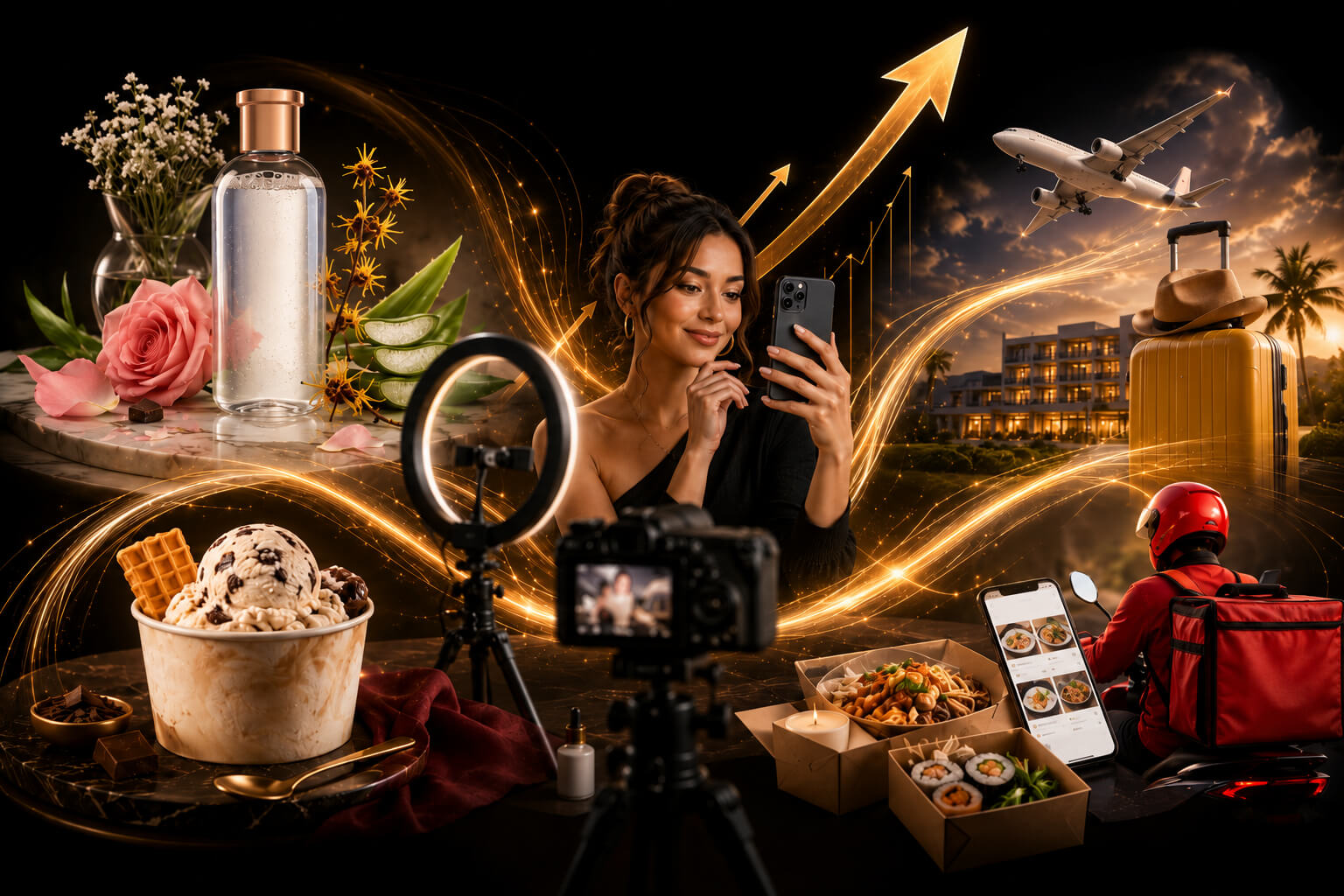
Influencer marketing is no longer limited to brands asking creators to post an image or a video featuring the company’s product. Brands are increasingly collaborating with creators in order to tell stories, build communities, educate customers and even sell products directly.
Travel, beauty, luxury foods, and food delivery companies such as Thayers, Expedia, Häagen-Dazs and DoorDash showcase how influencer campaigns change in 2026. The key takeaway is simple: the role of creators goes beyond promotional content. Influencer marketing becomes a crucial part of the brand experience.
Brands Are Going Beyond Sponsored Content From Influencers
For decades, influencer marketing meant sponsored content. The model hasn’t changed but brands increasingly seek partnerships that are not limited to simple posts and commercials. Rather than relying only on celebrities, marketers focus on creators who already have established relationships with specific audiences.
The list of these creators may include lifestyle creators, food critics, travel bloggers, beauty gurus and micro-influencers in local markets.
There are three main objectives of the new creator partnerships strategy:
- Authenticity
- Conversion
- Community impact
When content is consistent with the creator’s voice, the audience engages with it more actively.
Brands expect influencer marketing campaigns to drive bookings, orders, purchases, and app downloads.
Creators can target specific communities that traditional ads fail to reach.
Expedia Offers Commission to Creators for Every Travel Bookings They Generate
Expedia has launched Travel Creator Program, allowing creators to earn a commission based on the number of followers booking their trips through the creator’s social posts.
The company claims that the purpose of the program is to enable individuals and businesses to earn money by promoting Expedia travel properties through social media.
This approach represents an evolution in the world of travel influencers. While most creators promote travel destinations via inspirational posts, now they can create commerce-driven content that can help travelers to book accommodation.
Moreover, Expedia launched another creator-oriented program – Travel Shops. According to Expedia, more than 100 creators and influencers will get access to the ability to monetize their curated travel picks in 2025.
For brands in the travel industry, this case study proves that creators are going to become the new digital stores.
DoorDash Employs Short-Form Videos to Boost Restaurant Discoveries Among Customers
Another example of brands’ collaboration with creators is the initiative started by DoorDash. The company launched a DoorDash Creators Program, allowing people from select U.S. cities to apply and become DoorDash Creators creating short form video content, which helps potential customers to see food samples from restaurants available on the DoorDash website.
It makes sense since in today’s world, customers prefer to search for dining locations via Instagram and TikTok before opening delivery applications. In such a context, it’s logical to assume that DoorDash wants to make its customers discover restaurants before opening the application.
According to DoorDash’s Creator Agreement, posts should contain products that are available on DoorDash. Additionally, they should be original, comply with content guidelines and be approved.
In other words, as influencer marketing evolves, brands start to seek influencers who can produce authentic content but also satisfy brand requirements.
Häagen-Dazs Uses Creators To Build Its Premium Storytelling Around Ice Cream
Influencer marketing has traditionally played an essential role in brand campaigns. As the company behind the Slow platform, Häagen-Dazs created a campaign covering multiple channels, such as social networks, digital marketing, influencer marketing, out-of-home and sampling.
It makes sense for a premium food brand like Häagen-Dazs to collaborate with creators because a luxury food item like ice cream can become a subject to storytelling. Creators can demonstrate that the product represents a luxurious way to relax and enjoy life.
Such approaches allow established brands to appear fresh to their younger audience. Creator marketing brings a more personalized touch to influencer campaigns.
Thayers Benefits From Collaboration With Beauty and Lifestyle Influencers
Like many other beauty and skincare brands, Thayers has benefited from influencer marketing campaigns. Notably, Thayers has launched several influencer marketing campaigns related to skincare routines and affordable beauty products.
For any skincare brand, influencers are especially helpful because they can show customers how they can benefit from a certain product. It means that instead of focusing only on product features, creators help to demonstrate how it looks within a routine.
Such approaches help brands to establish relationships with influencers who can explain benefits to potential clients and promote products via their lifestyle videos.
Why Do Creator Marketing Trends Matter For Brands?
Modern influencer marketing trends reveal how creators evolve from brand partners to brand collaborators. Instead of asking creators “Who has the most audience?”, brands now ask:
- Who can build relationships with audiences?
- Who can produce quality content according to the format of specific channels?
- Who can drive conversions?
- Who can help to tell the story of the brand in a convincing way?
These questions explain why local and niche influencers are gaining popularity. In some cases, the content by an influencer with 50K followers will prove more helpful than the content by a celebrity with millions of passive subscribers.
Influencer Marketing Becomes More Commerce-Driven
Social media platforms play a greater role in commerce. As shown by cases related to Expedia, DoorDash and Häagen-Dazs, creators are increasingly involved in driving commercial results.
Thus, it is safe to say that the next trends in the world of influencers will be:
- Creator storefronts
- Short-form video commerce
- Long-term partnerships
- Performance tracking
With the increase of content produced by creators, more and more customers will be able to buy something curated by their favorite creators.
Influencers will use TikTok-like videos to promote products, destinations and services.
One-off sponsored posts will give place to permanent collaboration with influencers.
More and more brands will require influencer campaigns to show the desired results in terms of conversions.
Creator Marketing Trends: Final Thoughts
The most obvious trend among current creator marketing examples is that creators are becoming active parts of the buying process. They don’t only create awareness but also contribute to the discovery and purchase decisions.
Thayers, Expedia, Häagen-Dazs, and DoorDash are just a few companies that use creators for much more than promotion.
Social platforms will continue shaping consumer habits. Thus, it will pay off for brands knowing how to engage with creators effectively.
