

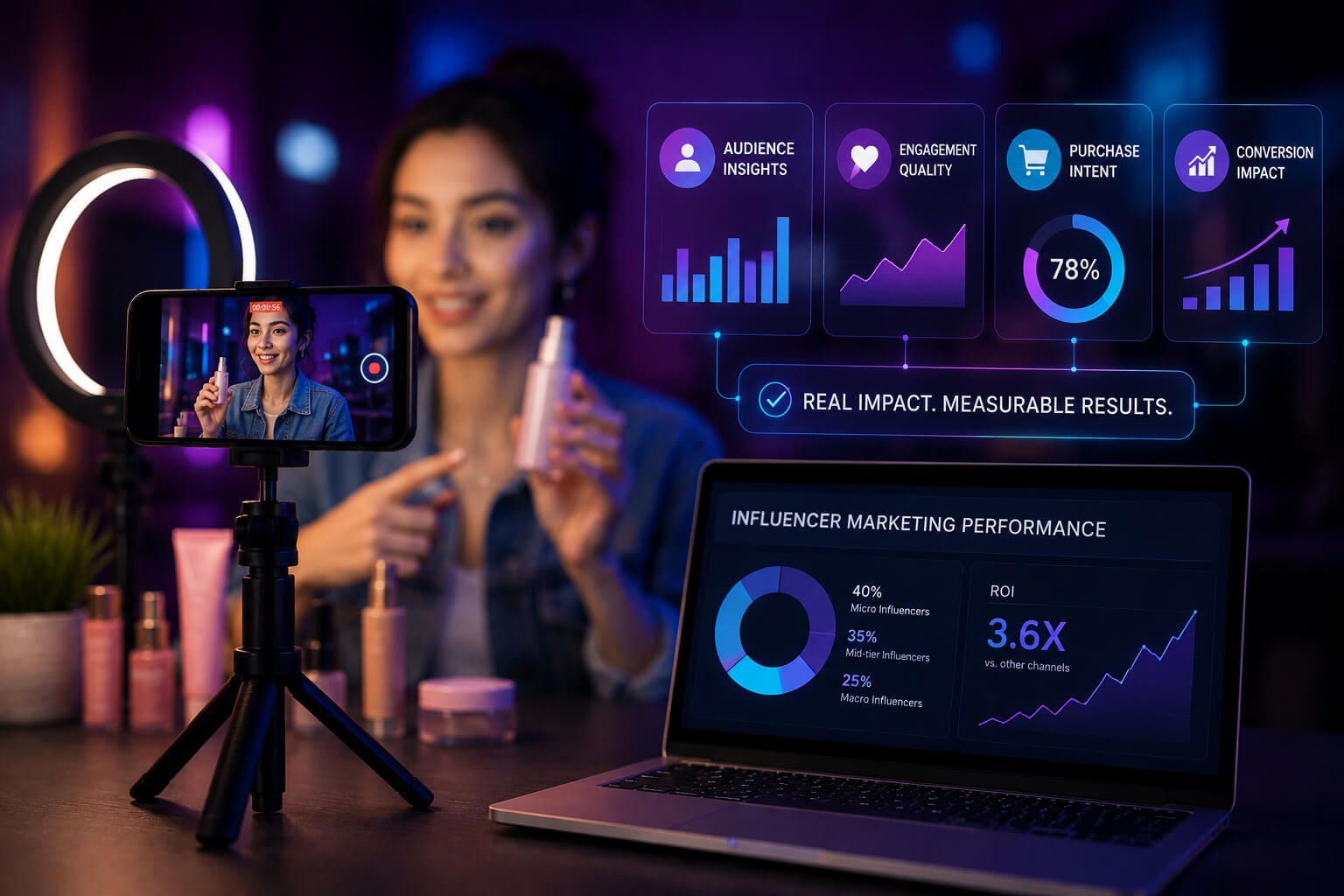
Influencer marketing has spent years being judged by the easy stuff. Views. Likes. Comments. Follower counts. Screenshots from campaign dashboards that look good in a recap deck but do not always explain what actually happened to sales. But to truly measure success, you need to consider influencer marketing ROI.
Circana’s latest report, The Value of Influence, pushes the conversation into a more serious place. The report looks at influencer marketing through measurable business outcomes, including sales impact, incrementality, and return on investment. In plain terms, it asks the question brands keep circling around: did the creator campaign actually move product, or did it just make noise?
Influencer Marketing Is Getting a Harder Scorecard
For a long time, influencer marketing benefited from being a little vague. A creator posted. Engagement came in. The campaign felt active. Everyone had content to repost. That worked when influencer marketing sat closer to awareness than performance.
That version is getting old.
Circana’s research argues that creator activity can be measured against other media channels using sales impact and incrementality, not just engagement metrics. That matters because marketers are under pressure to prove what every channel is doing, especially when budgets are being questioned and every media dollar has to work harder.
This is not the death of engagement metrics. They still tell part of the story. But they are no longer enough on their own. A post with strong engagement can still fail to create meaningful sales lift. A smaller creator campaign can look modest online but perform better at the register. That is exactly the kind of gap brands are trying to understand.
Circana Says There Is Still Room to Spend
One of the bigger findings from the report is that 75% of brands still have room to scale influencer investment and unlock more growth. That does not mean every brand should suddenly throw money at creators. It means many brands may be underinvesting, especially when influencer activity is measured properly against actual business results.
That point is important because influencer marketing already feels everywhere. Creators are in product launches, travel campaigns, retail promotions, beauty drops, restaurant openings, and B2B thought leadership campaigns. From the outside, it can look like brands are spending heavily across the board.
But the report suggests a different picture. A lot of brands may still be testing, limiting, or misreading the channel because they do not have a clean way to measure its value. When the measurement improves, the budget conversation changes.
Smaller and Mid-Sized Brands May Have an Edge
Another interesting detail: Circana found that small and mid-sized brands often see stronger returns from creator campaigns. That makes sense. Smaller brands usually need trust fast. They may not have the awareness, shelf power, or media budgets of larger competitors, so the right creator partnership can do more than generate attention. It can introduce the brand, explain the product, and push people closer to buying.
There is also less distance between the creator message and the purchase decision. A niche beauty brand, a specialty retail product, or a challenger CPG company can sometimes benefit from creator content in a way that feels more direct. Not always. But often enough that marketers should pay attention.
Big brands still have obvious advantages. But smaller brands can sometimes move quicker, choose creators with sharper audience fit, and build campaigns that do not feel like they were polished to death by committee.
Beauty and Specialty Retail Stand Out
The report also points to strong influencer marketing performance in beauty and specialty retail. No shock there, but it is still worth saying because those categories are built for creator-led discovery. People want to see texture, use, reaction, comparison, routine, transformation, and personal recommendation. A static ad can do some of that. A creator can do it better when the fit is right.
Beauty has been one of the clearest examples of influencer marketing turning into a full-funnel engine. A creator can create awareness, answer questions, show application, compare products, and drive purchase intent in one piece of content. Specialty retail works in a similar way because creators can make products feel specific, useful, and easier to choose.
That does not mean every creator post in these categories performs. Plenty do not. But the natural behavior of the audience already matches the format. People discover through creators. They compare through creators. Sometimes they buy because of creators.
The Real Shift Is From Content Metrics to Sales Lift
Circana’s report uses advanced marketing mix modeling and proprietary retail data to analyze influencer performance. That allows the company to look at both short-term sales impact and longer-term brand contribution from influencer campaigns.
That is the part brands have been asking for. Not another dashboard full of impressions. Not another campaign recap built around a few top-performing posts. Actual evidence that connects creator activity to sales outcomes.
For marketers, this could make influencer marketing easier to defend internally. It gives teams a way to compare influencer campaigns with traditional media channels, spot where creator spend is underused, and identify when a campaign is over-indexing in a category or audience.
Influencer Marketing Is Growing Up, Whether It Wants To or Not
The creator economy still runs on personality, timing, trust, and cultural instinct. That part cannot be fully reduced to a spreadsheet. And honestly, it should not be. The best creator campaigns often work because they feel alive, not because they were engineered into something sterile.
Still, the money side is getting stricter.
Brands want proof. Retailers want proof. Media teams want proof. Finance teams definitely want proof. Circana’s report lands right inside that pressure point by showing influencer marketing as a channel that can be measured by business impact, not just social activity.
That may be uncomfortable for some campaigns. It may expose weak creator strategies that looked better on Instagram than they did in sales data. But for brands that are already using creators well, better measurement could unlock more budget, more confidence, and smarter planning.
Influencer marketing is not just about who can create the loudest post anymore. The better question is much less glamorous: what moved because of it?
