

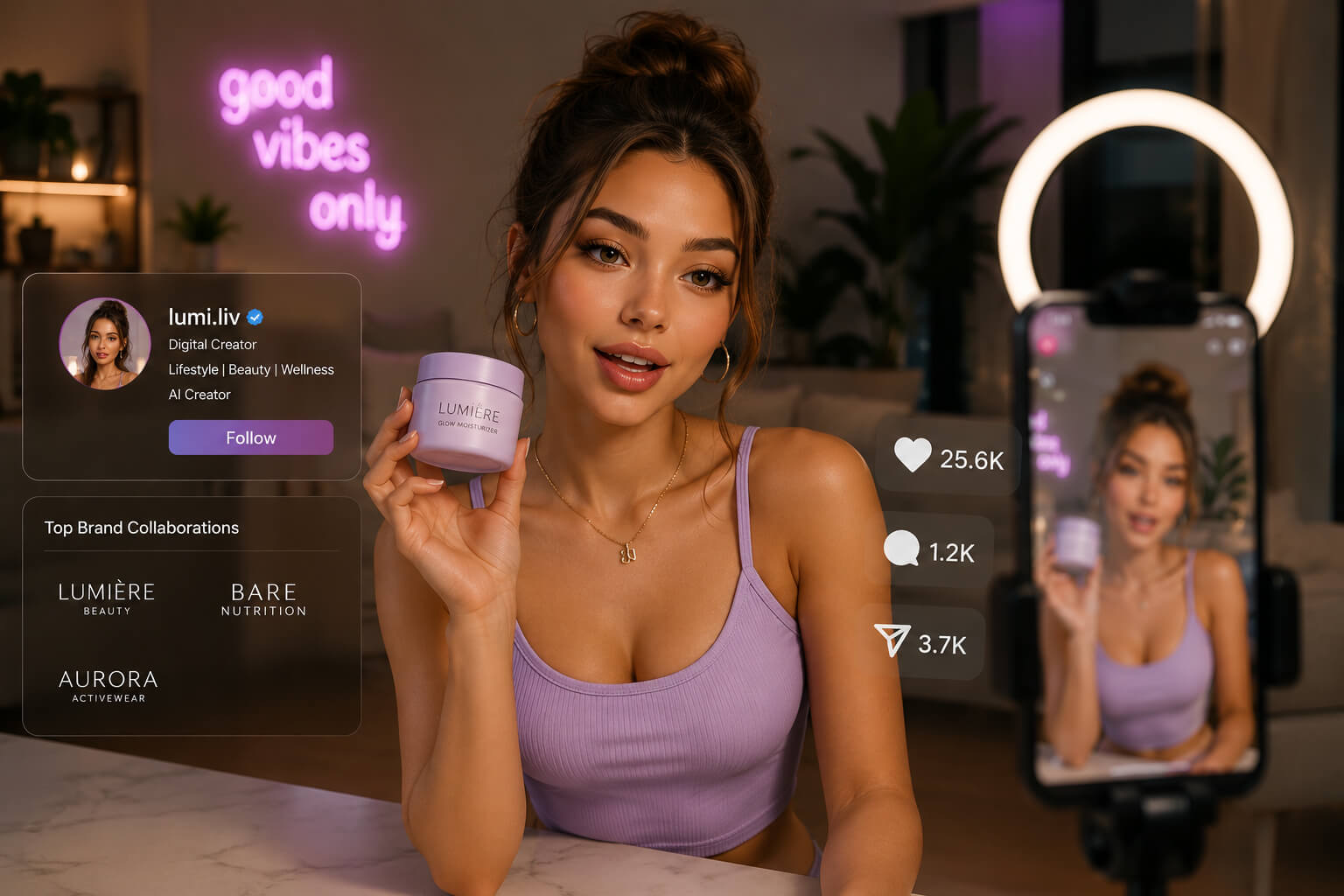
AI-generated influencers are becoming a growing part of social media marketing, as brands look for cheaper, faster, and more controllable ways to create promotional content.
A new investigation has highlighted how some companies are using realistic AI-created people in ads, product videos, and influencer-style posts. These digital characters can appear like everyday customers, creators, or lifestyle influencers, even when no real person is behind the content.
The rise of AI-generated influencers is creating new questions for the creator economy. For brands, the technology offers a way to produce polished social media campaigns without traditional photoshoots, influencer fees, scheduling issues, or reputational risks. For audiences, however, the concern is whether people can clearly tell when a product recommendation is coming from a real customer or a synthetic personality.
AI Influencers Are Changing Brand Marketing
Brands have long relied on influencers and user-generated content to make product promotions feel more relatable. A video of someone opening a package, reviewing a beauty product, wearing a fashion item, or using an app can feel more authentic than a standard advertisement.
AI now allows companies to recreate that same style without hiring a human creator.
Instead of booking models, photographers, locations, and influencers, marketers can generate digital people who look like real consumers. These AI characters can be placed in lifestyle settings, made to speak scripted lines, and used across Instagram, TikTok, Facebook, and other social platforms.
This makes AI-generated influencers especially attractive for startups and brands that need a high volume of content but want to reduce production costs.
Why Brands Are Interested in AI-Generated Influencers
There are several reasons companies are experimenting with AI influencer content:
First, AI content can be cheaper than traditional influencer campaigns. A full photoshoot or video production can cost thousands of dollars, while AI-generated visuals can be produced much faster.
Second, brands have more control. Human influencers may have personal opinions, public controversies, scheduling conflicts, or creative differences. AI-generated influencers can be designed to match a campaign exactly.
Third, AI content can be tested quickly. Brands can create different versions of ads, captions, faces, locations, and hooks to see what performs best.
Finally, AI influencers allow companies to create content that looks like user-generated content, even if it was produced entirely by a brand or marketing agency.
The Transparency Problem
The biggest issue is disclosure.
Many consumers may assume that a person shown in a product video is a real customer, creator, or influencer. If the person is AI-generated and that is not clearly labelled, audiences could feel misled.
Consumer advocates argue that brands should be transparent when promotional content features AI-generated people. This is especially important when the content is designed to look like a real testimonial, review, or customer experience.
The issue becomes even more complicated when AI-generated influencers are used in formats that audiences already associate with authenticity, such as unboxing videos, wedding testimonials, beauty routines, fashion posts, and app recommendations.
What This Means for Human Creators
The growth of AI-generated influencers could create new pressure on human creators, especially those who produce paid user-generated content for brands.
UGC creators have become popular because they create relatable product videos without always needing a large following. Brands pay them to make content that feels natural and less polished than traditional advertising.
AI may now compete directly with that market.
If brands can generate realistic-looking customer-style videos at scale, some may reduce their reliance on human creators. However, human influencers still offer something AI cannot fully replicate: real trust, personal experience, community, and audience relationships.
Creators who have built loyal followings may remain valuable because their influence is tied to credibility, not just appearance.
Regulators Are Still Catching Up
Advertising rules already require promotional content to avoid misleading consumers. However, rules around AI-generated people and synthetic influencer content are still developing in many markets.
In some regions, new AI rules are expected to require clearer labels for deepfakes or AI-manipulated media. But in other places, brands may not yet face specific requirements to disclose when an influencer-style post was created with AI.
That gap leaves consumers, platforms, creators, and advertisers in a confusing space.
For now, the key question is not only whether AI was used, but whether the content gives viewers a false impression about the product, the person promoting it, or the experience being shown.
The Future of AI Influencers in Social Media
AI-generated influencers are unlikely to disappear. As tools become more realistic, more brands may experiment with synthetic creators for ads, product demos, and social media campaigns.
But the brands that use this technology responsibly will need to prioritize transparency. Clear labelling could help audiences understand when they are watching AI-generated promotional content rather than a real customer or creator.
For the creator economy, this shift could separate creators who simply produce content from creators who build real trust with their communities.
AI can generate a face, a voice, and a polished video. But authenticity, lived experience, and audience loyalty remain harder to automate.
Key Takeaway
AI-generated influencers are becoming a new tool for brand marketing, offering speed, scale, and lower production costs. But as synthetic creators become more realistic, brands will face growing pressure to disclose when promotional content is made with AI.
For influencers and creators, the message is clear: trust and transparency are becoming more valuable than ever.
