
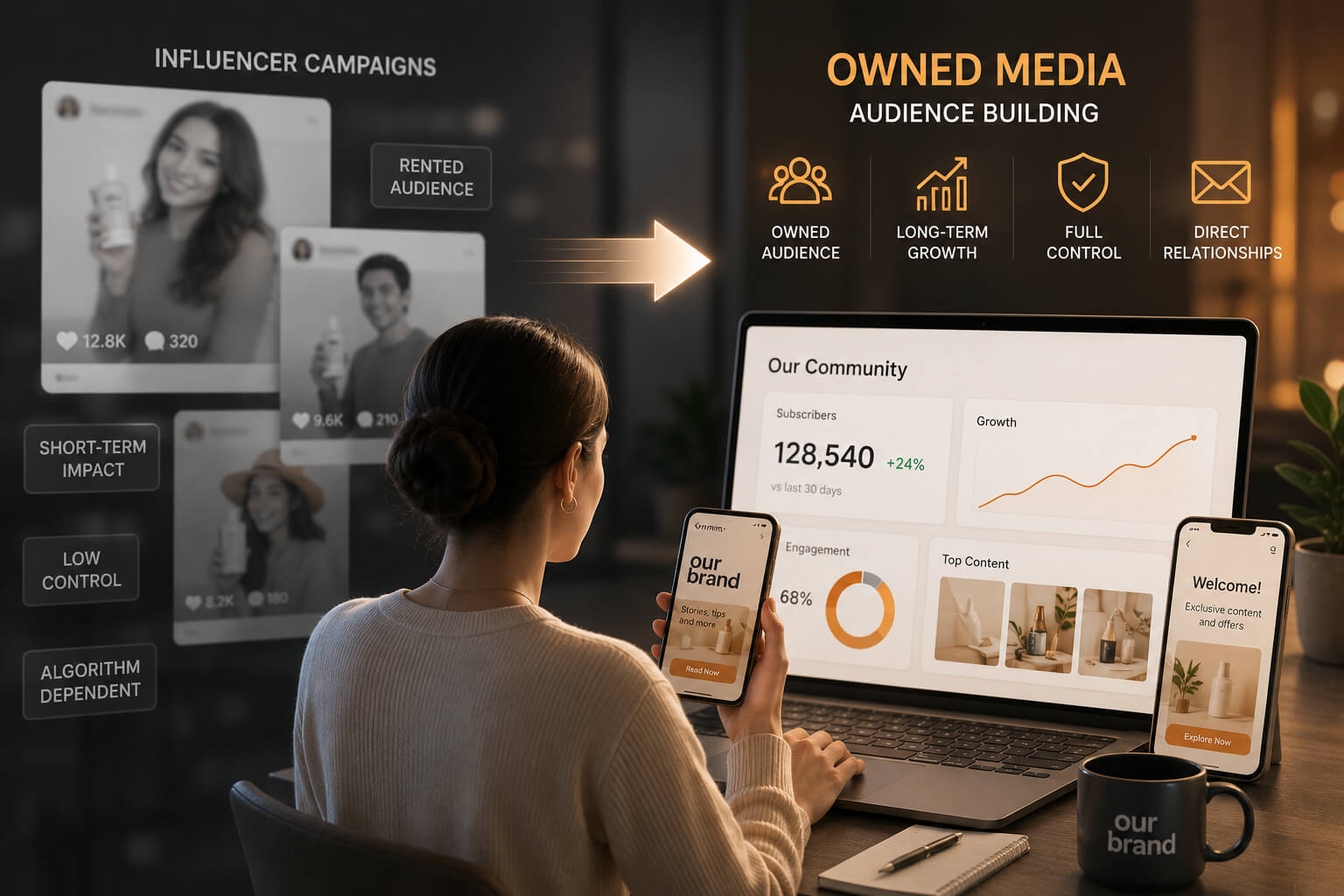
Brands are rethinking how they work with creators and influencers. Instead of relying only on short-term influencer campaigns, more marketing teams are now investing in owned media platforms that help them build direct relationships with their audiences.
This shift marks a major change in the creator economy. Influencer marketing is still valuable, but brands are realizing that renting attention from creators is not the same as owning an audience. As social platforms become more competitive and algorithms become harder to predict, companies are looking for ways to create long-term media assets they can control.
Why Brands Are Moving Away From One-Off Influencer Campaigns
Influencer campaigns can deliver strong awareness, engagement, and sales. A well-matched creator can introduce a brand to a loyal audience and make a product feel more relatable.
However, the problem begins when the campaign ends.
Once a paid post, reel, or video stops gaining traction, the brand often loses access to that audience. The creator keeps the relationship with their followers, while the brand has to start again with another campaign, another negotiation, and another paid activation.
This creates what many marketers now see as the “temporary spike” problem. A campaign can generate attention, but that attention usually does not compound unless the brand has a way to bring people into its own ecosystem.
That is why more brands are shifting from short-term influencer partnerships to long-term audience-building strategies.
Owned Media Is Becoming a Brand Priority
Owned media refers to channels that a brand controls directly. These can include:
- Email newsletters
- Branded podcasts
- YouTube shows
- Blogs and editorial hubs
- Private communities
- Mobile apps
- Membership programs
- Live or virtual events
- Creator-hosted content series
Unlike influencer posts, owned media gives brands a direct line to their audience. Instead of depending completely on social media algorithms, brands can use owned platforms to keep people engaged over time.
This does not mean influencer marketing is disappearing. Instead, the role of influencers is changing. Creators are no longer being used only for sponsored posts. They are increasingly becoming hosts, collaborators, advisors, community leaders, and creative partners inside brand-owned media projects.
Brands Are Starting to Think Like Media Companies
The most forward-looking brands are no longer thinking only in terms of campaigns. They are building repeatable content formats that audiences can return to regularly.
This includes weekly podcast episodes, founder-led video shows, expert interviews, educational series, documentaries, and creator-led programs. These formats work because they build familiarity.
A single sponsored post may create a moment. A recurring show or newsletter can create a habit.
When audiences know what to expect from a brand’s content, they are more likely to return. Over time, this repeated engagement can build trust, brand preference, and community.
That is the real value of owned media. It gives brands the chance to become part of their audience’s routine instead of competing for attention only when they have a campaign budget.
Creator-Led IP Is the Next Step
One of the biggest trends in this shift is the rise of creator-led intellectual property, or creator-led IP.
In the past, a brand might pay an influencer to promote a product. Now, brands are working with creators to build formats that can live beyond a single campaign.
For example, a creator might host a branded podcast, lead a video interview series, develop a recurring educational segment, or become the face of a brand community. In this model, the creator brings personality and trust, while the brand owns the long-term media property.
This gives creators more meaningful work than a basic sponsored post. It also gives brands a stronger asset that can grow over time.
AI Is Making Owned Media Easier to Scale
Another reason brands are investing in owned media is the rise of AI-powered content production.
A single long-form video or podcast episode can now be repurposed into multiple pieces of content, including short clips, blog posts, newsletters, quote graphics, social captions, and localized versions for different markets.
This makes owned media more practical for brands that previously saw content production as too expensive or time-consuming.
With AI tools helping with transcription, editing, repurposing, translation, and content planning, brands can maintain a consistent publishing schedule without needing a large traditional media team.
The Real Goal Is Direct Audience Ownership
Building content is only one part of the strategy. The bigger goal is audience ownership.
A brand may publish a show on YouTube or a podcast on Spotify, but those platforms still control distribution. If an algorithm changes, reach can drop overnight.
That is why brands are also trying to move audiences into channels they control more directly, such as email lists, communities, apps, events, and membership programs.
This is where owned media becomes a true business asset. A newsletter subscriber, community member, or registered event attendee gives the brand a more reliable relationship than a one-time viewer on a social platform.
What Brands Should Measure Now
As brands shift from influencer campaigns to owned media, the metrics also need to change.
Instead of focusing only on likes, views, or one-time reach, brands need to measure long-term audience behavior. Important metrics include:
- Returning viewers
- Newsletter subscribers
- Community growth
- Direct website traffic
- Content completion rates
- Repeat engagement
- Brand search growth
- Assisted conversions
- Event registrations
- Customer retention
These metrics may grow more slowly than a viral post, but they are more valuable because they show whether a brand is building a lasting relationship with its audience.
What This Means for Creators and Influencers
For creators, this shift creates new opportunities. Brands still need trusted voices, but they are looking for more than one-off promotional content.
Creators who can host shows, build communities, develop formats, explain topics, and keep audiences engaged over time will become more valuable.
This also means creators may need to position themselves as long-term content partners rather than just advertising channels. The more a creator can help a brand build an audience it owns, the stronger their role becomes.
The Future of Brand and Creator Partnerships
The creator economy is entering a more mature phase. Brands are no longer satisfied with short bursts of attention. They want media properties, audience data, community, and content systems that grow over time.
Influencer marketing will continue to matter, but the smartest brands are moving beyond campaign thinking. They are building owned media ecosystems that combine creator talent, brand storytelling, AI-powered content production, and direct audience relationships.
The message is clear: the future of brand marketing is not just about borrowing attention. It is about building an audience that comes back again and again.
