

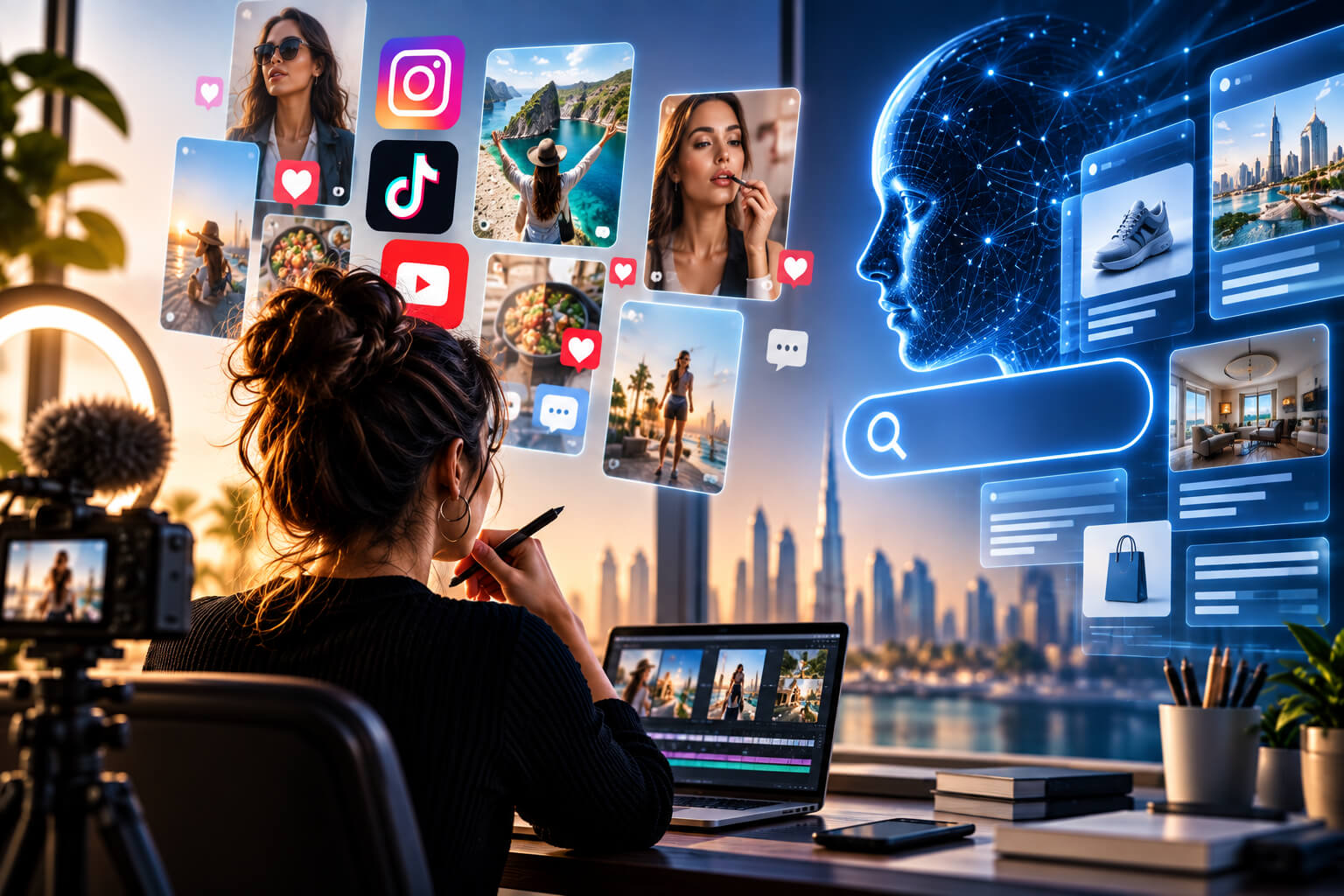
Creator marketing has spent years chasing familiar numbers: followers, views, engagement and conversions. AI is quietly adding another metric to that list.
Brands and agencies are starting to look at whether a creator can influence what artificial intelligence platforms say about a product, company or category. That changes the job slightly. A creator no longer needs to reach only the person watching a video. Their content may also need to make sense to the AI systems reading, indexing and citing it.
It sounds technical, but the shift is already showing up in creator briefs. Digiday reports that agencies including Tinuiti, Dept, Go Fish Digital, Ogilvy and Jellyfish are paying closer attention to how creator content appears inside AI-generated answers. Some marketers now consider AI visibility alongside traditional factors such as credibility, expertise and audience trust.
Creator Marketing Is Starting to Target Two Audiences
For years, brands built creator campaigns around people. The basic idea was simple: get someone’s attention, keep them watching and hopefully persuade them to act. Now there is another audience sitting quietly in the background. AI assistants increasingly answer questions about products, services and buying decisions by pulling information from sources they consider useful or authoritative. Creator videos, reviews, demonstrations and detailed explainers can become part of that information layer.
That makes creator content potentially useful long after the initial campaign has finished. A video might stop generating big social numbers but continue appearing as supporting material behind AI-generated recommendations. This is pushing marketers to think about creator influence in a different way. The question is no longer simply how many people will see a piece of content. Brands are also beginning to ask whether a creator could become a trusted source when AI systems answer questions about their category.
Follower Counts May Matter Less Than Subject Expertise
A huge audience still carries weight, but size alone may become a weaker signal when brands specifically want visibility inside AI answers. Digiday found agencies increasingly interested in creators with genuine depth in a particular subject. A creator who has consistently covered skincare, travel, finance, gaming or another niche for years gives AI systems a clearer body of information to understand.
That could give smaller specialist creators an unexpected advantage. A creator with 100,000 followers and hundreds of detailed videos around one subject may provide stronger authority signals than an account with millions of followers that jumps between unrelated topics. AI discovery rewards a slightly different kind of influence, where depth, consistency and useful information can matter almost as much as raw reach.
Long-Form Creator Content Could Gain New Value
Short-form video transformed creator marketing. TikTok, Instagram Reels and YouTube Shorts made quick, entertaining content enormously valuable to brands. AI search could pull the pendulum slightly in the other direction. Go Fish Digital told Digiday that longer-form information appears more likely to earn citations than Shorts in the AI data it has examined.
That does not mean short-form content is losing relevance. It means detailed videos may take on an additional role. A ten-minute product demonstration can explain features, answer questions, compare alternatives and provide context. There is simply more material for an AI system to work with. Suddenly, the creator who spends time properly explaining something may have an advantage that is not immediately visible in a social media dashboard.
YouTube Is Becoming Particularly Important for AI Discovery
YouTube sits right in the middle of this change. The platform already contains an enormous archive of reviews, tutorials, product demonstrations, interviews and specialist commentary. Much of that content answers exactly the kind of questions people now put into AI assistants.
Marketers are noticing. Digiday reports that much of the current push around creator-driven AI visibility is concentrated on YouTube. Agencies are looking at which creators already appear in AI-generated answers and considering that information when deciding who should join campaigns. This could make older creator content surprisingly valuable too. A useful YouTube video does not disappear when a campaign ends. It can remain searchable, discoverable and potentially relevant to AI systems months or even years later.
Creator Briefs Are Getting More Specific
The change becomes clearer when looking at the actual campaign brief. Brands are not necessarily asking creators to speak like search engines. Instead, agencies are adjusting what sits underneath the creative idea. On one campaign described by Dept, creators received accurate product names and verifiable claims to work from. Video chapters reflected real questions people might ask, while clean transcripts helped make the content easier for AI systems to interpret.
That is a subtle shift, but an important one. The creator can still sound like themselves and the video can still entertain. Underneath it, however, sits a clearer structure built around accurate terminology, useful answers, understandable sections and information that machines can process without guessing what the creator meant. Creator SEO is starting to look less like traditional keyword placement and more like building useful, structured content.
AI Visibility Is Moving Into Creator Strategy
AI visibility is no longer sitting on the fringes of creator planning. Tinuiti told Digiday that AI visibility accounted for roughly a tenth of the factors it considered when developing creator strategies six to eight months earlier. That share has since moved closer to a quarter. Discussions about how to approach AI visibility are also touching around 60% of its client roster.
Jellyfish is seeing similar pressure from advertisers. More than 90% of marketers working with the agency now rank AI’s effect on discovery and sales among their top three concerns. Around half of advertisers with creator programs are already examining the issue specifically in relation to creators. Those numbers suggest this is moving beyond theoretical debate and into real campaign planning.
Agencies Are Building Tools to Measure AI Citations
Measurement is naturally following the money. Jellyfish has developed a system called Share of Model, which runs large batches of prompts through major AI models and tracks which sources appear in their answers. It can then examine cited videos to understand what may have helped them surface.
That creates an entirely different creator marketing dataset. Instead of measuring only views, clicks or engagement, marketers can start asking whether a creator repeatedly appears when consumers ask AI systems relevant questions. Over time, that could influence creator selection, campaign structure and even how creators are valued commercially.
AI Citations Have Not Changed Creator Rates Yet
Despite all the attention, brands are not widely paying creators extra simply because their content performs well inside AI-generated results. Tinuiti said creator rate cards have not materially shifted around AI citations. Some creators are instead adding citation information to media kits or pitches as another reason for brands to choose them.
That could change once marketers develop a clearer way to value the business impact of AI visibility. If brands eventually connect AI citations with product discovery or sales, creators who repeatedly influence those answers will have something measurable to sell. A future creator media kit could include follower count, average views, engagement rate and AI citation visibility side by side.
Creator Authority Could Become a Bigger Currency
The creator economy has always had specialists. AI may simply make their value easier to see. Creators who have spent years building knowledge around one topic have accumulated something beyond followers. They have created a searchable library of opinions, explanations, demonstrations and firsthand experience.
AI systems need that kind of material. It also creates an interesting opening for micro and mid-sized creators. They may not compete with celebrity creators on reach, but they can compete on expertise. For certain campaigns, that distinction could become far more important. Brands might end up dividing creator strategies into different jobs, with some creators delivering massive reach and others building long-term authority that helps brands surface across search and AI.
Brands Should Be Careful Not to Over-Optimize for AI
There is an obvious risk in all of this. Once marketers discover another measurable signal, some will try to optimize every sentence, chapter title and product mention around it. That could quickly make creator content worse.
AI discovery systems are also evolving fast, and marketers still do not have full visibility into how large language models decide which sources deserve citations. That means the fundamentals still matter. Creators need to make genuinely useful content, build credibility and maintain a recognizable point of view. People still need to want to watch. Ironically, those human qualities may be exactly what makes the content valuable to AI systems as well.
The Creator Economy Is Entering Its AI Discovery Era
Creator marketing is not abandoning humans for algorithms. It is becoming responsible for reaching both. A creator campaign can influence someone scrolling through YouTube today and potentially shape an AI-generated recommendation later. Those are two very different moments, yet the same piece of content can sit behind both.
That makes creator authority harder to reduce to follower numbers alone. Reach will still matter. Engagement will still matter. Sales certainly will. But another question is quietly entering campaign planning: when someone asks an AI about this category, does this creator show up? For creators who have spent years becoming genuinely knowledgeable about something, that could turn into a significant advantage.
Sources
Digiday — Future of Marketing: Brands want creators who can win over humans and machines at once
https://digiday.com/marketing/future-of-marketing-brands-want-creators-who-can-win-over-humans-and-machines-at-once/
Digiday — Creator Economy Coverage
https://digiday.com/topic/creator-economy/
