

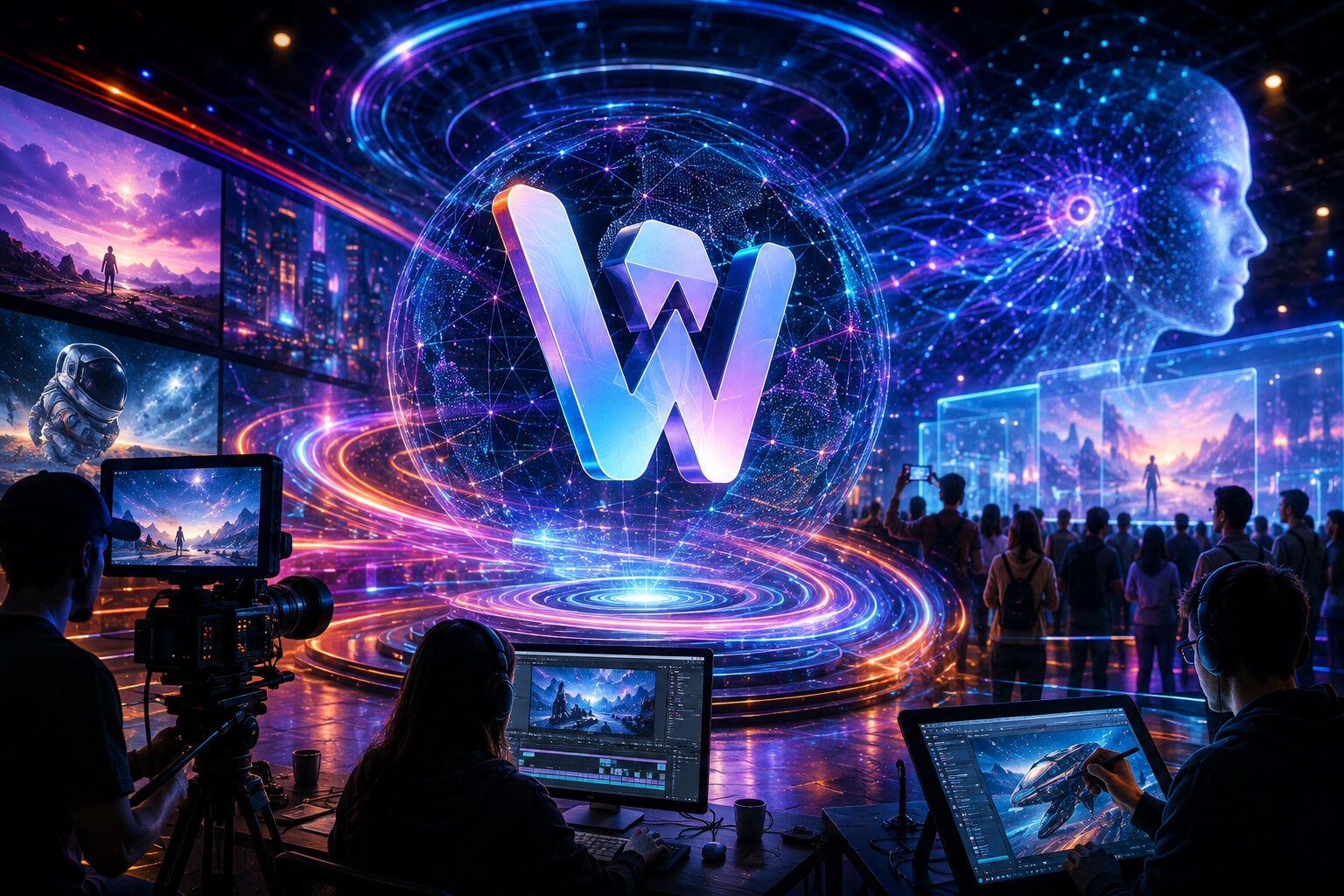
AI-generated video is moving beyond the novelty stage. In Bali, creators were already asking the harder question: what happens when these tools become part of the everyday creative process?
The AI Creator Festival 2026 wrapped up on August 22 at The Mulia Resort in Nusa Dua, bringing together creators, developers, investors and creative industry figures from around the world. The event focused heavily on the rapidly evolving AI video space, with Alibaba’s Wan3.0 and AI creation platform VivaReel at the center of the conversation.
Held under the theme “Imagination Without Limitation,” the festival wasn’t simply another showcase of AI demos. There were films, creator discussions, technology presentations and an awards program built around work actually produced with generative AI.
And that matters. AI video is starting to look less like an experimental side tool and more like a production layer creators may soon use without thinking twice about it.
Bali Becomes a Meeting Point for the AI Creator Economy
The Bali gathering attracted creators, developers and industry representatives from 30 countries and regions, giving the event a noticeably international footprint. Screenings of AI-assisted short films sat alongside discussions about the creator economy and the uncomfortable question hanging over much of generative media: how do creators use more AI without sanding away the human part of the work?
That question surfaced directly during discussions around keeping creativity human in an AI-heavy environment.
Indonesia was also part of the bigger picture.
Arwin Syahputra, Chairman of the Bogor City Chamber of Commerce and Industry, and Ricky Setiawan discussed AI’s potential role in Indonesia’s creative industries and digital economy. TBV General Partner and Co-founder Tobias Bauer brought the investor angle, looking at the startup landscape developing around AI-powered content creation. Indonesian actress and Motions V Partner and Principal Nadia Vega also joined the program.
The mix was telling. Creators were there, but so were investors, businesses and technology builders. AI content creation is becoming an ecosystem, not simply a new category of software.
Wan3.0 Shows Where AI Video Generation Is Heading
A major technology focus was Wan3.0, Alibaba’s latest-generation AI video model.
Wan3.0 entered public beta in August 2026 and can generate videos lasting up to 30 seconds in a single generation. More interesting for working creators is the range of material it can accept.
Text, images, video and audio can all become references. The model also supports inputs such as web pages and documents, opening the door to workflows that go well beyond typing a cinematic prompt into a box.
That changes the practical conversation around AI video.
A creator could potentially begin with existing campaign materials, visual references, documents or multimedia assets rather than constructing every scene from scratch. For marketers and production teams, that starts to blur the boundary between an AI generator and an actual creative production tool.
The 30-second capability is another important step. AI video models have often produced impressive clips that are simply too short or inconsistent for deeper storytelling. Longer sequences give creators more space for camera movement, character development and continuity within one generation.
VivaReel Wants AI to Feel More Like a Creative Studio
VivaReel approached the same problem from another direction.
Rather than focusing entirely on the underlying model, the platform is positioning itself as a broader AI-powered video workspace where creators can move from ideas and visual references toward storyboards and finished video production.
VivaReel founder and CEO Summer Li used her opening remarks at the festival to outline a vision for an AI video ecosystem that effectively puts capabilities once associated with much larger production teams into the hands of individual creators.
That’s probably one of the bigger creator-economy stories hiding underneath the AI model announcements.
Generative AI isn’t only making individual production steps faster. It could change how big a “team” needs to be.
A solo creator who previously needed outside help with concept art, storyboarding, animation, editing or visual effects can increasingly automate pieces of that workflow. Small creator businesses suddenly have access to production capabilities that would have required much bigger budgets only a few years ago.
It doesn’t automatically make the content good. It does make ambitious production much easier to attempt.
The Festival Put AI Storytelling to the Test
The technology wasn’t left sitting on presentation slides.
The festival’s global creator competition used “LOVE” as its theme, asking participants to create emotional stories capable of crossing cultural, geographic and language boundaries.
The resulting work became part of the inaugural VivaReel Creator Awards.
First Prize went to Boxer for The One Everyone Passed By. Second Prizes went to Coffee for Another me and Akra for The Last Voice. Third Prize winners included Jhowu for Peace World, Yuliia Myrosh for A Recipe for Life and Aze Visual Story for Love Beyond Distance. Adrien Bodson received the Special Award for Tomorrow Calls.
The competition offered a more useful test of AI video than another polished technical demo.
Can people actually use these systems to tell stories viewers care about?
That’s where the creator market ultimately gets decided.
AI Video Is Becoming a Creator Tool, Not Just an AI Tool
The bigger story coming out of Bali isn’t one particular model specification.
It’s the normalization of AI video.
AI-generated footage is increasingly entering the same workflow as cameras, editing software, stock footage, animation tools and visual effects. Creators don’t necessarily need to build an entire video with AI either. Generated scenes can become one piece of a larger production.
That flexibility could matter enormously for independent creators.
A YouTuber might generate a scene that would be impossible to film. A brand could turn an existing campaign concept into several video treatments. A filmmaker could prototype an idea before committing to production. An influencer could create visual sequences without assembling a traditional production crew.
Some of those uses already exist. The quality, control and accessibility of the tools are what’s changing.
That shift is happening alongside a broader transformation in creator-led entertainment, with major media companies increasingly treating creator studios as production partners rather than simply promotional channels.
The Human Question Isn’t Going Away
There is an obvious tension here.
As AI handles more of the production process, creators have to decide what they actually want to automate.
The Bali program addressed that tension through discussions around the HUMAN+AI approach and maintaining authentic emotional expression as generative tools become more capable. Coverage of the festival highlighted a panel examining how creators can preserve the human element while working with AI.
That’s likely to become a bigger creator-economy issue than whether one model beats another on a benchmark.
Audiences follow creators because of taste, personality, perspective and connection. Generating prettier footage doesn’t replace those things.
If anything, widespread access to powerful AI tools could make them more valuable.
When everyone can generate something technically impressive, having something worth saying becomes the difficult part.
What the AI Creator Festival Says About the Next Creator Wave
The AI Creator Festival 2026 offered a snapshot of a creator industry changing unusually fast.
Wan3.0 showed how AI video models are becoming longer, more flexible and increasingly multimodal. VivaReel demonstrated the push toward packaging those capabilities into workflows ordinary creators can actually use. The Creator Awards, meanwhile, moved the discussion away from specifications and toward finished stories.
That’s where this gets interesting.
AI video generation is no longer just a competition between technology companies trying to produce the most impressive demo clip. Creators are beginning to build communities, competitions and production workflows around the technology itself.
That also gives creators another layer of value as brands increasingly treat creator content as part of wider AI-driven discovery and marketing strategies.
The next phase may be less about asking whether a video was made with AI.
It may simply be about whether anyone wants to watch it.
Sources
- The Manila Times — 2026 AI Creator Festival Concludes in Bali: Wan3.0 and Global Creators Explore the New Frontier of AI Video Generation
- IDN Times — AI Creator Festival 2026 di Bali: Kreator Global Bertemu Pakar Industri
- Alibaba Cloud Community — Wan3.0: 30-Second AI Video Generation from Any Input
- VivaReel × Wan3.0 AI Creator Festival 2026 — Event Information
