

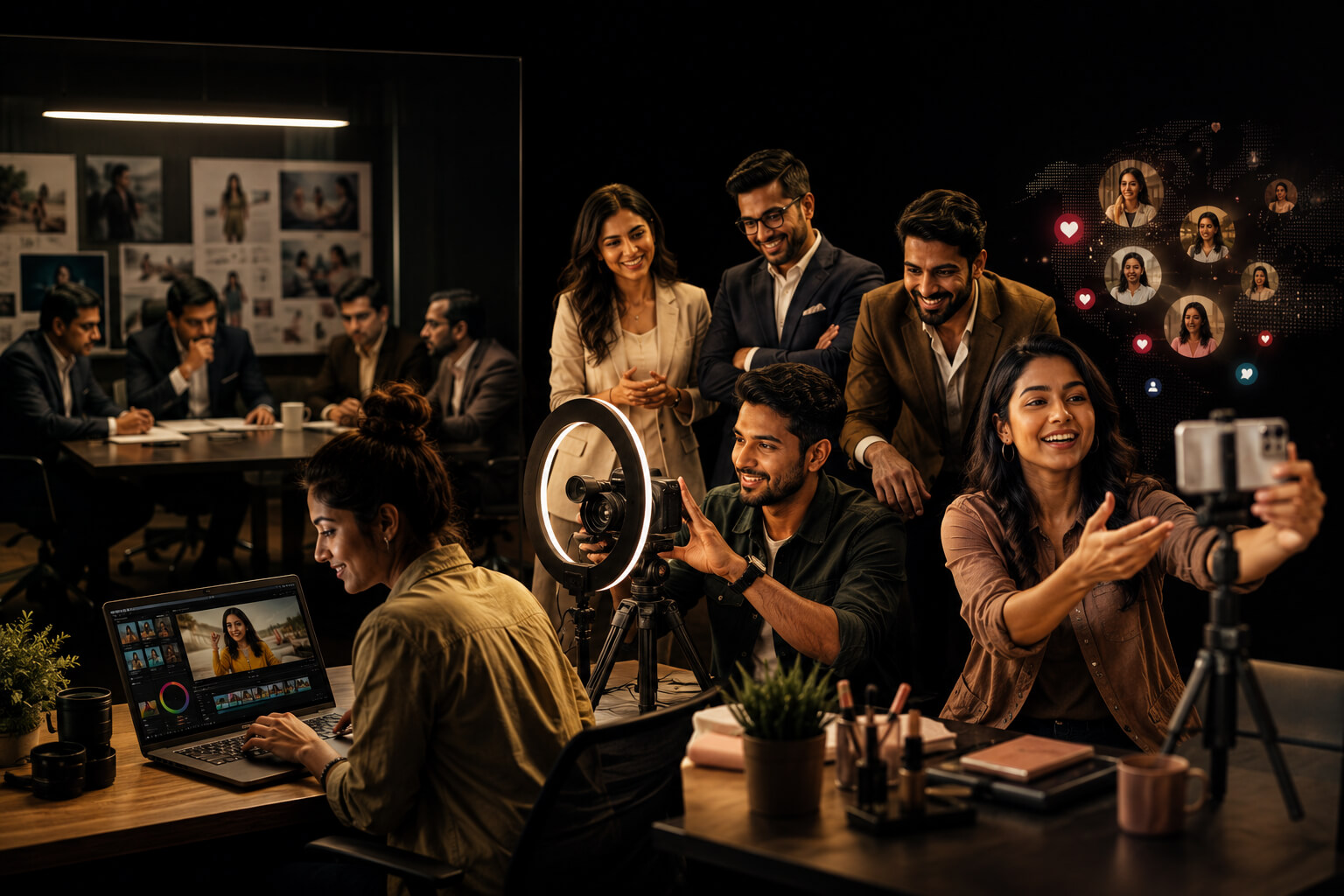
India’s leading brands are rethinking how they connect with consumers. Instead of just working with traditional ad agencies and one big campaign, lots of brands are now teaming up directly with creators, influencers, micro creators and online communities to make their messaging more authentic and relatable.
The change was discussed at MMA Impact India 2026, where marketers explored how the creator economy is changing advertising, brand trust and content strategy. The panel included leaders from Meta India, Reckitt, Le15 Patisserie, and Communique Marketing Solutions.
From One Big Ad to Many Creator-Led Stories
For a long time, brand advertising followed a predictable path. A company would create one big commercial, test it, release it across different platforms, and hope it connected with millions of people.
That approach is no longer enough.
Consumers today want content that’s personal, authentic and relatable. That’s why brands are leaning into creator-led campaigns, which allow multiple creators to tell the same brand story in their own authentic and distinctive way.
Brands need more than just one polished campaign – they need multiple voices that represent local culture, communities, and everyday experiences.
Why are Creators Increasing in Value
Creators are increasing in value because they are trusted more than traditional advertisements. Their content is also less scripted and more natural.
During the panel, Saugato Bhowmik of Meta India said creators are viewed as raw, organic, and authentic. He noted that Indian audiences are increasingly drawn to creators because they feel more relatable than highly produced brand communication.
This is one of the biggest reasons Indian brands are choosing creators over older advertising models.
Micro Creators Are Becoming “Social Neighbours”
A major shift in influencer marketing is the growing importance of micro and nano creators.
Celebrities and large influencers still help brands reach wide audiences, but smaller creators often build deeper trust within specific communities. They understand local language, humour, culture, and consumer behaviour in a way that feels more personal.
Tarun Aggarwal of Communique Marketing Solutions described micro and nano creators as “social neighbours,” especially in a diverse country like India.
For brands, this means a creator with a smaller but highly loyal audience can sometimes create more impact than an influencer with millions of followers.
Follower Count Is No Longer the Main Measure
Earlier, many brands selected influencers mainly by looking at their follower numbers. That is changing quickly.
Marketers are now taking a closer look at engagement, comments, shares, sentiment and the level of trust a creator has built with their audience.
A big audience does not always mean real influence. If people do not connect with the content, the campaign may not build trust.
That is why brands are now choosing creators who can start genuine conversations, not just deliver large reach.
Creator-Led Content Helps Brands Move Faster
Speed is another reason brands are turning to creators.
Traditional campaigns can take months to plan, produce, approve, and launch. Creator-led campaigns are much faster. Brands can test different ideas, formats, languages, and cultural angles at the same time.
Marketing has moved from one core creative idea to several creative iterations, says Reckitt’s Gautam Rishi, allowing brands to understand quickly which creator, message or format is working best.
In a country as diverse as India, this flexibility is extremely valuable.
Brands Need to Let Creators Sound Like Themselves
Strong creator partnerships are built on trust.
Creators know their audiences. They know what feels natural, and what doesn’t. If a brand hands them a script that doesn’t fit their personality, it’s really easy for audiences to spot.
“Creators need to believe in the message themselves before they can share it with their followers,” said Pooja Dhingra, founder of Le15 Patisserie.
This means brands should not treat creators only as advertising channels. They should involve them as creative partners.
AI Is Changing Creator Marketing Too
Artificial intelligence is also becoming part of the creator economy. AI isn’t about replacing creators, it’s about helping with brainstorming, scripting, variations on content and campaign planning.
Creators and marketers can use AI tools to develop more ideas and adapt content for different platforms faster.
Still, authenticity remains essential. AI can support the process, but the creator’s own voice, personality, and relationship with the audience remain the most important part of the campaign.
What This Means for the Future of Influencer Marketing
The move toward creators does not mean traditional advertising is going away. Big campaigns, brand films, and agency-led strategy will continue to play an important role.
But creator marketing is no longer just an extra activity. It is becoming a core part of how brands speak to consumers.
The future of marketing for Indian brands is likely to be a mix of big campaigns, creator collaborations, storytelling with micro-influencers, AI-powered content and real-time audience feedback.
The bottom line is simple: people trust people. Brands that appreciate this will be better equipped to create authentic relationships with consumers today.
