

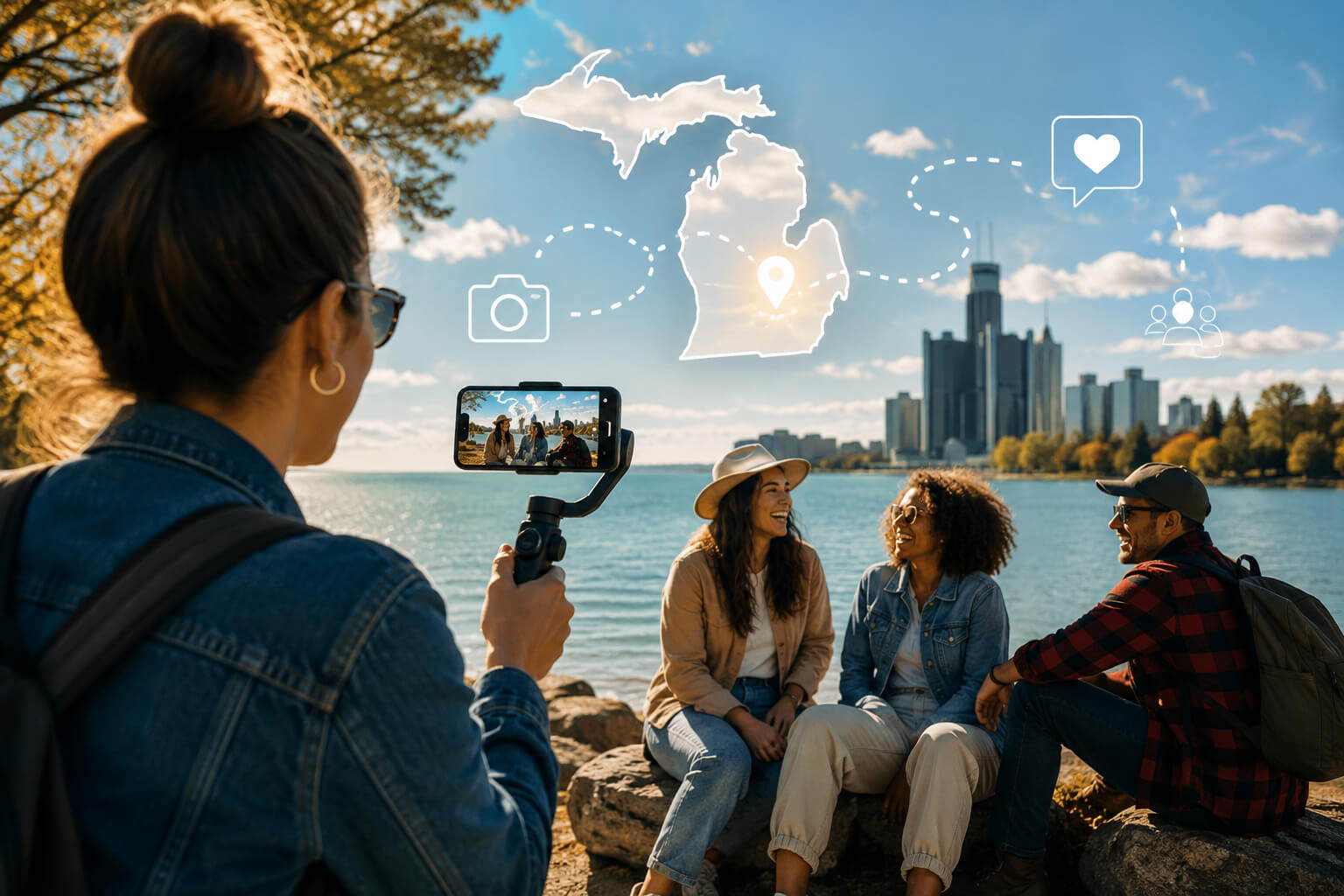
Michigan did not just buy billboards, glossy travel videos, or another safe tourism campaign.
It paid creators.
According to reporting cited from The Detroit News, the Michigan Economic Development Corp. and its Pure Michigan campaign have paid social media influencers as part of efforts to promote the state, with spending reportedly reaching about $500,000 across influencer activity. The campaign included creator posts tied to Michigan promotion, including activity around South by Southwest in Austin, Texas, where Michigan tried to sell itself as more than a cold-weather state with lakes and old auto-industry nostalgia.
That is the interesting part.
Pure Michigan is a well-known tourism brand. It already has the kind of name recognition most destinations would love to have. But even a familiar campaign now has to fight for attention inside TikTok feeds, Instagram Reels, creator travel diaries, and the weird little corners of the internet where people decide where they want to go next.
Michigan Turns To Influencers To Sell The State
The Pure Michigan influencer push fits a much bigger shift in destination marketing.
Tourism boards are no longer only trying to look beautiful. Every state can post a lake. Every city can show a skyline. Every travel campaign can cut together food, sunsets, festivals, and smiling people walking through downtown.
Creators do something different.
They make a place feel lived in. A creator eating Detroit-style pizza or reacting to Lake Michigan like it is an ocean can sometimes do more than a polished ad with a perfect voiceover. It feels smaller. Less official. More like someone texting you, “Wait, this place is actually cool.”
Michigan’s presence at SXSW also shows how the state wanted to be seen by a different crowd. The Midwest House activation was built around the idea of Michigan as a place for creators, entrepreneurs, and tech people, not just vacationers. Gravity Global, which worked on the MEDC SXSW campaign, said the activation generated more than 10.7 million paid impressions and more than 171,000 social engagements.
Those numbers explain why influencer spending keeps showing up in public tourism campaigns. The internet is messy, but it moves.
Why Paid Influencer Travel Campaigns Are Getting More Attention
There is always a slightly awkward question here.
When creators post about a destination after being paid, are they sharing a real experience or selling a sponsored mood?
The answer is usually both.
That is why transparency matters. Sponsored travel content can work, but only when audiences understand what they are watching. People are not stupid. They can usually feel when a creator is forcing excitement. They can also forgive paid partnerships when the content still feels honest, useful, or entertaining.
The problem starts when government-backed marketing looks too casual without making the sponsorship clear enough. A tourism board is not a private skincare brand or a clothing label. Public money changes the conversation. Taxpayers may want to know who was paid, why they were chosen, what results were delivered, and whether the campaign actually helped local businesses.
That is not anti-influencer. It is basic accountability.
Tourism Marketing Is Becoming Creator Marketing
Pure Michigan is not alone here.
Cities, states, countries, hotels, airlines, festivals, and economic development groups are all using influencers because traditional ads do not travel through culture the same way creator content does.
A creator can turn a small restaurant into a destination. A TikTok travel series can make a town feel suddenly famous. One viral food video can push a city into someone’s weekend plans. That kind of attention is hard to buy through old media alone.
Michigan has already seen how powerful creator attention can be. British influencers Josh and Jase built major online momentum earlier this year through their Michigan travel content, with local outlets reporting strong fan response and a planned summer return to the state.
That kind of thing is exactly why tourism boards are watching creators so closely.
Not every campaign will go viral. Most will not. But when it works, it can make a place feel alive in a way a tourism slogan cannot.
The Real Question Is Whether It Worked
A $500,000 influencer spend sounds big or small depending on who is reading it.
For a statewide tourism campaign, it may be just one part of a wider marketing budget. For regular taxpayers, it sounds like real money. For creators, it shows how official tourism marketing is becoming a serious business category.
The important question is not only how much Michigan spent.
It is what the state received in return.
Did the influencer posts drive travel interest? Did people visit Michigan because of the content? Did hotels, restaurants, events, and local businesses benefit? Did the campaign reach people who would not have paid attention to a traditional Pure Michigan ad?
Those answers matter more than the headline number.
Still, the spending reveals something larger about the creator economy. Influencers are no longer sitting outside official marketing. They are inside it now. Government agencies, tourism boards, and economic development teams are using them to shape perception, build regional identity, and make places feel culturally relevant.
Michigan is just one example.
The next fight in tourism marketing will not only be about who has the prettiest destination video. It will be about who can make a place feel real enough that people want to book the trip.
