


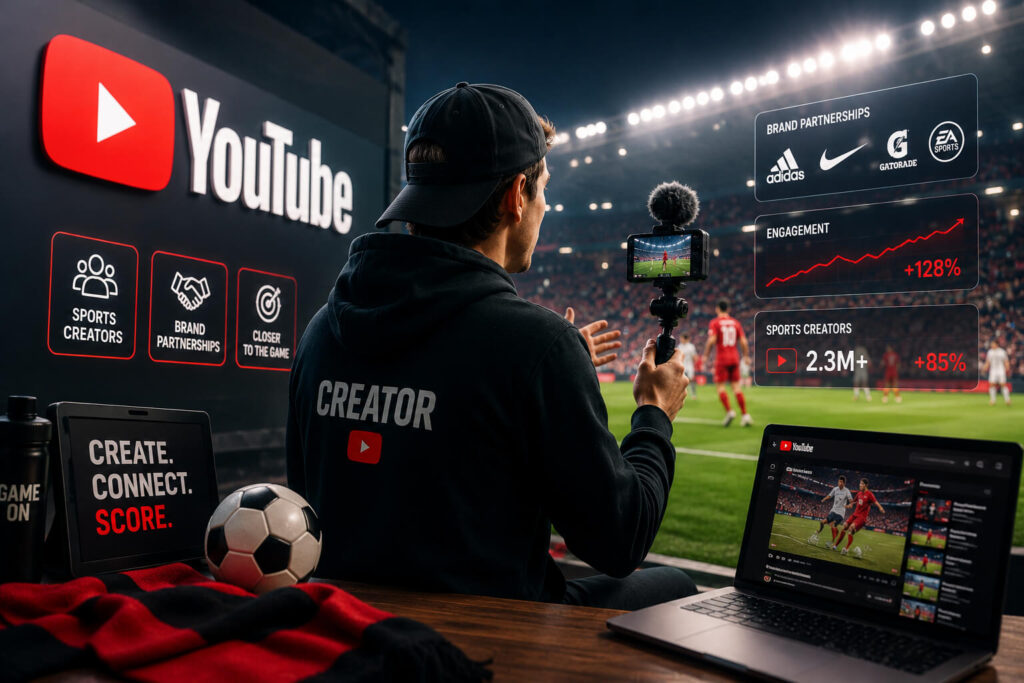
YouTube is making a clear pitch to brands: sports marketing does not have to live only inside stadiums, live broadcasts, or big tournament sponsorships.
The platform’s latest Creator Pulse report puts sports creators closer to the center of brand partnership strategy, especially as fan behavior keeps spreading across clips, commentary, behind-the-scenes videos, podcasts, athlete channels, and creator-led sports culture. Marketing Dive reported that YouTube’s new report looks at the growing influence of athletic influencers and how brands can work with them more effectively.
And honestly, the timing is not random.
With the FIFA World Cup 2026 building global attention, YouTube wants marketers to look at what happens around the game, not just during the game.
YouTube Sports Creators Are Becoming Part of the Fan Experience
Sports fans do not just watch a match anymore and move on.
They watch previews. They check reactions. They follow player vlogs. They watch breakdowns from creators who sound more like friends than broadcasters. Then, after the final whistle, they come back for analysis, memes, hot takes, training clips, and locker-room-style content.
That is where YouTube sees the opening.
According to the report, 66% of surveyed Gen Z sports fans said they enjoy going to YouTube to watch related content before and after live sports. That detail matters because it shows YouTube is not only competing for live sports attention. It is trying to own the surrounding conversation.
For brands, that changes the playbook a little.
The ad is no longer just beside the game. It can sit beside the build-up, the commentary, the personality, and the fan community.
Why Sports Influencers Matter More to Brands Now
Traditional sports sponsorship still has power. No question.
But it is expensive, crowded, and often built around massive rights packages that only the biggest brands can afford. Sports creators offer something different. They can be specific. Sometimes niche. Sometimes more trusted than official campaign messaging.
A creator who covers football boots, basketball culture, women’s sports, sports betting commentary, training routines, or athlete lifestyle may not have the biggest audience in the world. But the audience usually knows why they are there.
That kind of attention is useful.
YouTube highlighted sports personalities such as Erling Haaland, who has millions of subscribers on the platform, as an example of how athletes themselves are becoming media channels. The report also pointed to Rachel DeMita, a sports commentator, influencer, and former college basketball player, as another example of sports talent building direct audience relationships through YouTube.
This is where creator marketing gets interesting. The athlete is not only the face of a campaign. The athlete can be the channel, the storyteller, and the distribution point.
Brand Partnerships Are Moving Beyond Simple Sponsorship
A logo placement is not enough anymore.
YouTube’s report points brands toward formats such as creator Takeovers and YouTube Select Line-ups. Takeovers allow brands to pay for custom messages from creators, while YouTube Select helps advertisers place campaigns beside stronger-performing content on the platform.
That sounds like media buying language, and it is.
But underneath it is a simpler idea: brands want to borrow the trust and energy that creators already have.
A sports creator can explain why a product matters in a way a polished ad may not. A football creator can connect a campaign to match-day emotion. A fitness athlete can make a product feel useful rather than forced. A commentator can fold a brand into the conversation without stopping the whole experience.
Badly done, it still feels like an ad.
Done well, it feels like part of the sports culture around the fan.
Gen Z Sports Fans Are Changing the Marketing Window
The old sports marketing window was obvious. Before the game. During the game. After the game.
Now it stretches across days.
A fan might watch a preview on Monday, a creator debate on Wednesday, short-form clips on Friday, the live match on Saturday, and post-game analysis all weekend. For younger fans, YouTube is part of that habit.
That gives brands more room to show up.
Not always with one huge campaign. Sometimes with smaller creator partnerships, smart pre-game content, post-event reactions, product integrations, or recurring sponsorships around a creator’s weekly sports coverage.
It is less clean than a traditional ad buy.
But maybe that is the point.
Sports culture online is messy, fast, emotional, and very creator-driven. Brands that understand that may get more value than those still waiting for one perfect broadcast moment.
What This Means for Influencer Marketing
YouTube’s sports creator push shows where influencer marketing is heading.
Creators are not just add-ons to campaigns. In some categories, they are becoming the campaign infrastructure. Sports makes that especially clear because fandom is already built on personality, loyalty, debate, and repeat viewing.
For creator agencies, this opens more room for athlete-led media deals, niche sports partnerships, and creator packages tied to major events like the World Cup.
For brands, the challenge is choosing creators who actually fit the audience. Not just the biggest name. Not just the safest name. The right name.
Sports fans can smell forced marketing quickly.
That means the best brand partnerships will probably come from creators who already talk to the audience every week, not from campaigns parachuted in only when a major tournament arrives.