


Key Takeaways
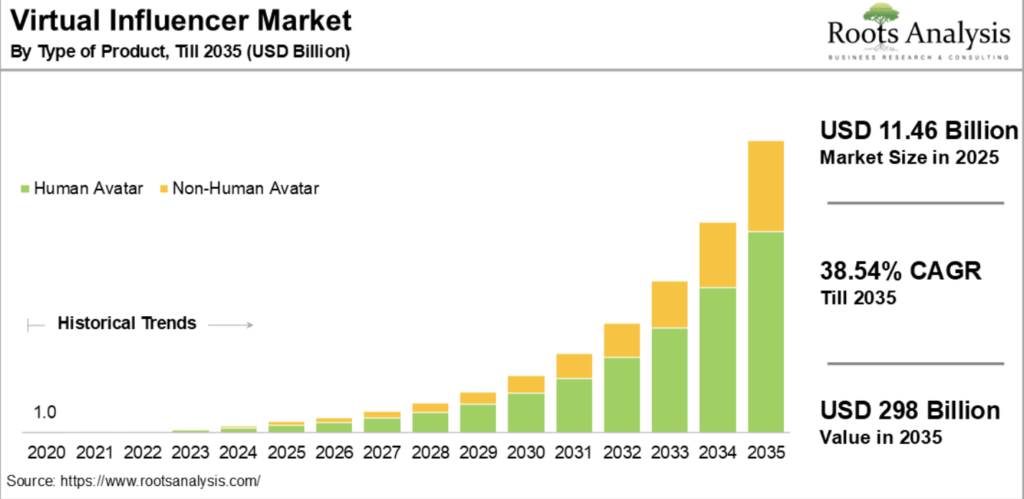
- The virtual influencer market could reach $298 billion by 2035 due to advancements in AI and digital content.
- Brands benefit from virtual influencers because they offer consistency and eliminate risks related to real-world controversies.
- Virtual influencers can operate non-stop, adapt quickly, and allow brands to experiment with diverse marketing strategies.
- Creatives and marketers should embrace virtual influencers as they signify a shift towards AI-powered content and new collaboration opportunities.
- Future developments will make virtual influencers even more interactive, blurring the line between human and digital creators.
Virtual influencer market growth is accelerating at a massive pace, with new projections estimating the industry could hit $298 billion by 2035. As brands explore AI-driven content and digital personalities, virtual creators are quickly becoming a serious force in the creator economy.
What is driving the virtual influencer boom
Virtual influencers are computer-generated characters designed to act like real social media personalities. They post content, collaborate with brands, and build loyal audiences across platforms like Instagram, TikTok, and YouTube.
Several factors are fueling this growth. Advances in AI, 3D modeling, and real-time rendering have made these digital personalities more realistic and scalable. At the same time, brands are drawn to the control they offer, from consistent messaging to zero risk of real-world controversies.
This mix of technology and brand safety is making virtual influencers increasingly attractive to marketers worldwide.
Virtual influencer market growth and brand adoption
Virtual influencer market growth is closely tied to how brands are shifting their marketing strategies. Companies are investing more in digital-first campaigns that rely on storytelling, personalization, and always-on content.
Unlike human creators, virtual influencers can operate 24/7, appear in multiple campaigns at once, and adapt quickly to different brand voices. This flexibility allows companies to experiment with new formats and global campaigns without traditional limitations.
Major industries including fashion, gaming, and e-commerce are leading adoption, using virtual influencers for product launches, immersive experiences, and interactive campaigns.
Why creators and marketers should pay attention
The rise of virtual influencers is not just a trend. It signals a broader shift toward AI-powered content and hybrid creator ecosystems.
For human creators, this creates both competition and opportunity. While virtual personalities may take on certain brand deals, they also open new doors for collaboration, creative direction, and digital production roles.
For marketers, the key advantage lies in data and predictability. Virtual influencers can be optimized based on audience behavior, allowing campaigns to become more targeted and performance-driven.
What the future looks like for virtual influencers
As technology evolves, virtual influencers are expected to become even more interactive and lifelike. Future developments may include real-time audience engagement, AI-generated storytelling, and deeper integration into virtual worlds and the metaverse.
This means the line between human and digital creators will continue to blur. Brands that understand how to balance authenticity with innovation will be better positioned to succeed.
Conclusion:
Virtual influencer market growth highlights a major shift in how content, branding, and technology intersect. As the industry moves toward a $298 billion future, both creators and brands need to adapt to stay competitive. Follow for more updates on the evolving creator economy.
👉 Source: https://www.openpr.com/news/4456740/virtual-influencer-market-to-reach-298-billion-by-2035-growing