


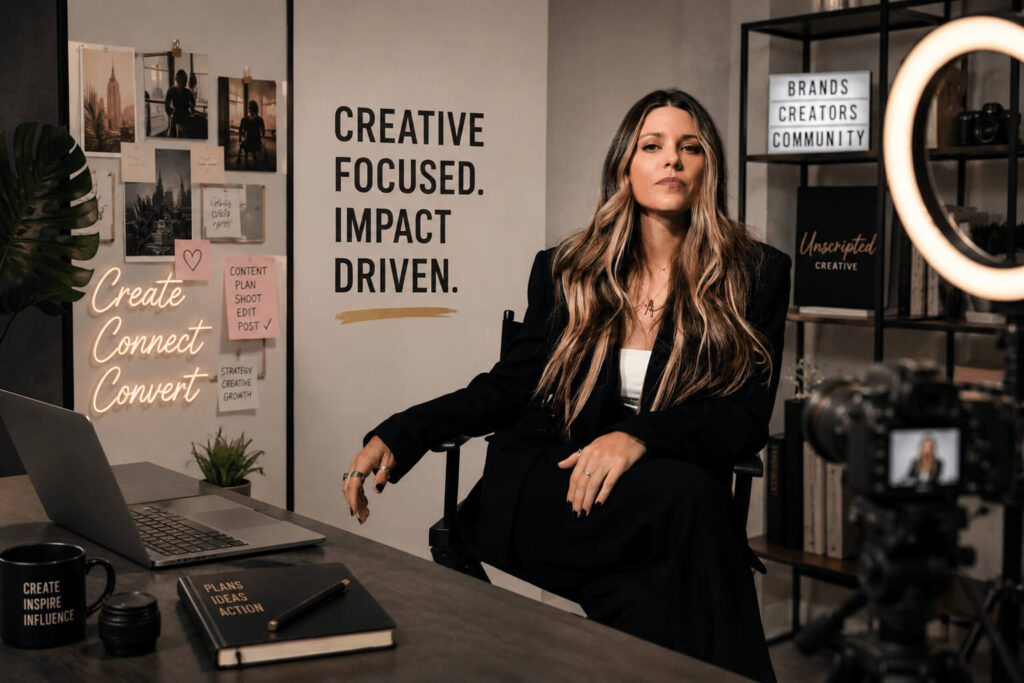
The creator management business often rewards scale. Agencies sign more talent, handle more campaigns and chase bigger deal volume.
Unscrippted Creative is deliberately taking a different route.
Founder Jordana Ripp has capped the company’s creator roster at just five clients. The decision is less about exclusivity and more about protecting the kind of work she actually wants to do. Rather than spending most of her time negotiating sponsorships and handling contracts, Ripp wants room to work directly with creators on content, positioning and long-term career development.
The Los Angeles-based company operates across both creator management and brand marketing. Its work includes digital strategy, campaign development, ideation, production and talent representation. At one point, its creator roster represented roughly 25 million followers across categories including entertainment, comedy, fashion, film and beauty.
Why Unscrippted Creative Limits Its Creator Roster
Ripp runs Unscrippted Creative as a solopreneur, which makes the size of the roster particularly important. Managing dozens of creators might bring in more deals, but it would also change the nature of the business. Her goal is to stay involved in the creative decisions that shape each client’s career, rather than becoming a manager who mainly responds to brand enquiries and negotiates rates. Keeping the roster at five gives her enough space to understand what each creator is producing, where their audience is moving and what opportunities actually make sense for them.
That approach also reflects Ripp’s background. She spent eight years working in marketing at Sony Pictures Television before moving into freelance consulting and later helping to build the digital talent arm of a traditional agency. That experience gave her exposure to both sides of influencer marketing: the brands spending the money and the creators producing the work. Unscrippted Creative grew out of that overlap.
Bigger Rosters Can Change the Meaning of Creator Management
A larger creator roster can generate more sponsorship opportunities, but it can also push management toward a transactional model. Once one manager is responsible for 20, 30 or even more creators, much of the day can disappear into emails, contracts, approvals and negotiations. There is less time left to discuss why certain content is working, how a creator should evolve or whether a particular partnership fits their broader identity.
Unscrippted Creative is built around the idea that management should go further than securing paid deals. Ripp wants to be involved in the actual content strategy behind the business. That can mean questioning formats, reviewing ideas, discussing audience behavior or helping a creator decide which direction to take next. The sponsorship is part of the job, but not the entire job.
Creator Contracts Can Become More Expensive Than They Look
Contract negotiations are another area where Ripp’s experience on the brand side comes into play. A creator might see an attractive campaign fee and assume the deal is straightforward, but smaller clauses can dramatically change how much work is required. Ripp recalled one creator who had previously accepted unlimited revisions, which allowed what should have been a relatively simple project to stretch across several weeks of additional work.
Usage rights can create similar problems. A brand paying for a creator to post content on their own social account is purchasing one type of exposure. Using that same content in paid advertising, on websites or across other marketing channels creates additional commercial value. Creators who fail to separate those rights can effectively give brands far more than the original fee covers. Ripp regularly reviews market rates and adjusts pricing as audience size, niche and brand demand change.
AI Has a Role, but It Stays Behind the Scenes
Unscrippted Creative is using artificial intelligence, although Ripp is cautious about where it fits. AI tools can help with repetitive administrative work and early-stage ideation. They can organize information, speed up basic processes or provide a rough starting point for creative development. What they should not do, in her view, is replace the creator’s actual voice.
That distinction matters because creator businesses depend heavily on authenticity. Audiences follow people because of their personality, perspective and delivery. If AI begins writing or producing too much of the final content, that relationship can start to feel artificial. Ripp sees the technology as useful infrastructure in the background rather than something that should take over the final creative product.
Posting More Content Is Not Always the Best Strategy
The pressure to publish constantly has become one of the defining features of the creator economy. Algorithms reward activity, trends move quickly and creators often feel that disappearing for even a few days could hurt momentum. Ripp does not automatically believe that more posting equals better growth.
In one case, she encouraged a creator to reduce output from six or seven posts per week to around three stronger pieces of content. The reasoning was straightforward. A schedule that cannot be sustained eventually affects quality, creativity and mental health. Producing fewer posts can sometimes create more room for better ideas, stronger execution and a healthier relationship with the platform.
Viral Growth Can Bring Problems Creators Are Not Prepared For
Going viral sounds like the obvious goal for a creator, but sudden visibility can bring a completely different set of pressures. A post that reaches millions of people can attract criticism, harassment or audiences that were never part of the creator’s original community. Unscrippted Creative considers those situations part of management rather than something creators should simply deal with alone.
Ripp works with clients on how they might respond when attention suddenly turns negative. That can mean discussing whether to engage with criticism, when to ignore it and how to protect the creator’s mental health during periods of intense exposure. Preparing for virality before it happens can make the experience considerably easier to manage once thousands of new comments start appearing.
Brands May Get Better Work When Creators Have More Freedom
Ripp also pushes back against overly scripted influencer campaigns. Some brands still approach creator marketing as if they are producing a traditional advertisement, supplying detailed scripts and expecting creators to deliver corporate messaging almost word for word. That can defeat the reason for working with a creator in the first place.
Her preferred approach gives brands control over the message while leaving creators room to decide how it should actually sound. A company can provide its objectives, key points and campaign requirements. The creator then develops a concept that fits their normal content style. The brand approves the idea before production, reducing surprises while preserving the personality that made the creator valuable to begin with.
Unscrippted Creative Wants to Expand Beyond Sponsorship Deals
Keeping the creator roster small does not mean Unscrippted Creative intends to remain a small business in every area. Ripp plans to grow the brand-side operation, particularly around production, campaign development and creative strategy. That creates a path for expansion without requiring the company to sign dozens of additional creators.
Longer term, Ripp is also interested in vertical entertainment. Short-form video has already changed the way audiences consume content on TikTok, Instagram and YouTube, and streaming platforms are beginning to experiment with similar formats. Her background in television and creator marketing puts Unscrippted Creative in an interesting position to develop scripted vertical concepts that could eventually move beyond social media.
Small Creator Rosters Could Become More Valuable
Unscrippted Creative’s five-person limit raises a broader question about the creator management industry. Bigger agencies can offer extensive brand relationships, large teams and considerable negotiating power. Smaller management companies can compete in a different way by offering attention.
For creators, that attention can become valuable as their businesses grow more complicated. Brand deals are only one part of the job. Content strategy, audience development, contracts, mental health, pricing and long-term career choices all need time. A manager handling only a handful of clients can potentially spend much more of it on those decisions.
Unscrippted Creative is betting that depth can matter more than scale. In a creator economy filled with agencies trying to sign the next hundred influencers, choosing to stop at five is a fairly unusual growth strategy. That may also be exactly what helps the company stand out.
Sources
The primary source for this article is Net Influencer’s report, “Unscrippted Creative Caps Its Creator Roster at Five to Keep Management Creative,” which examines Jordana Ripp’s management philosophy, the company’s five-creator limit and its approach to brand partnerships, contracts, AI and content strategy.
Additional company information can be found through the official Unscrippted Creative website.