


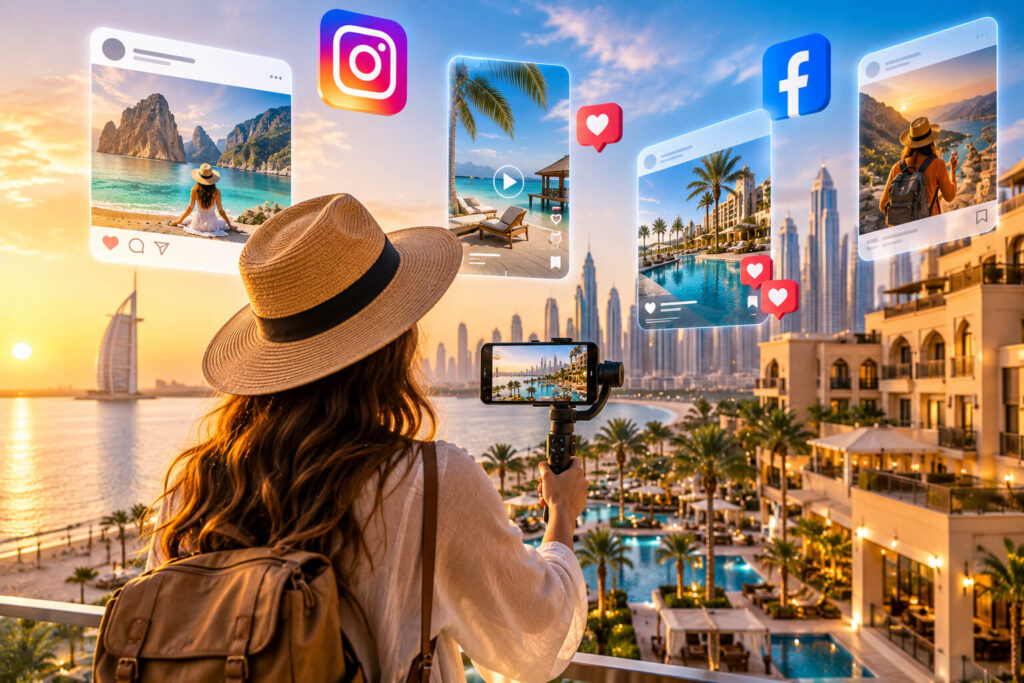
Travel brands are investing heavily in content creators, but attracting millions of views is no longer enough. Companies want to know whether influencer campaigns actually encourage travelers to book hotels, visit destinations or purchase experiences.
That challenge took center stage at the Skift Creator Summit 2026, held in New York City on September 22. Executives from Meta and Marriott International discussed how travel companies can build more effective creator marketing programs instead of relying on occasional influencer collaborations.
According to figures shared by Skift Research, creators and social media now influence more than $7 trillion in global travel spending. The scale is enormous, but measuring the connection between online inspiration and actual bookings remains difficult.
For travel marketers, the conversation is shifting. The priority is no longer simply finding popular influencers. It’s building systems that connect creators, advertising budgets, audience insights and measurable business results.
Travel Creator Marketing Moves Beyond One-Off Influencer Campaigns
Travel companies have traditionally worked with influencers through individual campaigns. A hotel might offer a complimentary stay in exchange for Instagram posts, while a tourism board could invite creators to promote a destination through short videos.
These collaborations can generate attention, but they don’t always fit into a company’s broader marketing strategy. Once the campaign ends, the brand may have little information about what worked or how to repeat its success.
Speaking at the Skift Creator Summit, Sanjay Bhatia, Meta’s director and head of industry for travel, auto and experiences, said effective creator programs need clear internal ownership, dedicated budgets and creative planning that begins alongside media strategy.
Marriott International has taken a similar approach. Laura Troy, the company’s senior director of creative and content for the United States and Canada, explained how Marriott’s creator marketing activities developed from early experiments into a more organized business function.
Today, creator collaborations involve coordination between creative teams, brand managers, paid media specialists and performance marketers. The objective is to make creator content useful beyond a single social media post.
Meta Reports Rapid Growth in Creator Marketing Investment
Creator marketing is attracting a larger share of advertising budgets as companies recognize its influence on consumer decisions.
During the summit, Bhatia said creator marketing was growing approximately four times faster than the broader media market. Meta also presented forecasts suggesting that paid amplification of creator content could reach $13 billion, representing annual growth of 48%.
Another figure highlighted the industry’s growing confidence in creator-led advertising. According to research cited by Meta, 92% of marketers surveyed believed creator-produced content performed better than their brands’ own material.
These figures reflect Meta’s presentation and should not be interpreted as guaranteed outcomes for every campaign.
For travel businesses, creators offer something traditional advertising often struggles to deliver: a personal perspective on destinations and experiences.
A hotel advertisement can showcase beautiful rooms and impressive facilities. A travel creator, however, can show what staying there actually feels like, including the surrounding neighborhood, food and local attractions.
That personal connection can influence consumer interest long before someone begins comparing hotel prices or searching for flights.
Marriott Integrates Creator Content Into Paid Advertising Campaigns
Marriott’s approach demonstrates how travel brands can make creator marketing part of a broader advertising strategy.
The company began experimenting with influencer collaborations around 2015, including arrangements where creators received hotel stays in exchange for content.
Over time, those partnerships evolved. Marriott now works with creators not only to reach their followers organically but also to develop material that can support paid advertising across different formats.
Troy explained that creators need to understand how their content will function once advertising budgets are used to distribute it.
A video that performs well on a creator’s Instagram account may need a different opening, message or editing style when used in a paid campaign.
Marriott’s marketing teams therefore examine campaign objectives before production begins. They also review performance afterward to identify which creative decisions contributed to the results.
The company wants to understand more than whether a post attracted attention. It needs to know whether the content supported the intended business outcome.
Meta’s Creator Marketing Hub Helps Travel Brands Find Relevant Influencers
Finding creators whose audiences match a brand’s objectives remains an important part of influencer marketing.
Meta is addressing this challenge through its Creator Marketing Hub, which makes more than seven million creators across Facebook and Instagram discoverable to advertisers.
The platform uses machine learning and performance information to help brands identify potential partners.
For a travel company, that might mean discovering creators who specialize in luxury resorts, family vacations, adventure tourism or particular destinations.
Bhatia described an approach that moves through creator discovery, partnership development, campaign expansion and performance optimization.
The process begins by identifying suitable creators and establishing arrangements that allow brands to use their content. Companies can then amplify successful material through paid advertising and analyze the results.
Those findings help guide future decisions, including which creators to work with and what types of content deserve additional investment.
Rather than treating each collaboration as a separate project, brands can gradually build a more informed creator marketing strategy.
Meta Partnership Ads Show Potential for Better Marketing Returns
Paid advertising is becoming an important part of how brands extend the reach of creator content.
Meta’s Partnership Ads allow advertisers to promote content connected to creators and business partners, making it possible to reach audiences beyond a creator’s existing followers.
At the Skift Creator Summit, Bhatia said Meta had observed Partnership Ads generating twice the incremental return on advertising spend and a 94% improvement in cost per lift for brand consideration.
These are Meta-reported results, and individual campaign performance may differ.
The figures nevertheless illustrate why travel companies are increasingly combining organic creator content with paid media.
A creator’s video might initially attract strong engagement from followers. The brand can then use advertising to introduce that content to other audiences with similar interests.
Once the campaign enters a paid advertising environment, marketers can examine metrics such as acquisition costs, return on advertising spend and incremental conversions.
That provides more information than views and likes alone, particularly for businesses that need to justify their marketing investments.
Travel Brands Struggle to Connect Creator Content With Actual Bookings
One of the biggest challenges in travel creator marketing is the delay between discovering a destination and completing a reservation.
Someone might watch a creator’s hotel review, save the video and discuss the destination with friends. Weeks later, that same person could book through an online travel agency without returning to the original social media post.
The creator may have influenced the decision, but the connection can be difficult to measure.
During discussions at the Skift Creator Summit, one participant described Partnership Ads involving Booking Holdings and Tripadvisor Group that reportedly improved conversion rates and efficiency by approximately 30%.
However, many conversions occurred 90 days or more after the initial advertising exposure.
That delay creates problems for brands evaluating campaigns over shorter periods.
Evan Frank, co-founder of travel advisory company Fora, also discussed the difference between content that creates awareness and content that encourages transactions.
A destination video might inspire someone to travel, while a later hotel comparison or booking recommendation could influence the final purchase.
Both pieces of content can contribute to the customer journey, even if only one receives measurable credit for the reservation.
Micro-Influencers Offer Travel Brands More Targeted Audience Connections
Large follower counts can help creators attract attention, but they don’t always indicate whether someone can influence a particular audience.
Meta’s Bhatia encouraged travel companies to consider smaller, more specialized creator communities.
A boutique hotel, for example, may benefit more from working with a creator who focuses on independent accommodation and local travel experiences than from partnering with a celebrity whose audience has little interest in that destination.
Smaller creators often build relationships around specific interests. Their followers may value their recommendations because they consistently cover familiar subjects.
Dan Holowack, founder and CEO of CrowdRiff, also highlighted the growing importance of nano- and micro-influencers during the summit.
He cited research indicating that 73% of brands are seeking smaller creators, who can generate strong engagement within focused communities.
For independent hotels, local tourism businesses and smaller destinations, this approach could offer a more practical alternative to expensive partnerships with major influencers.
The key is choosing creators whose audiences match the people the business actually wants to reach.
Performance Data Helps Brands Improve Future Creator Campaigns
A creator marketing campaign shouldn’t end when the final post goes live.
Travel companies need to review the results, identify what influenced performance and use those findings to improve future collaborations.
Marriott’s Troy emphasized the importance of examining campaigns that fail to meet expectations.
Sometimes the content itself isn’t the problem. A campaign may have targeted the wrong audience, used too many competing creative assets or lacked effective advertising optimization.
Without reviewing those factors, brands risk repeating the same mistakes.
Performance analysis can also reveal opportunities that weren’t obvious during the planning stage.
An organic video might generate unexpectedly strong engagement among a particular audience. Instead of immediately commissioning new content, a brand could test whether the existing material performs well when supported by paid advertising.
The results can then inform future creator selection, production decisions and campaign budgets.
Over time, those insights become more valuable than simply collecting impressive engagement numbers from disconnected campaigns.
Travel Creator Marketing Strategies for 2027 Will Focus on Long-Term Partnerships
As travel businesses prepare their marketing strategies for 2027, the discussions at the Skift Creator Summit point toward a more structured approach to creator relationships.
Instead of constantly recruiting influencers for individual campaigns, companies may benefit from working with creators over longer periods.
These relationships can help creators understand a brand’s identity, audience and commercial objectives while giving marketers more opportunities to test different content formats.
The approach also encourages businesses to establish clear goals before selecting creators.
A destination marketing organization may want to increase awareness of a particular location, while a hotel chain could prioritize direct reservations or customer acquisition.
Those objectives require different creative strategies and performance measurements.
Marriott’s experience suggests that brands need to understand what success means for each campaign before deciding how much to invest.
Meta’s broader message was similar. Creator marketing becomes more useful when companies can repeat successful approaches and improve their decisions using reliable performance information.
The Future of Travel Creator Marketing Depends on Smarter Systems
Travel creators already influence how people discover destinations, compare experiences and make travel decisions. The next challenge is helping brands understand the commercial value of that influence.
The discussions involving Meta and Marriott show how influencer marketing is moving beyond occasional collaborations toward a more integrated marketing function.
Brands are connecting creator content with paid advertising, developing clearer measurement strategies and building relationships with creators who understand specific audiences.
Smaller travel businesses may find opportunities through niche partnerships, while larger companies can use their resources to experiment with different formats and advertising strategies.
But larger budgets alone won’t guarantee better results.
The strongest travel creator marketing programs will likely be those that learn from previous campaigns, measure performance over realistic timeframes and apply those lessons to future decisions.
A viral travel video can introduce millions of people to a destination. Turning that attention into bookings requires a strategy that continues long after the video disappears from someone’s feed.
Sources
- Skift – October 27, 2026: Travel’s New Creator Economy: Why Brands Need Smarter Systems. Sponsored content created in collaboration with Meta.
- Skift Creator Summit 2026: The Future of Creator-Led Travel Demand.
- Skift – September 15, 2026: The Broken Creator-to-Booking Chain, and Why It Matters Now.
- Skift – July 30, 2026: Announcing Skift Creator Summit 2026: Creator-Led Demand in Travel.