


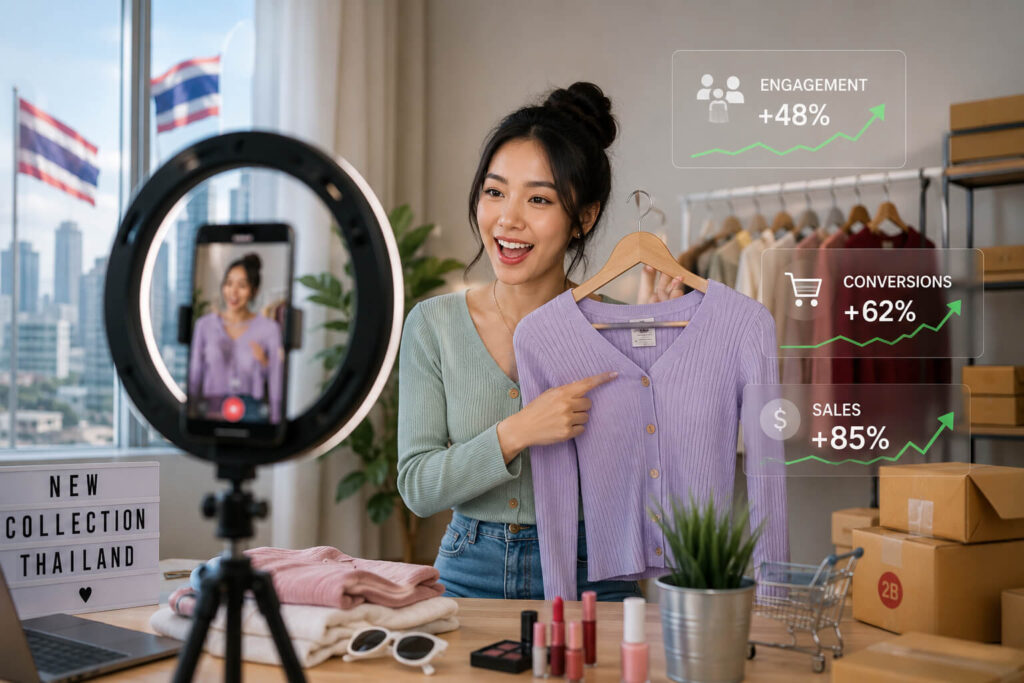
Thailand’s influencer marketing industry is entering a more performance-focused era. Brands are moving away from vanity metrics and place greater value on creators who can drive sales, return on investment, and measurable business results.
According to IdeasLabs, foodie, mom and kids, lifestyle, and beauty influencers remain the four creator categories most in demand among businesses. The company said brands are still investing in influencer campaigns. However, they are becoming more selective about which creators receive marketing budgets.
Brands Want Sales, Not Just Likes
Influencer marketing in Thailand is no longer just about reach, engagement, or viral visibility. Brands are now looking for creators who can help turn audience attention into real consumer action.
Thanadol Pittayanuwat, executive director and founder of IdeasLabs, said businesses are shifting their focus from likes, shares, and views to clearer indicators such as sales, ROI, and direct business impact. This change comes as companies become more cautious with spending during a slower economic environment.
The shift marks a major change from the earlier stage of influencer marketing, when brands often spent heavily on celebrities and mega influencers to build broad awareness. Today, marketers want creators who can influence purchasing decisions. They want them to prove campaign performance.
Micro and Nano Influencers Gain More Attention
As performance becomes more important, brands are increasingly working with micro and nano influencers. They are no longer relying only on major online personalities.
These smaller creators often produce more relatable, practical, and detailed content. Moreover, their posts can show how products fit into everyday life. This makes them useful for brands that want to build trust and encourage purchases.
IdeasLabs also noted that more influencer campaigns are being connected to affiliate marketing systems. This allows brands to track which creators are generating sales and measure campaign results more clearly.
Four Influencer Categories Remain in High Demand
Foodie influencers are currently the most attractive category for brands, according to IdeasLabs. Food content is closely connected to daily consumer spending and can quickly encourage buying decisions.
Mom and kids influencers also continue to draw strong brand interest because of the trust they build with audiences. Reviews based on real parenting experience can carry significant influence, especially for family-focused products.
Lifestyle influencers remain valuable because they can naturally connect products with daily routines, habits, and personal preferences. Beauty influencers are also still important. In particular, they matter to skincare and cosmetics brands that rely on product demonstrations, real reviews, and before-and-after content.
Creators Need to Become Business Result Drivers
IdeasLabs said influencers now need to go beyond simply being content creators. To stay competitive, creators must become “Business Result Drivers” who can help brands achieve measurable outcomes.
That means creators should focus on content that supports buying decisions and provide clear performance data. In addition, they need to maintain credibility in reviews and use AI or MarTech tools to improve their workflow.
Influencers are also encouraged to publish across multiple platforms instead of depending on one channel. Brands are looking for creators who can deliver professional campaign execution and prepare audience data. They also want post-campaign reports and flexible pricing models.
Short Video and Long-Term Partnerships Will Shape the Market
Competition in Thailand’s influencer marketing market is expected to intensify in the second half of the year. Short-video platforms such as TikTok and Facebook Reels are expected to remain important channels for reaching consumers.
At the same time, brands are expected to reduce risk by working with more niche influencers who have specific expertise. They prefer those with strong audience trust.
Another growing trend is the move toward longer partnerships lasting three to six months. Instead of one-off campaigns, brands want consistent communication, stronger tracking, and better long-term performance.
For creators, the message is clear: engagement alone is no longer enough. Influencers who can prove sales impact and build trust will win more brand deals. In addition, those who deliver measurable results are likely to succeed as Thailand’s creator economy becomes more performance-driven.