


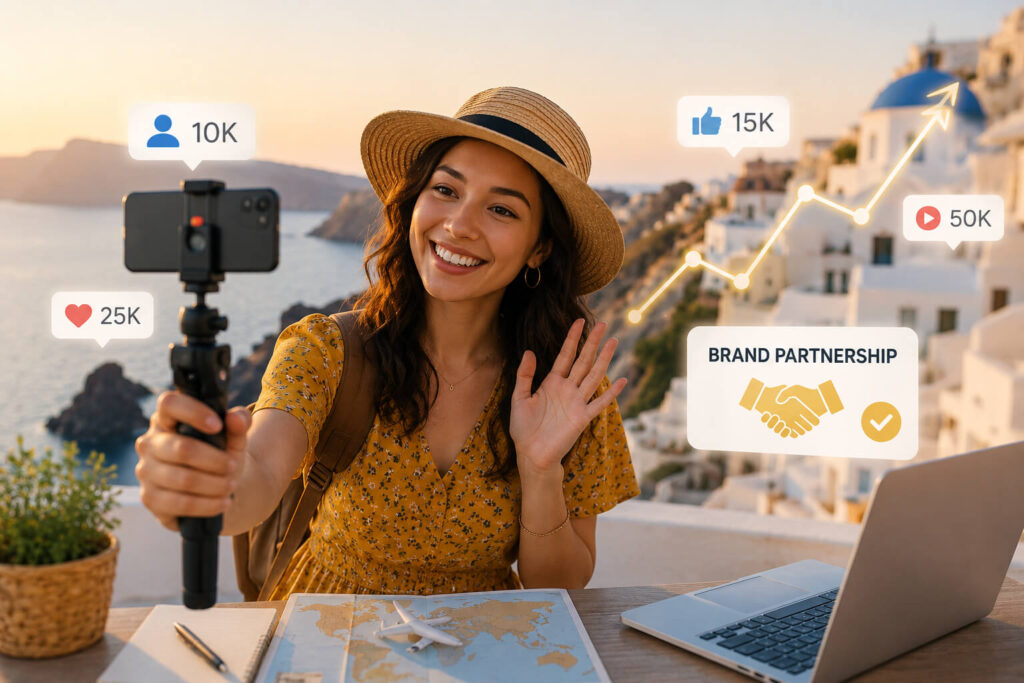
Travel brands used to chase the biggest names online.
The million-follower travel influencer. The glossy hotel reel. The perfect drone shot over a beach that looked expensive before the caption even started.
That playbook is not dead. But it is no longer the only one getting money.
A new Skift report shows that creators with fewer than 20,000 followers now account for nearly half of total U.S. influencer marketing spend in 2026. That is a major jump from 2021, when they made up less than 20% of spending.
For travel brands, that shift says something important. Smaller creators are no longer just “budget options.” They are becoming a serious part of the marketing plan.
Travel Brands Are Looking Beyond Big Follower Counts
The travel industry has always loved reach.
More followers meant more eyeballs. More eyeballs meant more bookings, at least in theory.
But social media does not work that neatly anymore. A creator with a huge audience may still deliver visibility, but that does not always mean trust. Or action. Or useful content that actually helps someone decide where to stay, what to book, or which destination feels worth the money.
Small content creators often bring something different.
Their audiences can feel closer. Their recommendations can feel less polished, in a good way. A hotel room walkthrough from a smaller creator may feel more believable than a cinematic campaign with ten layers of production. A food spot, local itinerary, walking tour, or airport transfer tip can land harder when it comes from someone who feels like a real traveler rather than a brand billboard.
That is the gap travel marketers are noticing.
Why Small Creators Are Becoming More Valuable
Small creators are usually cheaper to work with than celebrity influencers or major travel personalities.
That part is obvious.
But cost is only one reason brands are paying attention. The bigger reason is usefulness. Travel decisions are personal. People want specifics. They want to know if the hotel is actually quiet, if the beach is crowded, if the breakfast is worth it, if the destination works for families, solo travelers, couples, digital nomads, or budget-conscious guests.
A broad travel influencer can inspire.
A niche creator can answer the question that makes someone book.
That is especially valuable for hotels, tourism boards, airlines, tour operators, and travel platforms trying to reach very specific audiences. Not every campaign needs a giant audience. Sometimes it needs the right small audience.
Micro and Nano Creators Are Taking More Budget
The wider creator economy is moving in the same direction.
EMARKETER reported that micro- and nano-influencers are expected to claim 45.5% of influencer marketing spending in 2026. That lines up with Skift’s point about smaller travel creators gaining a bigger share of marketing budgets.
This is not just a travel trend. It is a creator marketing trend.
Brands are becoming more practical. They want content that can be reused, tested, boosted, and measured. They want creators who understand their audience, not just creators who look good on a media kit. They want campaign assets that feel native to TikTok, Instagram Reels, YouTube Shorts, newsletters, and even paid ads.
The influencer with the biggest following still matters.
But the smaller creator with a loyal audience, a clear niche, and strong content instincts may now be just as important.
Authentic Travel Content Is Becoming Harder to Fake
Travel audiences have become sharper.
They can usually tell when a creator is simply reading a hotel-approved script. They notice when every destination is described as “hidden gem,” every resort is “luxury,” and every trip somehow feels life-changing.
That style is wearing thin.
Smaller creators often win because their content feels less staged. They may show the awkward parts of travel. The crowded line. The small room. The honest food review. The rainy day. The transportation issue. The surprisingly good local find that did not look impressive at first.
That kind of content may not always look like traditional advertising.
Which is exactly why it works.
Travel Marketing Is Becoming More Creator-Led
The creator economy is also becoming more central to advertising overall.
At Cannes Lions 2026, creators were reportedly a major presence as brands looked for new ways to reach fragmented audiences. Business Insider noted that creators are increasingly influencing campaign direction, brand strategy, and product decisions — not just posting sponsored content after the real marketing work is done.
Travel brands are part of that shift.
A creator can now help shape the story of a destination. They can show how a hotel fits into a real trip. They can turn a tourism campaign into a series of practical, emotional, and searchable moments. Not one perfect ad. Many smaller pieces of content that feel alive.
That matters because people do not plan travel from one source anymore. They jump between TikTok, Instagram, Google, YouTube, Reddit, newsletters, booking sites, and friend recommendations.
Small creators fit that messy behavior better than polished campaigns sometimes do.
The New Travel Creator Strategy Is More Specific
This does not mean every travel brand should stop working with larger influencers.
Big creators still bring attention. They can launch a campaign fast. They can put a destination in front of a wide audience in one post.
But the smarter strategy now looks more layered.
A tourism board might use a major creator for awareness, then bring in smaller creators for food, culture, family travel, adventure, luxury, local neighborhoods, or accessibility. A hotel group might work with UGC creators for room tours and practical booking content. An airline might use niche creators to explain routes, airport experiences, or loyalty perks in a way that feels less corporate.
The point is not small versus big.
The point is fit.
Small Content Creators Are Becoming Serious Business
The travel industry is starting to treat smaller creators as more than backup options.
That is the real story.
They are not just cheaper influencers. They are content partners. Community connectors. Local storytellers. Search-friendly video makers. Sometimes, they are better at moving trust than creators with ten times the audience.
For travel marketers, the lesson is simple but easy to ignore.
A smaller follower count does not always mean smaller influence.
Sometimes it means the audience is closer, more specific, and more willing to listen.