


Selling mosquito repellent through social media is awkward by nature. There is no dramatic before-and-after shot. The thing consumers actually care about — protection — is mostly invisible.
Murphy’s Naturals has found a surprisingly simple way around that problem.
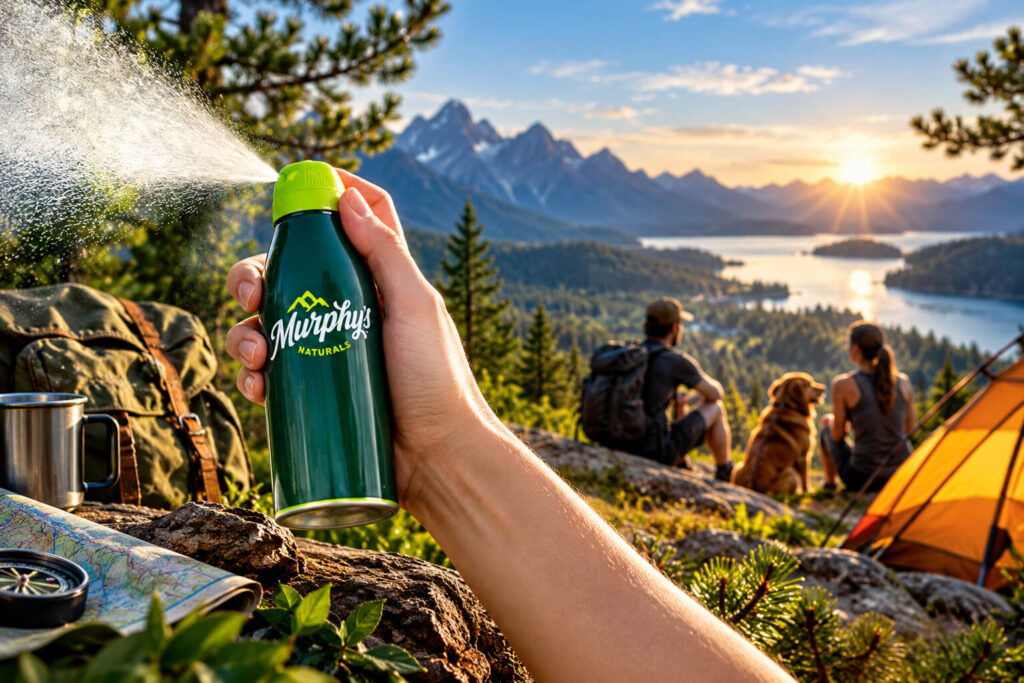
Instead of asking creators to make bug spray the star of the content, the brand places its products inside moments people already recognize: packing for a camping trip, getting children ready for summer adventures, preparing the backyard for an evening outside, or stocking up before mosquito season.
The product becomes part of the routine.
That approach has helped Murphy’s Naturals build an influencer marketing strategy stretching across family creators, outdoor personalities, wellness accounts and retail-focused influencers. More importantly, the content connects naturally with the company’s bigger pitch: spend more time outside.
Murphy’s Naturals Built Its Brand Around an Everyday Outdoor Problem
Murphy’s Naturals traces its beginnings to founder Philip Freeman and a problem much closer to home.
Freeman’s wife, Pam, was particularly attractive to mosquitoes, yet the family struggled to find a plant-based repellent that matched what they wanted from the category. Freeman eventually began developing his own solution around 2013 and 2014, launching what became Murphy’s Naturals from his garage.
The company took its name from the family dog.
Its early growth was hardly the kind of overnight direct-to-consumer story that dominates startup mythology. Independent retailers and trade shows provided some of the first opportunities to get products in front of shoppers.
That origin still matters to the brand’s creator strategy today. Murphy’s Naturals isn’t trying to invent an elaborate lifestyle around an unrelated product. Outdoor life was already baked into the reason the company existed.
Retail Expansion Gave Creator Content Somewhere to Convert
Murphy’s Naturals gradually moved beyond independent shops into larger retailers.
Whole Foods and Sprouts helped expose the company to consumers already interested in plant-based products. Target provided an important national retail opportunity, while the company’s distribution later expanded across names including Costco, Walmart, Lowe’s and Home Depot.
That retail footprint changes what influencer marketing can do.
A creator doesn’t necessarily need to push followers through a long ecommerce funnel. Someone can see Murphy’s Naturals in a camping Reel, remember the bottle and encounter it again during a Costco or Target shopping trip.
Retail creators make that connection even shorter.
Costco-focused accounts, for example, can show shoppers the product, its bundle and where they can actually find it. Influencer Marketing Hub’s analysis found particularly strong engagement around one Costco-focused piece of Murphy’s content.
Social discovery and physical retail start working together.
Outdoor Routines Solve the Product-Demonstration Problem
The clever part of Murphy’s Naturals’ influencer strategy is that creators don’t really have to demonstrate whether mosquito repellent “works” on camera.
They demonstrate when it belongs.
A parent sprays the kids before heading outside. A camper puts repellent beside the rest of the gear. Someone lights incense before guests arrive in the backyard. A traveler packs mosquito and tick protection alongside the usual outdoor essentials.
Those scenes do plenty of marketing without feeling like a product tutorial.
Viewers immediately understand the situation, the potential problem and why the product is there. Then the story moves on to the activity people actually care about — hiking, camping, gardening, traveling or spending an afternoon outside.
That distinction matters.
Murphy’s Naturals isn’t only attaching creators to a bottle of repellent. It is attaching the brand to the experience that comes after using it.
Different Creator Niches Play Different Roles
Murphy’s Naturals hasn’t limited its creator activity to one obvious influencer category.
Family creators can make mosquito and tick protection part of getting children ready for outdoor activities. The recommendation lands inside parenting content rather than looking like an interruption from an advertiser.
Outdoor and travel creators bring another layer of credibility. Repellent simply makes sense around hiking trails, campsites, road trips and van-life content. There is little explaining required because the environment already provides the reason for using it.
Wellness and low-tox creators approach the product differently. Their audiences may already be looking for alternatives within household and outdoor categories, giving Murphy’s plant-based positioning a natural place in the conversation.
Then there are retail creators.
Their job sits much closer to the buying decision. Instead of explaining why someone might need mosquito repellent, they can show where Murphy’s products are available and what shoppers can expect to find on the shelf.
Put those creator groups together and the strategy starts looking less like a collection of sponsored posts and more like a customer journey.
Instagram Shows a Wider Creator Network Than Paid Partnerships Alone
Influencer Marketing Hub used HypeAuditor to examine six months of Instagram activity connected with Murphy’s Naturals.
The analysis identified 53 mentions across 33 accounts. Only five posts from three creators were classified as sponsored, representing roughly 9.4% of the tracked mentions.
That doesn’t mean every other mention was completely independent. Influencer analytics tools cannot always distinguish between genuinely organic recommendations, gifted products, seeding arrangements and other commercial relationships.
Still, the pattern is interesting.
Murphy’s visibility appears to extend beyond a tightly controlled roster of paid influencers. Family, outdoor, travel, lifestyle, retail and American-made content all contributed to the wider conversation around the company.
Short-form video also stood out. Reels accounted for 69.8% of the content examined in the analysis.
It is an obvious match for the product. A creator can establish the outdoor setting, show the repellent being applied and get back to the adventure in seconds.
Retail Creator Content Can Produce Outsized Attention
One result from the analysis deserves some caution.
A Costco comparison post generated around 56,700 likes and 2,800 comments, according to Influencer Marketing Hub’s HypeAuditor analysis. That single piece of content represented more than half of the engagement recorded across the dataset.
That is impressive, but it also makes the post a terrible benchmark for an average Murphy’s Naturals creator collaboration.
The more useful takeaway is what the post says about retail-led creator discovery.
Consumers increasingly encounter products through creators while simultaneously learning where they can buy them. The distance between “I haven’t heard of this” and “I’ll look for it next time I’m shopping” becomes very small.
For brands with national retail distribution, that can be powerful.
‘We Love Bugs’ Gives Creators More Than a Product Claim
Murphy’s Naturals has also tried to push its identity beyond the usual language of insect repellent.
Its “We Love Bugs” campaign flips the category’s traditional enemy narrative. Instead of portraying every insect as something that needs to disappear, the campaign recognizes the role bugs play in nature while positioning Murphy’s products as a way to establish boundaries between people and pests.
A mosquito mascot named Skeeter makes that message deliberately playful.
Developed with advertising agency Fitzco, the campaign expanded across influencers, social media, digital video, retail media, earned media and weather-triggered programmatic advertising.
It also picked up industry recognition, including Best in Show at the AAF Atlanta ADDYs and Bronze in the Best Challenger Brand category at the 2026 ANA REGGIE Awards.
For creators, this broader positioning is useful.
They aren’t stuck repeating product features. They can talk about children getting outdoors, family adventures, camping, respecting nature or simply spending less time staring at screens.
The product still appears. It just doesn’t have to carry the entire story.
More Products Mean More Creator Storylines
Murphy’s Naturals has expanded well beyond a basic mosquito spray.
Its range now includes formats such as wipes, balms, candles, incense, mists, zone repellents and refills.
That expansion creates something creator marketers sometimes overlook: more reasons to make content.
A personal spray belongs in hiking preparation. Incense makes sense around a patio or campsite. A zone repellent can appear during an outdoor gathering. Wipes can fit travel or family content. Refills create another conversation with existing customers.
The same overall brand promise stays intact, but creators don’t have to repeat the same demonstration forever.
Consumable products also give Murphy’s an advantage after acquisition. Sprays, incense, candles and refills eventually run out, creating natural opportunities for repeat purchases when customers return outdoors.
Murphy’s Naturals Shows Why Context Can Matter More Than Product Placement
There is a broader lesson here for creator marketers.
Brands often spend too much energy figuring out how prominently a product should appear in influencer content. Murphy’s Naturals suggests another question may be more useful:
Where would this product naturally exist in someone’s life?
For Murphy’s, the answer is usually just before something happens.
Before the hike. Before camp. Before the children run outside. Before the lake weekend. Before everyone settles onto the patio.
That makes the product placement understandable without forcing the creator into a commercial.
Family influencers provide familiarity. Outdoor creators bring credibility to the use case. Wellness creators introduce an alternative. Retail accounts show people where to buy it.
The brand stays recognizable even while the creators and formats change.
The Missing Piece Is Better Creator-to-Sales Attribution
There is still an obvious question hanging over the strategy: which creator activity actually sells the most product?
Public social metrics can reveal reach, engagement and content patterns. They cannot fully explain customer acquisition costs, retail sales generated by individual creators or whether creator-acquired shoppers return for another purchase.
That becomes increasingly important as influencer marketing matures into a performance channel.
Brands are moving beyond follower counts and engagement alone, with more attention going toward conversions, acquisition costs and the ability to reuse successful creator formats across campaigns.
Murphy’s already has several pieces of that system — creator discovery, national retail availability, ecommerce, replenishable products and recognizable outdoor situations.
Connecting those pieces through stronger attribution would make the picture considerably clearer.
Creator Marketing Works Better When the Product Belongs in the Story
Murphy’s Naturals offers a useful example of influencer marketing without forcing the influencer part.
The brand has a product that is difficult to prove visually, so it doesn’t spend all its energy trying.
Instead, creators show the moment when someone would reasonably reach for it.
That small shift turns mosquito repellent from the subject of the content into part of an outdoor routine. National retailers make the recommendation actionable. Multiple product formats provide new storytelling opportunities. Campaigns such as “We Love Bugs” give those creators a larger brand idea to work with.
Sometimes the strongest product placement isn’t the loudest one.
It is the bottle sitting beside the camping gear because everyone watching already understands why it needs to be there.
Sources
Influencer Marketing Hub — How Murphy’s Naturals Built Its Influencer Strategy Around Outdoor Life
https://influencermarketinghub.com/how-murphys-naturals-built-influencer-strategy-outdoor-life/