


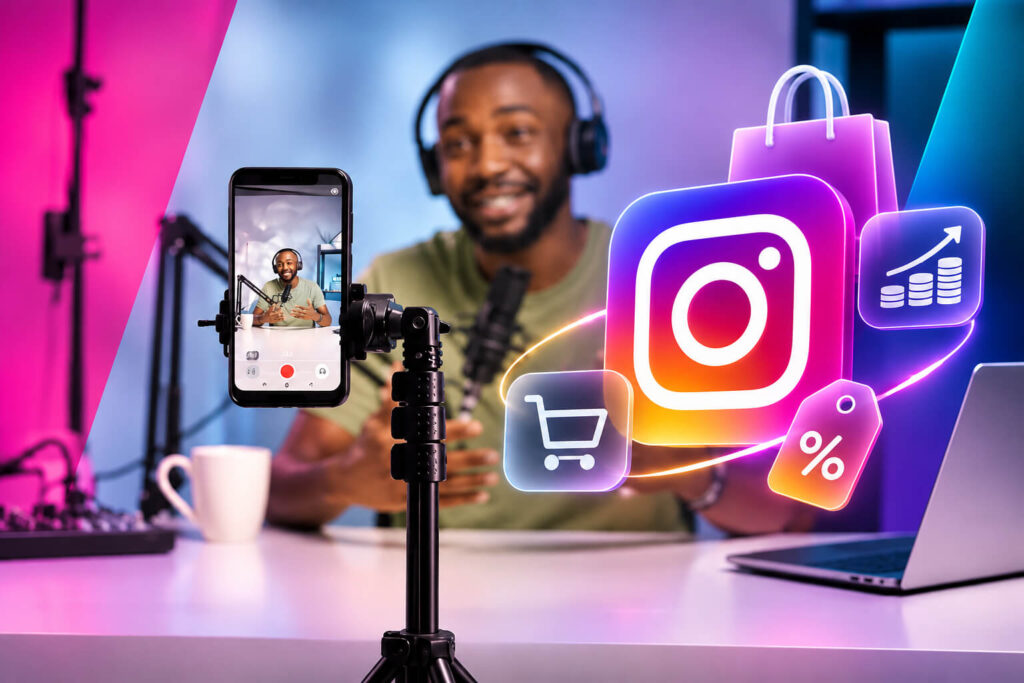
Instagram is giving creators more ways to make money from their content, expanding its affiliate marketing features through partnerships involving major retailers and established affiliate networks.
The platform has added Shein, Lowe’s and Halara to its native affiliate shopping integrations, building on its existing collaboration with Amazon. The expansion allows eligible creators to connect product recommendations directly to Instagram Reels and feed posts, potentially earning commissions when followers make qualifying purchases.
Affiliate marketing platform impact.com is playing an important role in the rollout, particularly through its existing relationships with Lowe’s and Halara.
The development reflects Instagram’s growing interest in turning creator content into a shopping destination. Rather than relying entirely on traditional sponsored posts, creators can increasingly earn money from the products they naturally feature in their videos and photos.
Instagram Expands Affiliate Shopping Across Reels and Feed Posts
Instagram’s latest affiliate expansion makes product recommendations more closely connected to the content people already watch.
Creators have traditionally relied on links in their biographies, Stories or external storefronts to direct followers toward products. While those methods remain useful, they often require audiences to leave the original content before finding the item being recommended.
The expanded affiliate tools offer a more direct approach. Eligible creators can associate supported products with their Reels and feed posts, making it easier for interested viewers to explore items without searching through separate links.
The addition of Shein, Lowe’s and Halara also broadens the types of products available for affiliate promotion. Fashion creators can feature clothing and accessories, while home improvement and lifestyle creators can recommend products that fit naturally into their content.
For Instagram, the goal appears to be reducing the distance between discovering a product and deciding to buy it. For creators, that could mean more opportunities to generate income from posts they were already planning to publish.
impact.com Strengthens Instagram’s Affiliate Marketing Infrastructure
One of the more notable aspects of Instagram’s expansion is its reliance on established affiliate marketing networks rather than creating an entirely separate system for managing every retailer.
impact.com, a partnership management and affiliate marketing platform, supports the affiliate programs associated with Lowe’s and Halara. Its infrastructure helps brands manage creator relationships, track qualifying purchases and administer commission payments.
This arrangement allows Instagram to concentrate on the shopping experience within its platform while affiliate networks handle important parts of the commercial process.
It also means creators need to understand how affiliate tracking works. Simply tagging a product in a post does not automatically generate a commission. The product must be connected to an eligible affiliate arrangement, and any resulting purchase must meet the program’s tracking and attribution requirements.
For brands already using impact.com, Instagram offers another opportunity to reach potential customers through creator-led recommendations.
The expansion also reinforces the growing importance of affiliate networks in social commerce, where the relationship between content, product discovery and measurable sales is becoming increasingly connected.
Instagram Affiliate Commission Rates Vary Across Retailers
The potential earnings from Instagram’s affiliate tools depend heavily on which retailer a creator promotes.
According to reporting on the expansion, Lowe’s offers commission rates ranging from 8% to 25%, while Halara provides a reported 10% rate. Shein’s commission rate is listed at 2%, and Amazon’s rates generally range from 1% to 4% through the relevant integration.
These differences could influence how creators select products for their content.
A creator promoting home improvement products through an eligible Lowe’s affiliate program might earn a higher percentage per qualifying sale than someone recommending products through a lower-commission retailer. However, the commission percentage is only one part of the equation.
Product prices, audience interest and purchasing behavior can make a significant difference in overall earnings. A lower-priced item that sells frequently may generate more income than an expensive product that attracts attention but few purchases.
Instagram reportedly does not take a share of the commissions earned through these integrations. Instead, the participating retailers and affiliate networks manage their respective payment arrangements.
Creators should still review each program’s conditions, as commission rates may vary depending on product eligibility, promotional restrictions and other requirements.
Smaller Instagram Creators Could Benefit From New Monetization Opportunities
Instagram’s affiliate expansion could be particularly interesting for smaller creators who have struggled to secure traditional brand sponsorships.
Reported eligibility requirements for the US rollout include being at least 18 years old, maintaining a public professional Instagram account and having at least 1,000 followers.
That threshold potentially opens the door to creators who have built engaged communities but do not yet have the audience size typically associated with major influencer campaigns.
Unlike fixed-fee sponsorships, affiliate marketing generally rewards creators based on qualifying sales rather than simply publishing promotional content.
A creator sharing skincare routines, fashion recommendations or home organization tutorials could potentially earn commissions when followers purchase products through properly tracked affiliate links.
The opportunity comes with uncertainty, though. High engagement does not necessarily translate into purchases, and creators may spend considerable time producing content without generating meaningful affiliate income.
Still, having access to more affiliate programs gives smaller creators additional ways to experiment with monetization without relying exclusively on paid brand collaborations.
Affiliate Tracking and Content Usage Rights Remain Important Concerns
Instagram’s growing affiliate ecosystem also raises questions about how creator content can be used after it becomes part of a retailer’s marketing program.
Affiliate relationships involve more than commission percentages. Depending on the program, creators may need to agree to specific terms covering tracking, advertising permissions and the reuse of promotional content.
Hello Partner highlighted concerns surrounding Amazon’s Instagram affiliate integration, particularly terms that reportedly allow Amazon and participating merchants to use certain qualifying public affiliate posts in paid advertising.
For creators, this introduces an important distinction between recommending a product and granting a retailer permission to use that recommendation in a broader advertising campaign.
A post originally intended for a creator’s audience could potentially reach additional consumers through paid promotion, depending on the permissions granted.
Creators should therefore examine program agreements before connecting their accounts, paying particular attention to content licensing, advertising rights, attribution requirements and payment conditions.
The promise of affiliate earnings can be attractive, but understanding what brands are permitted to do with creator content is just as important.
Instagram’s Affiliate Expansion Is Still Limited to Selected Markets
Although Instagram continues to develop its affiliate shopping features, the latest integrations involving Amazon, Shein, Lowe’s and Halara are focused on eligible creators in the United States.
The platform’s broader product-linking capabilities extend to additional countries and regions, but access to specific affiliate programs varies by market.
Other regional arrangements include shopping integrations involving Shopee in Indonesia and Mercado Libre in Brazil and Mexico.
This means creators outside the United States may not immediately receive access to the same retailers or commission opportunities.
The availability of an affiliate program in a particular country also does not guarantee that the program is connected to Instagram’s native product-tagging tools.
For international creators, checking the available monetization features within their professional Instagram accounts remains the most reliable way to determine which integrations they can use.
Instagram Faces Increasing Competition From TikTok Shop and YouTube
Instagram’s affiliate marketing expansion arrives as major social platforms continue investing in creator-driven shopping.
TikTok Shop has helped make product demonstrations, creator recommendations and commission-based selling a familiar part of short-form video. YouTube has also expanded its shopping features, allowing eligible creators to connect product recommendations with their videos.
Instagram is pursuing a similar opportunity, although its approach increasingly involves connecting existing affiliate programs with native content features.
The platform previously experimented with an affiliate program in 2021 before discontinuing that initiative in 2022. Its newer integrations suggest a different strategy, one that relies more heavily on established retailers and affiliate networks.
That approach could make expansion easier because brands can continue using existing commission structures and tracking systems while reaching audiences through Instagram.
The competition is no longer just about which platform attracts the most creators or generates the highest video views. Social networks are also competing to become places where audiences discover products and make purchasing decisions.
What Instagram’s Affiliate Expansion Means for the Creator Economy
Instagram’s latest move gives creators another reason to think about how their content connects with commerce.
For brands, affiliate integrations provide opportunities to work with creators whose audiences already have an interest in specific products. A well-placed recommendation in a fashion Reel or home improvement tutorial can feel more relevant than a conventional advertisement.
For creators, the expansion introduces more flexibility in choosing which products to recommend and which affiliate programs to join.
But the long-term value will depend on more than the number of retailers available.
Reliable sales tracking, transparent commission terms, reasonable content usage permissions and timely payments will all influence whether creators embrace these integrations.
Instagram is making it easier to connect product discovery with potential affiliate earnings. Whether that translates into sustainable income for creators will depend on how well the platform, retailers and affiliate networks deliver on those opportunities.
The shift is already clear: creator content is becoming more closely tied to measurable shopping activity, and affiliate marketing is moving further into the everyday social media experience.
Sources
- Hello Partner: Instagram’s Affiliate Expansion Leans on Networks Such as impact.com
- Business Insider: Instagram Expands Affiliate Marketing Tools With New Retail Partners
- Net Influencer: Instagram Quietly Adds Shein, Lowe’s and Halara to Native Affiliate Tools
- Instagram for Creators: Official Instagram Creator Resources
- impact.com: Official Affiliate Marketing and Partnership Platform