


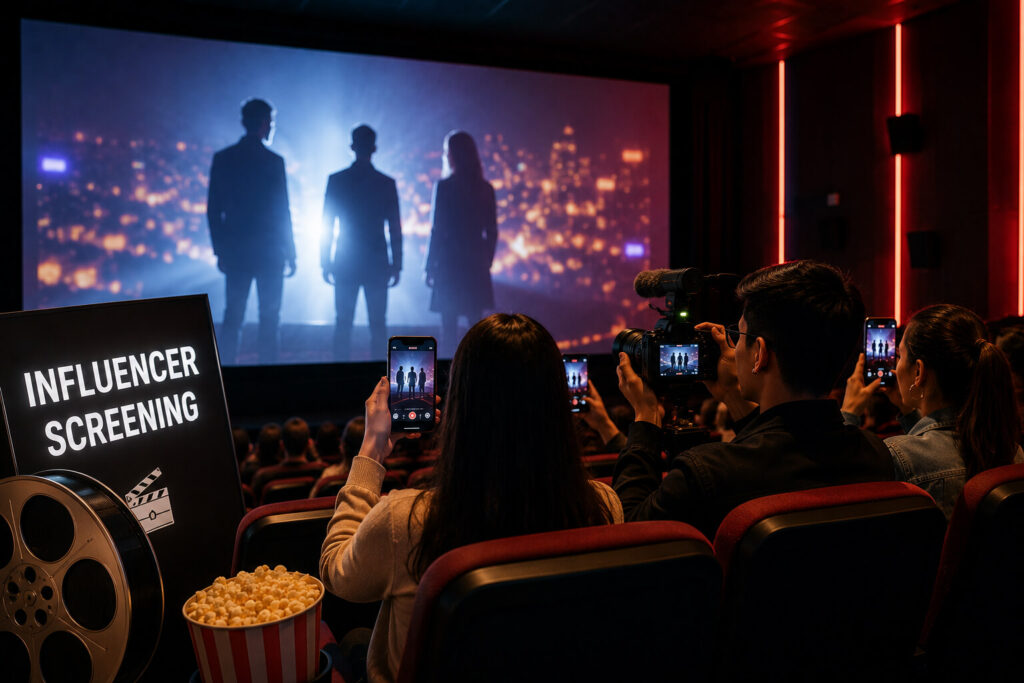
Movie marketing is starting to look less like a press cycle and more like a social feed.
For years, early screenings were mostly built around critics, entertainment journalists, and industry insiders. Studios showed the film, reviews followed, and audiences waited to see whether the movie was worth their money. That system still exists, of course. But it is no longer the only early signal that matters.
Influencers are now being pulled closer into the movie marketing machine. They are attending screenings, posting reactions, sharing clips from events, and turning early access into content that fans can immediately see, like, repost, and argue about. The shift was highlighted in WeRSM’s report on how influencer screenings are becoming part of entertainment campaigns, especially around high-profile releases such as Universal’s upcoming Christopher Nolan film, The Odyssey.
The Movie Screening Is Becoming Content
The old screening model was simple. Show the film to critics. Let the reviews land. Maybe run a few interviews. Maybe release a quote card if the reactions were strong.
Now, the screening itself can become part of the campaign.
An influencer does not just watch the movie and write a formal review. They post the invitation. They show the venue. They record the excitement outside the theater. They film their first reaction. They make the moment feel personal, immediate, and shareable.
That is exactly why studios are paying attention.
A creator’s reaction can move faster than a traditional review. It can reach fans who may not read entertainment publications at all. It also feels different. Less distant. Less polished. Sometimes more emotional. Sometimes messier. And in today’s fandom culture, that can be more powerful than a clean promotional quote.
Why Studios Want Creators in the Room
Hollywood is not inviting influencers to screenings by accident. There is a clear marketing reason behind it.
Creators bring communities with them. Not just audiences, but active followers who already trust their taste, humor, opinions, or personality. When a creator reacts to a movie, the post does not always feel like advertising. It feels like someone familiar saying, “I was there, and here is how it felt.”
That kind of social proof is valuable.
For major films, especially ones with built-in hype, early online conversation matters. A few strong creator reactions can help set the mood before wider coverage arrives. The campaign starts to feel alive before the official review cycle takes over.
This does not mean influencers are replacing critics. They are doing a different job. Critics bring analysis, context, and judgment. Creators bring speed, intimacy, and platform-native energy. Studios want both, but for very different reasons.
The Trust Problem Is Real
There is one uncomfortable part of this shift: audiences can tell when enthusiasm feels too managed.
If influencers are seen as being invited only because they are likely to post positive reactions, the credibility issue becomes obvious. Fans may start asking whether the buzz is real or just carefully arranged. That can hurt both sides. The studio looks too controlling, and the creator risks looking like a marketing extension instead of an honest voice.
That is where influencer screenings get tricky.
Access is exciting, but it comes with pressure. Creators want to stay close to big entertainment moments. Studios want early excitement. Audiences want honesty. Those three things do not always sit comfortably together.
A creator who only posts glowing reactions may get invited again, but followers may eventually stop trusting the reaction. A studio that over-curates the first wave of buzz may win a few days of hype, then lose credibility once broader opinions arrive.
Fandom Has Changed the Movie Marketing Timeline
The bigger story here is not just about screenings. It is about how quickly fandom now moves.
Fans do not wait quietly for a review embargo to lift. They search for leaks, reactions, red carpet clips, cast interviews, TikTok edits, Reddit threads, and anything that makes them feel closer to the movie before release. The campaign is no longer only built through trailers and posters. It is built through people.
That is why influencer screenings make sense in the current entertainment landscape.
A creator can make a film feel culturally active before the audience has even seen it. Their post becomes part of the anticipation. Their reaction becomes part of the conversation. Their presence at the screening becomes proof that something is happening.
For studios, this is useful. For creators, it is an opportunity. For audiences, it is sometimes exciting and sometimes suspicious.
Influencer Screenings Are Not Going Away
Influencer screenings are becoming part of the modern movie marketing playbook because they fit how audiences now discover entertainment.
People follow creators for taste, personality, and access. Studios need attention in crowded feeds. Movies need early momentum. Put those things together, and the screening becomes more than an industry event. It becomes a content format.
The challenge now is trust.
Creators will need to protect their credibility. Studios will need to avoid making every reaction feel manufactured. And audiences will keep learning how to separate real excitement from campaign-managed noise.
Movie marketing has always chased attention. The difference now is where that attention begins.
Not only in reviews. Not only in trailers. Sometimes, it starts with a creator walking out of a screening and posting before the rest of the internet has even caught up.