


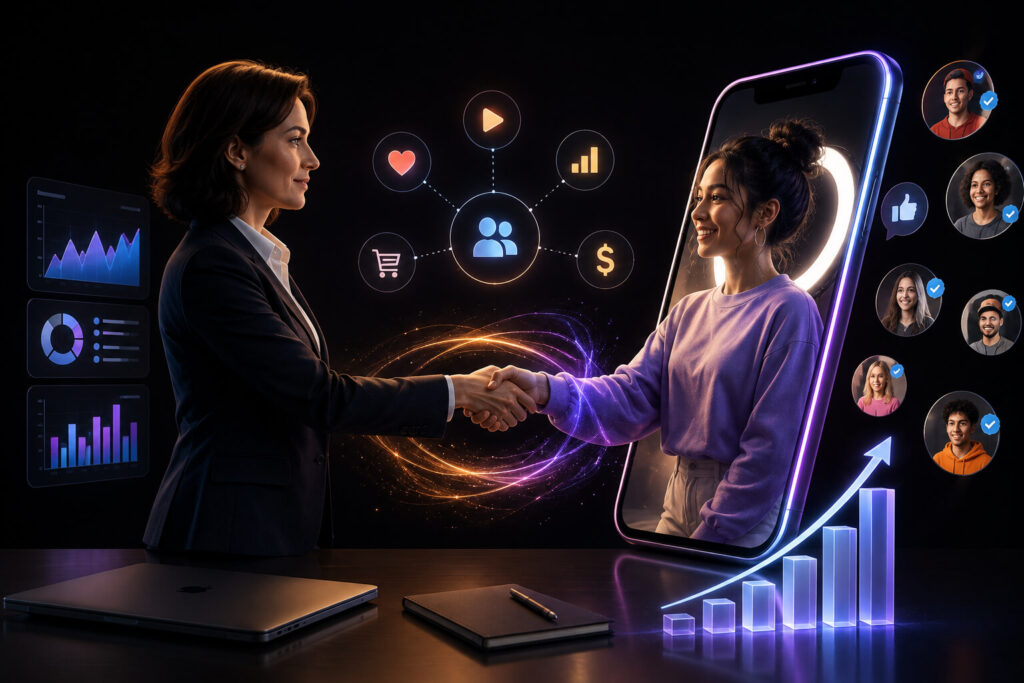
Influencer marketing has spent years talking about authenticity. In 2026, some brands are finally treating it as something more concrete than a line in a campaign brief.
Marketing leaders are becoming more selective about who gets paid to represent their brands. Bigger follower counts are not automatically winning the deal. A creator who actually knows the product, already likes it, and can talk about it without sounding like they memorized talking points may be far more valuable.
That was one of the clearest themes to emerge from conversations Later held with marketing executives from companies including Dunkin’, Solo Brands, Fidelity, Kizik, Habit Burger & Grill, Alibaba.com, and Creator Revolution. Later published its findings on August 4, 2026.
And the shift goes beyond creator selection.
Brands Want Real Fans, Not Convincing Actors
There is a simple problem with influencer marketing that brands still occasionally try to ignore: audiences can usually tell when somebody does not care about the product they are promoting.
The content looks right. The lighting is good. The required talking points are there.
Something still feels off.
That is becoming a dealbreaker.
Later reports that poor product-audience fit is one of the reasons creator collaborations fail, with 12% of creators identifying it as a primary issue. When the product does not naturally match a creator’s style or audience, sponsored content starts feeling like exactly what brands don’t want it to feel like: an advertisement.
Dunkin’ CMO Jill Nelson emphasized the value of working with people who are already genuine fans of a brand. Solo Brands CMO Liz Vanzura described an even stricter approach: if an influencer has not legitimately used and loved one of the company’s products, the partnership doesn’t make sense.
That changes creator discovery considerably.
Brands aren’t simply searching for reach anymore. They’re searching for evidence of an existing connection.
The Overwritten Influencer Brief Is Losing Its Grip
Another rule is starting to crack: the brand writes everything, the creator follows instructions, everybody hopes the post performs.
Creators increasingly want — and apparently need — room to create.
According to Later’s research, 81% of creators say they perform best when brands provide lighter guidelines and more creative flexibility. Meanwhile, 38% identify loss of creative freedom as the leading reason a collaboration fails.
It’s not particularly surprising.
A creator knows which joke their audience will understand. They know whether a polished product demo will work or whether their followers would respond better to a shaky phone video filmed in a kitchen. They know how they normally speak.
Strip all of that away and the brand may still get a technically correct campaign.
It may also get something nobody wants to watch.
The more interesting model emerging in influencer marketing in 2026 looks closer to creative collaboration. Brands bring the business objective. Creators bring the format, voice, audience knowledge, and sometimes even the campaign idea.
That puts creators closer to creative partners than rented distribution channels.
Smaller Creator Stories Are Getting Harder to Ignore
Huge campaigns still have a place. So do celebrity creators.
But some marketing leaders are paying much closer attention to tiny stories.
A person eating a burger.
Someone trying a shoe during an ordinary afternoon.
A familiar problem solved in 20 seconds.
These moments don’t necessarily look like major brand storytelling. That’s part of why they can work.
Later cites research showing nano- and micro-influencers producing roughly twice the sales conversion rate of macro-influencers. It also reports engagement rates of around 4% to 8% for smaller creators compared with roughly 1% to 2% among creators with more than 100,000 followers.
Follower count still matters in certain campaigns. It simply isn’t the whole equation anymore.
For brands chasing actual response rather than impressive-looking reach numbers, smaller creator communities can be unusually powerful.
AI Is Moving Into the Influencer Marketing Back Office
Then there’s AI.
Not the virtual-influencer conversation. Not another debate about whether AI-generated content looks authentic.
The bigger change may be much less visible.
AI is moving into the machinery behind influencer programs.
Marketing teams are exploring systems that can help identify trends, find creators, develop briefs, support outreach, analyze pricing, organize performance data, and speed up reporting.
Later says 43% of marketers now report that managing AI tools or AI-related initiatives is officially part of their job. It also reports that half of creators are already using AI tools such as ChatGPT somewhere in their content workflow.
That doesn’t mean brands suddenly want AI making every creative decision.
Quite the opposite.
The emerging split is fairly clear: use AI where scale and speed matter, keep humans involved where taste and judgment matter.
Knowing that a campaign is underperforming can be automated.
Knowing why a strange, imperfect creator video feels more culturally relevant than the polished version sitting in the approval queue? That’s harder.
Speed Could Become a Serious Competitive Advantage
Influencer campaigns have traditionally involved plenty of waiting.
Find creators. Contact creators. Negotiate. Brief them. Wait for content. Request edits. Approve it. Publish. Collect reporting.
AI-powered workflows could compress some of those steps dramatically.
That matters because social trends have short lives.
A campaign concept that takes three weeks to approve may arrive after the conversation has already moved somewhere else. A team capable of spotting a cultural moment and getting the right creator into it quickly has a completely different advantage.
Influencer marketing technology used to promise efficiency.
Now speed itself is becoming part of the strategy.
The Creator Relationship Is Becoming the Strategy
The common thread behind these changes isn’t a new platform or content format.
It’s the relationship between brands and creators.
The strongest influencer programs increasingly appear to be built around creators who genuinely fit the company, have enough freedom to speak naturally, can tell specific human stories, and are supported by technology that removes unnecessary work.
That’s a noticeable departure from the old model of buying exposure from somebody with a large following.
Brands still want reach.
They still want sales.
They still want measurable ROI.
They are just getting more serious about the messy human part in the middle.
And strangely enough, the more sophisticated influencer marketing becomes, the less effective it may be when it looks sophisticated.