


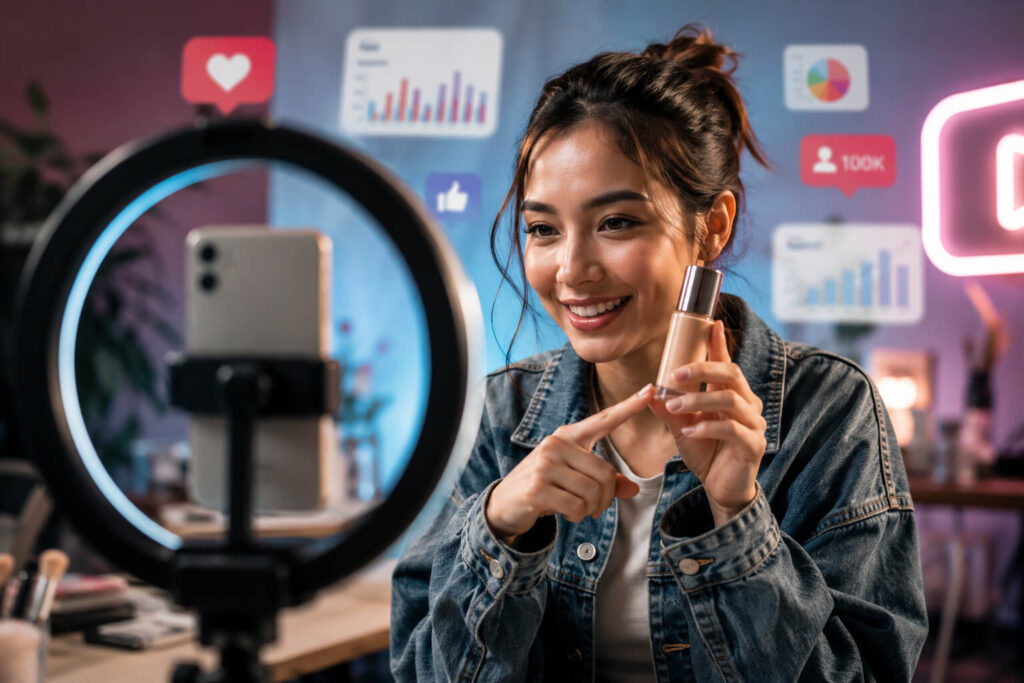
The influencer economy is no longer just about polished creators holding iced coffee in perfect lighting. In today’s digital landscape, influencer economy marketing has evolved to encompass much more than just aesthetics.
Something rougher has entered the room.
Brands are now trying to keep up with internet culture that moves through slang, niche communities, employee creators, inside jokes, “baddie” aesthetics, and content that looks less like advertising and more like something a friend sent in the group chat at midnight.
CNN recently reported on how companies are racing to understand this shift, especially as “baddie” culture becomes part of the language of online marketing. The word itself has moved far beyond beauty influencers and fashion posts. It now sits inside a bigger creator economy where personality, confidence, humor, and internet fluency can matter more than a traditional campaign concept.
Brands Are Chasing the “Normal People” Effect
The strange thing about influencer marketing right now is that the less perfect something looks, the more believable it can feel.
Brands have spent years making content cleaner, sharper, more approved, more measured. Then audiences started rewarding the opposite. A quick phone video. A casual joke. A creator speaking like an actual person. An employee who does not look like they were dragged through five rounds of brand training.
That is why more companies are paying attention to “normal people” content. Keith Bendes, chief strategy officer at influencer marketing agency Linqia, told CNN that brands are recognizing this kind of content can outperform polished campaigns.
That line says a lot.
The old brand instinct was to control everything. The lighting. The script. The facial expression. The caption. The risk. But creator marketing does not always work that way. Sometimes the content that wins looks slightly chaotic. Sometimes it sounds unscripted. Sometimes it works because it feels like nobody from corporate touched it.
The Influencer Economy Is Becoming Brand Infrastructure
This is not a small side trend anymore.
The creator economy has become a serious marketing channel for companies trying to reach people where they actually spend time. Influencers are no longer just campaign add-ons. They are distribution partners, product explainers, social proof engines, and sometimes the entire reason a product gets noticed.
Industry reports continue to show influencer marketing growing in 2026, with more brands treating creator partnerships as a core part of their media mix rather than an experimental budget line.
That shift changes the pressure on marketing teams.
It is not enough to hire a creator, send them a brief, and wait for a nice post. Brands now have to understand creator tone, platform culture, audience trust, comment-section behavior, and whether the creator actually fits the product.
A bad fit feels fake immediately. People can smell it.
The “Baddies of Polymarket” Example Shows Where This Is Going
One of the more unusual examples mentioned in the CNN-linked report is Polymarket’s “Baddies of Polymarket,” a social media effort aimed at making betting markets feel more culturally fluent and accessible to a younger online audience.
That is the point.
Even categories that once sounded dry, technical, or male-dominated are trying to borrow energy from creator culture. Finance platforms, betting platforms, tech companies, food brands, beauty labels, retailers, and even legacy businesses are looking for ways to sound less like institutions and more like people who understand the feed.
Of course, that can go wrong very quickly.
Trying too hard is still trying too hard. A brand that forces slang into a campaign without understanding the audience can end up looking desperate. Internet culture is fast, but it is also ruthless. Users know when a company is just copying a mood board.
Employees Are Becoming Creators Too
Another interesting part of this shift is the rise of employee-led content.
CNN noted that Starbucks previously announced some employees would create influencer-style content for the company’s official accounts.
That makes sense. Employees can often show a side of a company that a traditional ad cannot. They know the product. They know the daily rhythm. They can make content from inside the brand without always sounding like the brand.
But it also creates new questions.
Are employees being fairly compensated for creator-style work? Are they being trained? Are they allowed to be honest? What happens when an employee’s personality becomes more popular than the company account?
Brands want authenticity, but authenticity is not a button they can press. It comes with mess, boundaries, and trust.
Creator Marketing Is Moving Away From Perfect Influence
The influencer economy used to be obsessed with the perfect aspirational figure.
Perfect apartment. Perfect skin. Perfect outfit. Perfect morning routine. Perfect “you guys have been asking me about this” caption.
That version still exists. It still sells. But it is no longer the only model.
The newer version is more flexible. Micro-creators, niche personalities, meme pages, employee creators, casual reviewers, and community-based voices can all influence buying behavior. In many cases, smaller creators feel more believable because their audience sees them as closer, less filtered, and less obviously commercial.
Vogue has also reported that influencer marketing is moving toward deeper creator relationships, with brands using creators for consulting, product input, storytelling, and direct audience connection rather than one-off promotional posts.
That is a big change.
The creator is not just the billboard anymore. Sometimes the creator helps shape the product, the campaign, the launch, and the language around it.
The Risk Is That Every Brand Starts Sounding the Same
There is a catch.
Once every company starts chasing the same internet aesthetic, the whole thing can become boring again.
The “baddie” strategy works only when it feels connected to a real audience and a real cultural moment. If every brand suddenly starts using the same slang, the same creator type, the same messy-but-not-too-messy video style, then the content becomes another template.
And audiences get tired fast.
That is the uncomfortable part for marketers. The influencer economy rewards speed, but brand trust needs consistency. It rewards personality, but companies still need guardrails. It rewards casual content, but not careless content.
There is no clean formula here.
What This Means for Influencer Marketing Strategy
The bigger lesson is simple: creator marketing is becoming less polished and more embedded in everyday internet behavior.
Brands that win will probably be the ones that stop treating influencers as rented attention. They will work with creators who understand the audience better than the brand does. They will let some content breathe. They will avoid forcing every post to sound like a press release with emojis.
The influencer economy is not becoming less professional. It is becoming professionally informal.
That sounds contradictory, but that is where the market is now.
A brand can spend millions on a beautiful campaign and still lose attention to a creator filming a 22-second video from their bedroom. Not because the bedroom video is cheaper. Because it feels closer to the way people actually talk, shop, joke, and decide what matters.
That is the new marketing problem.
Everyone wants culture. Not everyone knows how to behave inside it.