


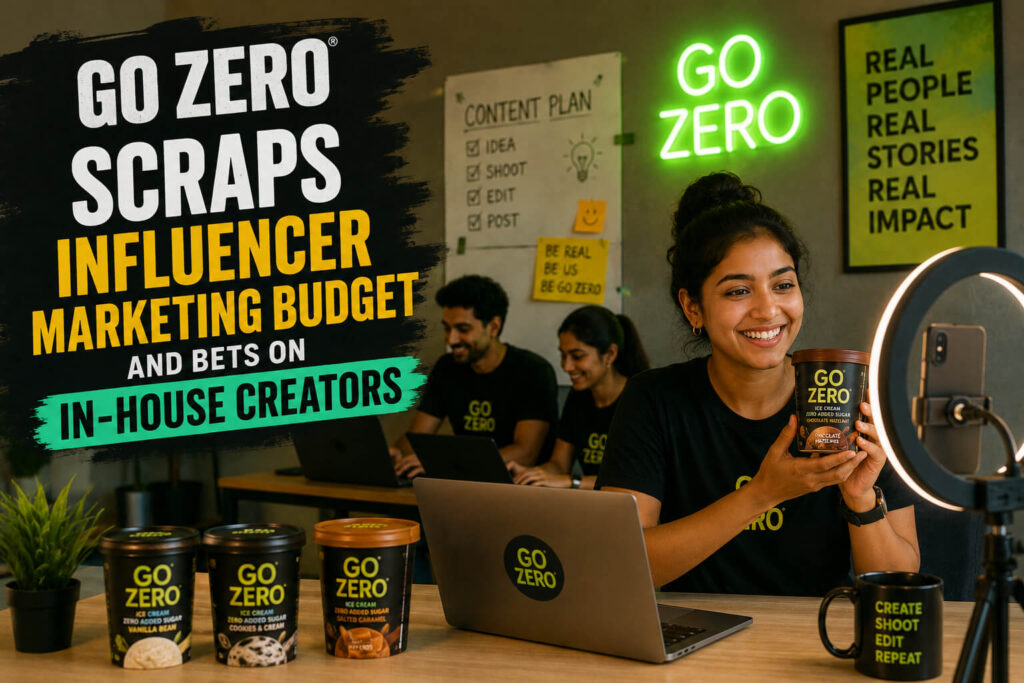
Go Zero is walking away from paid influencer videos. The shift in the Go Zero influencer marketing budget marks a new direction for the brand. The Indian ice cream brand will redirect its entire influencer collaboration budget towards hiring two full-time content creators, according to founder and CEO Kiran Shah.
His reasoning was blunt. The company had paid for dozens of collaborations, yet when Shah asked what a particular sponsored reel had actually delivered, nobody could give him a clean answer. Not views. Not sales. Not lasting brand growth. That uncertainty was enough for him to pull the plug.
Go Zero Could Not Clearly Measure Its Influencer Marketing ROI
Go Zero had been managing around 30 influencer collaborations at the same time. That meant finding creators, negotiating fees, shipping products, approving content and following up on posts. A lot of movement. Plenty of reels. The return was harder to see.
Shah said the problem was not simply how much the company was spending. It was the lack of clarity around what the spending produced. A creator video might generate views, likes and comments, but those numbers do not automatically show whether people bought the product, remembered the brand or followed Go Zero afterwards.
For a company that closely tracks sales across different cities, that blind spot became difficult to justify.
Paid Influencer Content Started to Feel Like Rented Attention
Shah described the company’s influencer strategy as a form of renting attention. The brand paid to appear in front of someone else’s audience. Once the campaign ended, however, the creator kept the followers, the engagement history and any long-term growth generated by the post.
Go Zero received a temporary visit. That distinction sits at the centre of the company’s decision. Sponsored content can deliver reach quickly, but the value often remains attached to the creator’s account rather than moving to the brand’s own channels.
This does not mean influencer marketing never works. It does mean brands need to know what they are buying. Reach alone is not always enough.
The Influencer Budget Will Now Pay Two Full-Time Creators
Instead of commissioning more influencer videos, Go Zero plans to hire two full-time creators. One will focus on Kannada-language content. The other will produce content in Hindi. The company intends to use the money previously reserved for collaborations to pay their salaries. Those creators will make videos specifically for Go Zero’s own social accounts.
Every reel will live on a brand-controlled channel. Any followers gained from the content will remain with the company. Successful ideas can also be repeated, expanded or turned into long-running formats. Go Zero is essentially trading borrowed distribution for an owned content operation.
The Application Process Skips the Traditional Résumé
Go Zero is not asking candidates to lead with a conventional résumé. Applicants have instead been invited to create a 30-second video promoting the brand in either Kannada or Hindi and publish it on LinkedIn. That is a practical test.
Rather than reading a list of editing skills, the company can immediately see whether a candidate understands hooks, pacing, product storytelling and platform culture. It also turns the recruitment campaign into content. Candidates promote the brand while demonstrating their ability to do the job. Clever, though probably a little chaotic.
Employee and In-House Creators Are Becoming More Valuable
Go Zero is not the only company looking beyond one-off influencer deals. Sprout Social said its internal creator network produced almost 30% of its video impressions in 2025 despite representing less than 8% of its overall content mix. The company also reported that the network’s share of video impressions grew by 680% year over year.
Starbucks previously recruited two full-time Global Coffee Creators for a year-long content role, including one position for an existing employee. The creators were tasked with documenting coffee culture and Starbucks locations around the world.
Dell has also invested in employee advocacy and ambassador programmes, using trained team members to share company content and industry expertise across social platforms.
The appeal is fairly obvious. Internal creators understand the product, have regular access to the business and can build recurring content instead of producing a single sponsored post. They are also easier to connect with sales campaigns, product launches and long-term brand goals.
This Is Not the End of Influencer Marketing
Go Zero’s decision will attract attention because it sounds like a rejection of influencer marketing. It is more accurately a rejection of poorly measured influencer marketing.
Creator partnerships can still work when brands use trackable links, unique discount codes, affiliate commissions, controlled landing pages or properly designed brand-lift studies. Long-term creator relationships can also produce stronger results than isolated sponsored posts.
The problem begins when companies treat views as proof of business impact. A reel can perform well and still produce little value for the advertiser. Another video might generate fewer views but bring in paying customers. Without proper tracking, both outcomes look like social media activity rather than business evidence.
Creators May Face More Pressure to Prove Commercial Value
The shift towards owned content could change what brands expect from external creators. Follower count and video views will still matter, but businesses may ask harder questions before approving campaigns.
Did the content produce website visits? Did people search for the brand? Were discount codes used? Did sales increase in the creator’s market? Did the company gain followers of its own?
Creators who can connect their work to those outcomes will remain valuable. Those selling reach without reliable reporting may find budgets moving elsewhere.
Go Zero Is Turning the Strategy Into a Public Experiment
Shah said he plans to share the results of Go Zero’s new content model every quarter. That gives the company’s decision an interesting second act.
Hiring in-house creators does not automatically guarantee better performance. Salaries, equipment, production planning and creative management all carry costs. The company will still need strong ideas and consistent execution.
But it should gain something it struggled to find in its previous approach: control. Go Zero will own the accounts, the content library, the audience data and the learning that comes from every video.
For influencer marketers, the message is uncomfortable but useful. Brands are no longer satisfied with activity that looks successful on a dashboard. They want evidence that something happened after the views arrived.