


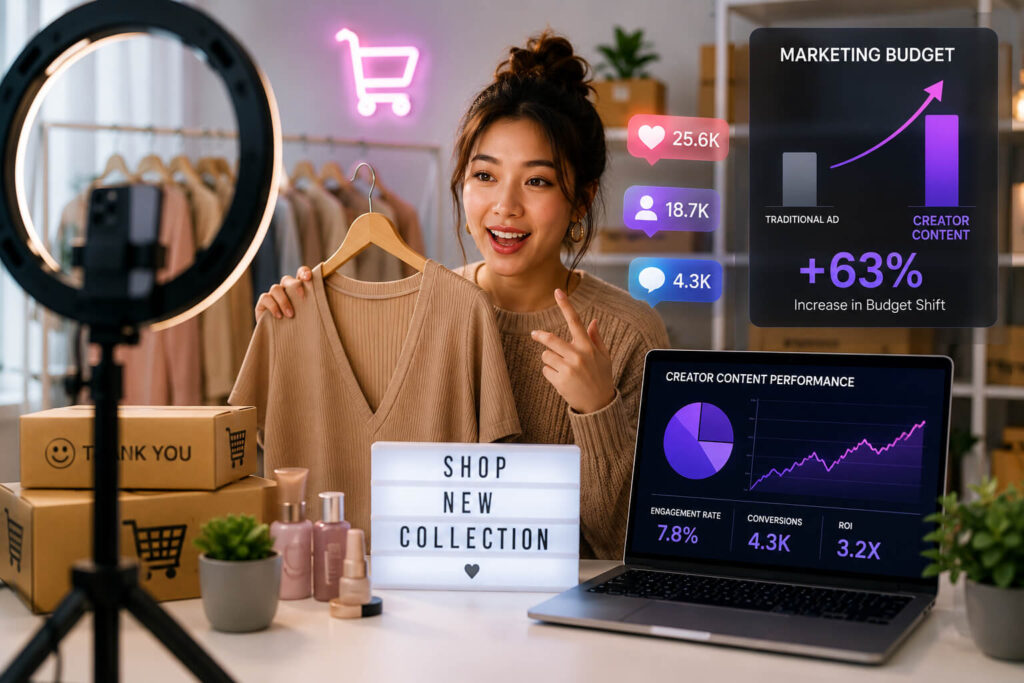
Running an ecommerce brand is not as simple as launching a store, buying ads, and waiting for sales anymore. In today’s competitive environment, ecommerce creator marketing has become an essential strategy for growth.
That version of online retail feels a bit old now. Paid ads cost more. Organic reach is harder to predict. Shoppers scroll past polished brand posts without much thought. And for many businesses, the old playbook of cheap Facebook traffic and discount-heavy campaigns is not carrying the same weight.
So budgets are moving.
Not always bigger budgets. Smarter ones. More ecommerce brands are looking at creator-led content because it does something traditional marketing often struggles to do now. It feels real.
Why Ecommerce Brands Are Rethinking Their Marketing Spend
The pressure is coming from several sides at once. Customer acquisition is more expensive, social media platforms are crowded, and consumers have become much quicker at spotting content that feels too manufactured.
A beautiful product photo still matters. A clean website still matters. But neither one fully answers the question many shoppers have before buying: “Will this actually work for me?”
That is where creator content has started to change the conversation.
According to the Redditch Standard report, ecommerce brands are shifting more attention toward content that sells without looking like a direct sales pitch, especially through creator videos, product demonstrations, and social proof from trusted voices.
Creator Content Is Becoming a Performance Tool
For a long time, influencer marketing was treated mainly as brand awareness. Pay someone with an audience, get a post, hope people notice.
That is no longer enough.
Ecommerce brands are now using creator content across more parts of the sales funnel. A single creator video can appear on TikTok, Instagram Reels, paid social ads, product pages, email campaigns, and retargeting campaigns. That makes the content more useful than a one-time post that disappears after a few days.
The shift is important for smaller brands too. A homeware shop, skincare startup, food brand, or fashion label does not always need a celebrity influencer. Micro and nano creators can often deliver content that feels more specific, more believable, and easier to test.
Sometimes that is exactly what a buyer needs.
Why Real People Can Sell Better Than Polished Ads
A studio shoot can make a product look perfect. But creator content can make it look usable.
That difference matters.
A short video of someone opening a product, trying it, explaining what they like, or showing how it fits into daily life can answer doubts faster than a product description. It gives the buyer a small preview of ownership. Not a glossy promise. More like a human signal.
That is especially powerful when shoppers are already interested but still undecided. They may not need another discount. They may need proof.
Creator-led content gives ecommerce brands a way to build that proof in a format people already understand from their social feeds.
The Mistake Brands Still Make With Influencer Marketing
Many ecommerce brands still treat influencer campaigns like isolated promotions.
One post. One story. One discount code. Then the campaign ends.
That approach leaves too much value on the table. The stronger strategy is to treat creator content as reusable marketing material. Brands can take the video, photos, testimonials, and product reactions, then use them across paid ads, landing pages, emails, and product listings.
That is where creator marketing becomes less of a gamble and more of a system.
Another mistake is starting too big. A macro influencer can bring reach, but reach alone does not guarantee sales. For many ecommerce brands, testing several smaller creators is often more practical. Different hooks. Different audiences. Different product angles. Then the brand can scale what actually works.
Micro Creators Are Giving Smaller Brands a Way In
One of the reasons creator marketing is growing in ecommerce is accessibility.
A brand does not always need a huge campaign budget to begin. Working with five or ten smaller creators in a niche can produce enough content to test across channels. A wellness brand can work with lifestyle creators. A food brand can work with home cooks. A skincare brand can work with creators who already talk about daily routines.
The match matters more than the follower count.
That is also why local and UK-based creators are becoming more valuable for regional ecommerce brands. Their audiences can feel closer, more relevant, and more likely to trust the recommendation.
Ecommerce Growth Is Becoming More Content-Led
The bigger point is simple: ecommerce growth is becoming harder to separate from content.
Not content for decoration. Content that answers questions, reduces doubt, shows real use, and gives shoppers a reason to trust the product before they buy.
As ad costs continue to rise and organic reach remains unpredictable, creator-led content gives brands something more durable. It can support paid campaigns, strengthen product pages, improve email flows, and keep working after the first post goes live.
For ecommerce brands watching every pound of marketing spend, that matters.
The brands moving early are not just chasing influencers. They are building a content engine around trust. And right now, trust may be one of the most valuable assets an ecommerce brand can buy.