


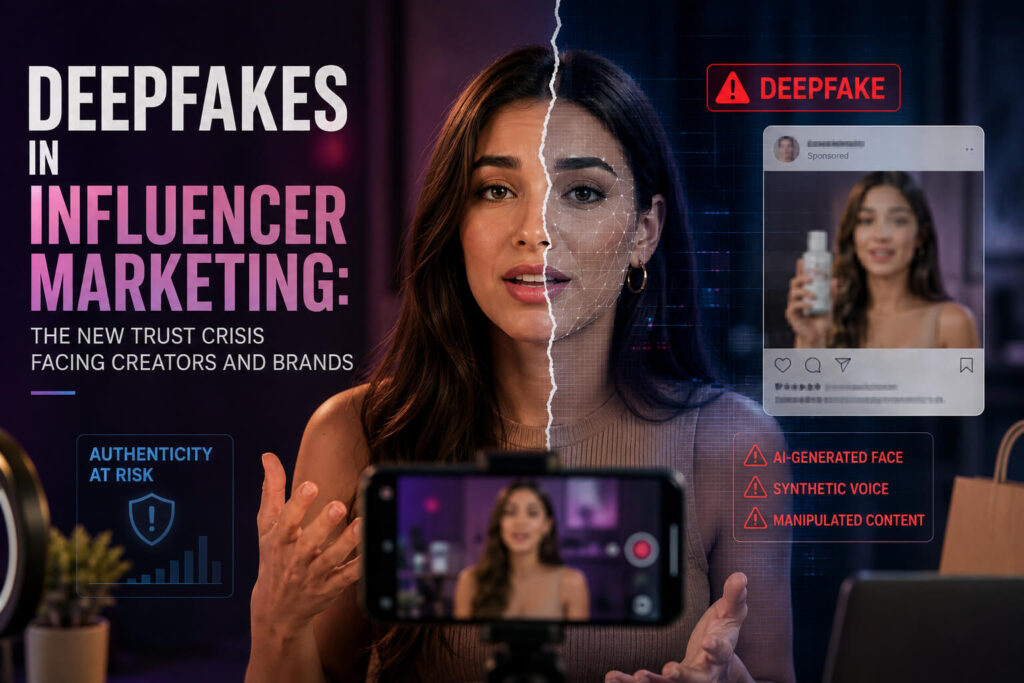
Deepfakes are no longer just a viral internet concern. They are becoming a serious issue in advertising, creator partnerships, and influencer marketing.
As AI-generated video, voice, and image tools become more realistic, brands can now create content that looks and sounds like a real person without needing a traditional production shoot. For marketers, that may seem like a shortcut. For creators, influencers, and audiences, it raises a much bigger question: who owns a person’s identity online?
The creator economy is built on trust. Followers support influencers because they believe the recommendations, reviews, and personal stories they see are authentic. When deepfakes enter that relationship, the line between real endorsement and synthetic manipulation becomes dangerously unclear.
What Are Deepfakes?
Deepfakes are AI-generated or AI-manipulated videos, images, or audio that make a person appear to say or do something they never actually said or did.
In advertising, this could mean using AI to copy a creator’s face, voice, style, or personality for a product promotion. It could also mean creating an AI version of an influencer to appear in paid campaigns without the person physically recording new content.
The technology itself is not always harmful. Some creators may choose to license their AI likeness for approved brand campaigns. Fictional AI avatars can also be used transparently as part of a brand identity. The problem begins when audiences are led to believe they are seeing a real creator endorsement when they are actually seeing synthetic media.
Why Deepfakes Are a Major Threat to Influencer Marketing
Influencer marketing works because audiences trust creators more than traditional ads. A recommendation from a familiar creator can feel personal, honest, and relatable.
Deepfake advertising puts that trust at risk.
A creator may spend years building a loyal audience, only for their likeness to be copied in a campaign they never approved. Viewers may believe the creator supports a product, service, or message when they do not. This can damage the creator’s reputation, mislead fans, and create legal and ethical problems for brands.
For younger audiences, the risk is even greater. Teens and young consumers often form strong connections with influencers and may be more likely to act on creator recommendations. If those recommendations are fake, the audience is not just being advertised to — they are being deceived.
The Cost-Cutting Appeal for Brands
The rise of deepfakes in influencer marketing is partly driven by cost.
Creator partnerships can be expensive, especially when working with established influencers. Campaign fees, usage rights, production costs, revisions, and paid media licensing can add up quickly.
AI-generated content may appear cheaper and faster. A brand could create a realistic-looking ad without booking a shoot, negotiating a usage fee, or waiting for a creator’s approval.
But the short-term savings could create long-term damage.
If consumers discover that a brand used a fake creator endorsement, the backlash can be severe. Trust is hard to earn and easy to lose. In the creator economy, authenticity is not just a nice-to-have — it is the product.
Creator Consent Must Be Non-Negotiable
The biggest issue with deepfakes in influencer marketing is consent.
There are ethical ways to use AI likenesses. A creator may agree to license their digital twin for a campaign. They may approve the script, usage period, platforms, and payment terms. In that case, AI can become a production tool rather than a form of exploitation.
But without explicit permission, using someone’s face, voice, or identity in advertising crosses a serious line.
Creators should have control over how their image is used. Brands and agencies should not treat AI likenesses as a loophole to avoid paying talent or negotiating fair rights. A creator’s identity is part of their business, and unauthorized deepfake use can harm both their income and public image.
Disclosure Is Becoming More Important
Audiences deserve to know when they are watching AI-generated or AI-manipulated content.
Influencer marketing already requires clear disclosure when content is paid advertising. Deepfakes add another layer: viewers also need to know when the person they are seeing is not appearing in a real, newly recorded performance.
Clear labels such as “AI-generated,” “digitally altered,” or “licensed AI likeness” can help protect audiences and creators. However, disclosure should not be treated as a quick fix. If a creator did not approve the campaign, labeling it as AI-generated does not make it ethical.
Transparency and consent must work together.
Can Deepfakes Ever Be Acceptable in Creator Campaigns?
Yes, but only under strict conditions.
Deepfakes or AI likenesses may be acceptable when:
- The creator has given clear, written consent.
- The usage rights, platforms, campaign length, and payment terms are defined.
- The audience is clearly informed that AI-generated media is being used.
- The content does not misrepresent the creator’s beliefs, opinions, or endorsements.
- The AI use supports production rather than deception.
For example, a creator might approve an AI version of themselves for multilingual ads, accessibility-focused dubbing, or additional campaign formats. In these cases, AI can help scale content while respecting the creator’s rights.
The key difference is permission.
What Brands Should Do Before Using AI Influencers or Deepfakes
Brands entering this space need strong internal rules before launching AI-generated creator campaigns.
Before using deepfakes in influencer marketing, brands should ask:
- Has the creator clearly approved this use?
- Is the AI content labeled in a way the audience can understand?
- Does the campaign make it clear whether the endorsement is real, licensed, or synthetic?
- Could the content damage the creator’s reputation?
- Would the brand be comfortable explaining the campaign publicly?
If the answer to any of these questions is unclear, the campaign is not ready.
The Future of Influencer Marketing Depends on Authenticity
AI will continue to change how content is produced. Brands will use more AI tools for editing, translation, testing, and creative production. But when it comes to influencer marketing, authenticity remains the strongest advantage.
A deepfake can copy a face. It can copy a voice. It can imitate a creator’s style.
What it cannot truly copy is the years of trust between a creator and their audience.
The brands that succeed will be the ones that use AI responsibly while continuing to invest in real creator relationships. Deepfakes may offer speed and scale, but genuine influence still comes from human connection.
For creators, this moment is a reminder to protect their likeness, update contracts, and demand clear terms around AI usage. For brands, it is a warning: using AI to fake trust may be cheaper upfront, but the reputational cost could be far higher.
Bottom Line
Deepfakes in influencer marketing are creating a new identity crisis for the creator economy. As AI-generated ads become more realistic, brands must prioritize consent, disclosure, and authenticity.
Influencer marketing has always depended on trust. If deepfakes are used to deceive audiences or exploit creators, that trust could quickly collapse.
The future of creator marketing will not belong to brands that fake influence. It will belong to brands that protect it.